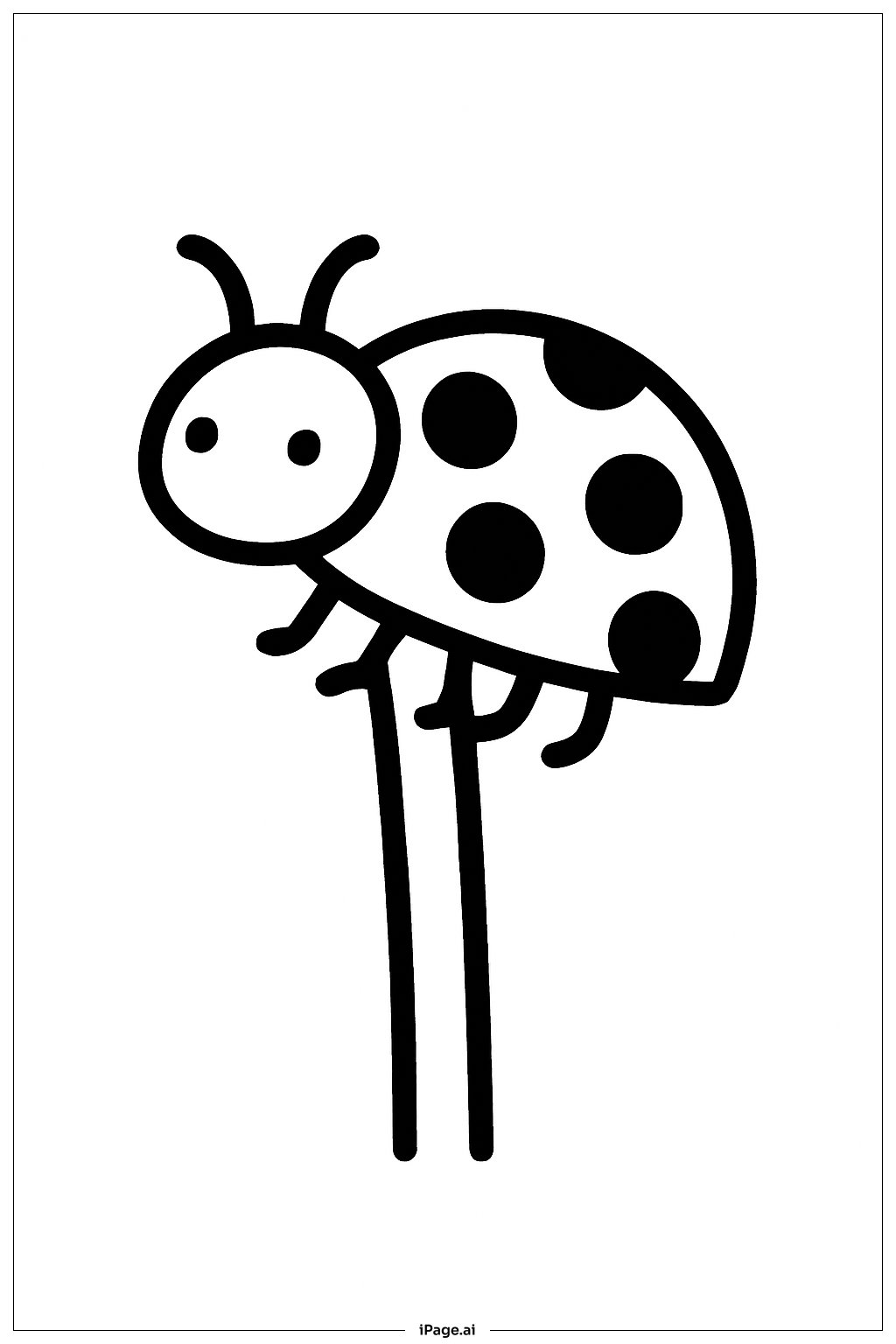
Coloring tips: How to color Ladybug On A Twig coloring page well?
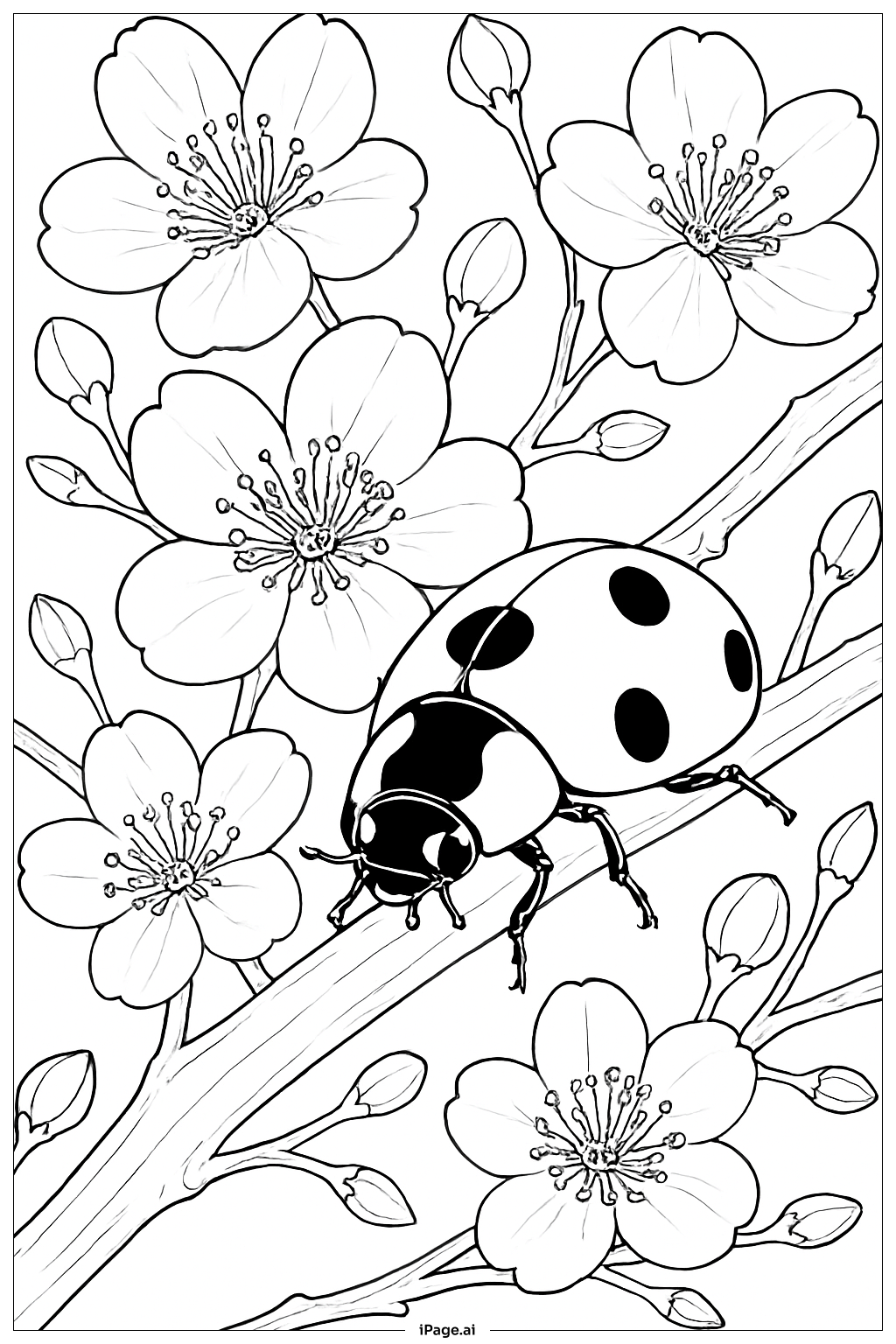
Use red to color the ladybug's back, leaving the spots black. The head and legs can be colored black as well. For the twig, green or brown colors will look natural. You can add different shades of green to make the twig look lively. Feel free to use lighter and darker colors to create a 3D effect on the ladybug and twig. Use a bright color for the background like blue or yellow to make the ladybug stand out.
Coloring challenges: Which parts are difficult to color and need attention for Ladybug On A Twig coloring page?
1. Staying inside the small spots on the ladybug can be tricky for younger children as they are small and round. 2. Coloring the legs and antennas requires careful attention to avoid coloring outside the lines because they are thin and close to the twig. 3. Deciding the right shades for the twig to make it look natural may be difficult since it should not blend in too much or stand out too brightly. 4. Some might find it challenging to add shadows and highlights to give the ladybug some depth and make it look more realistic. 5. Coloring within the thin lines of the twig can be hard as it requires steady hands and precision.
Benefits of coloring books: Advantages of drawing Ladybug On A Twig coloring page
Coloring this picture helps children improve their fine motor skills as it requires careful coloring in small spaces. It also encourages creativity by allowing children to choose colors and practice blending shades. The simple design makes it ideal for young kids to build confidence in their coloring. Additionally, it helps children learn about nature and insects, making the activity both fun and educational. Coloring the ladybug can also teach patience and focus, important skills for young learners.