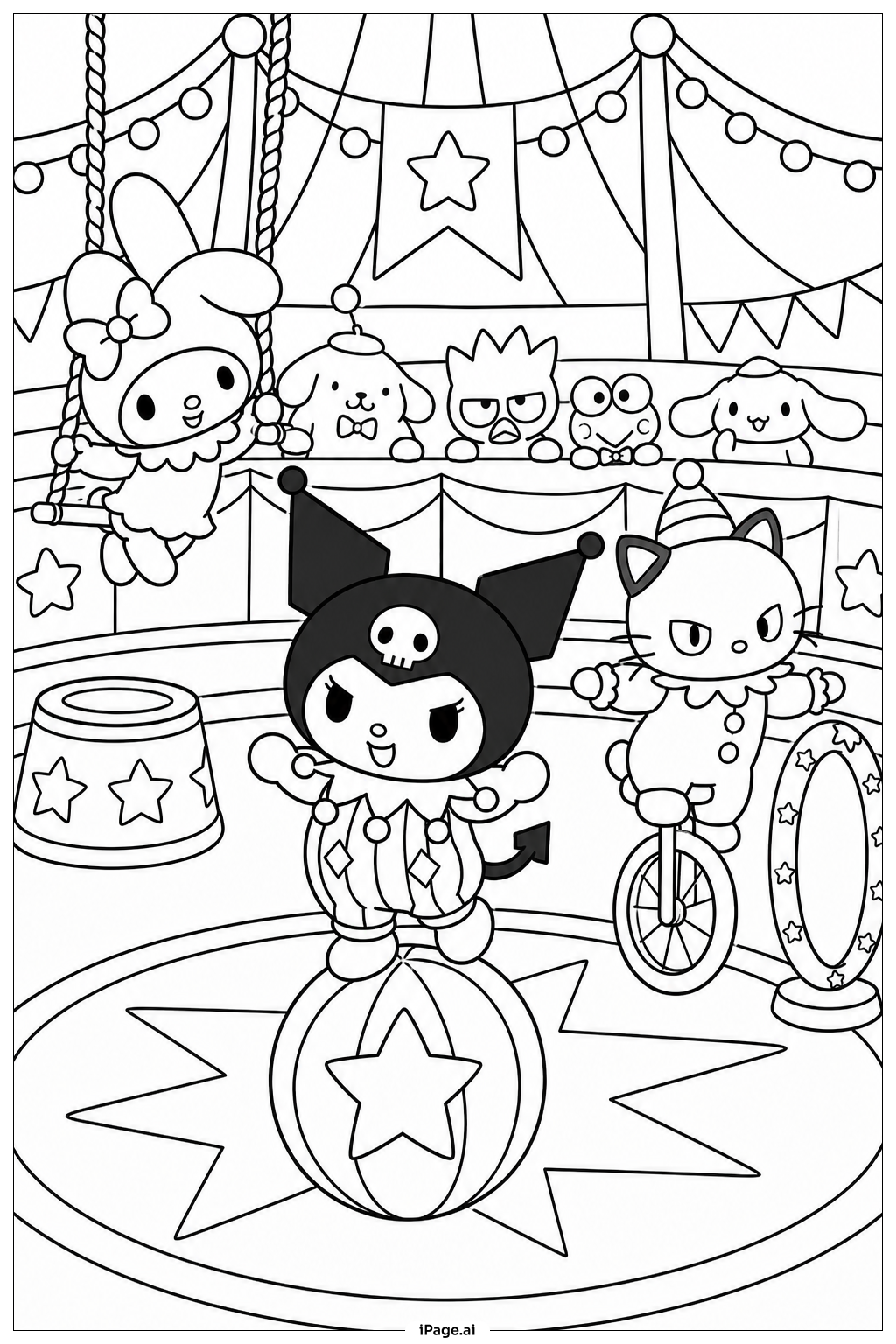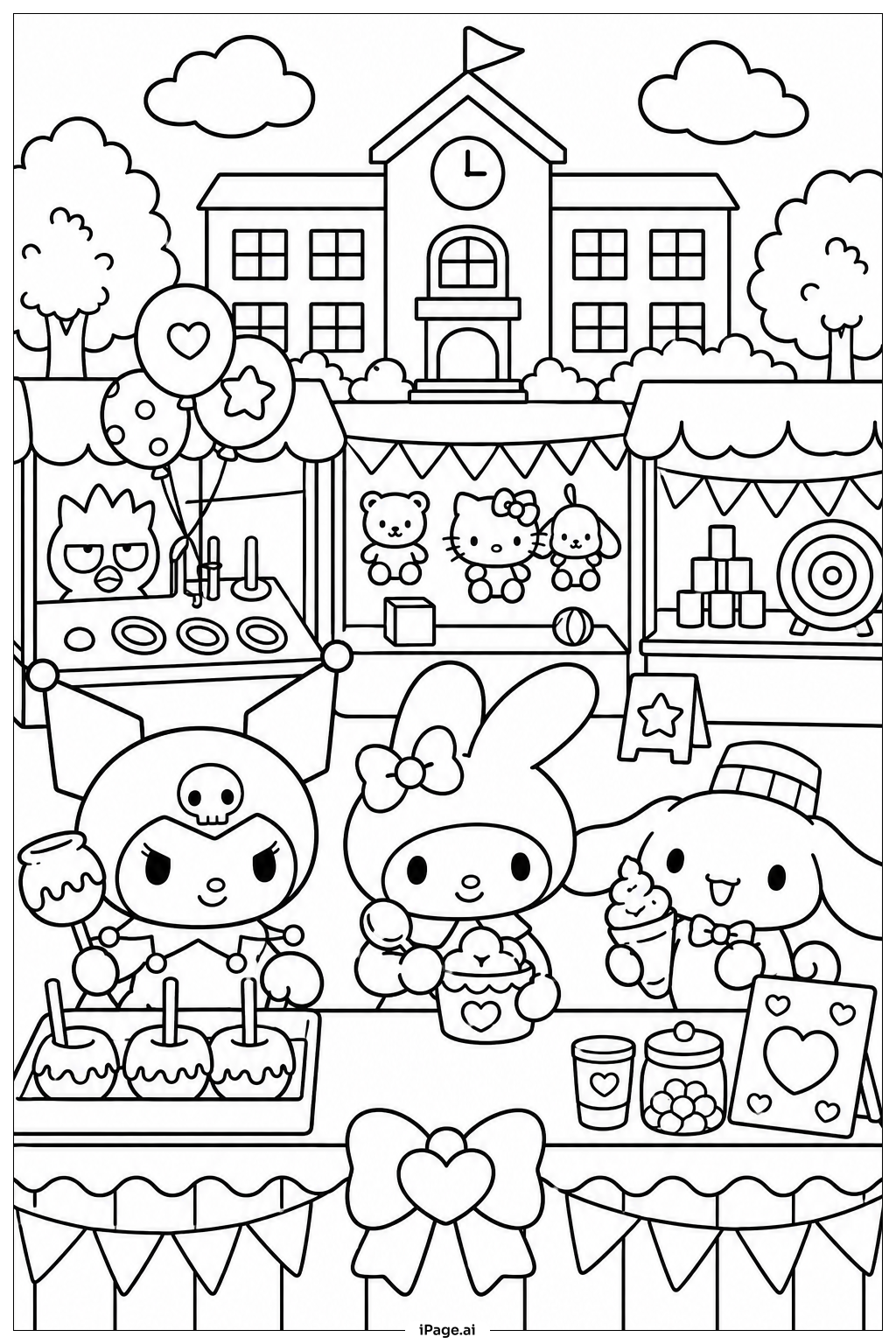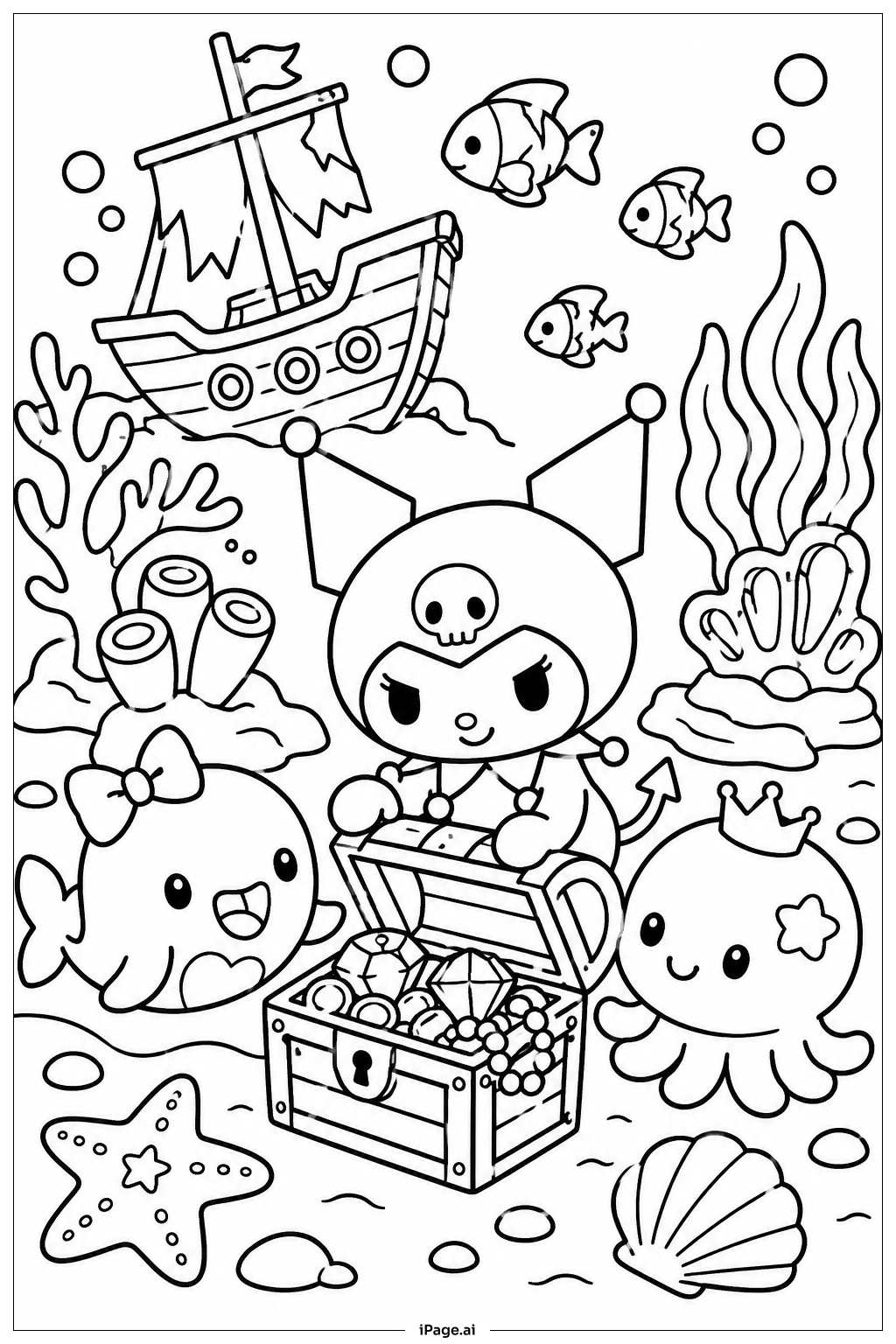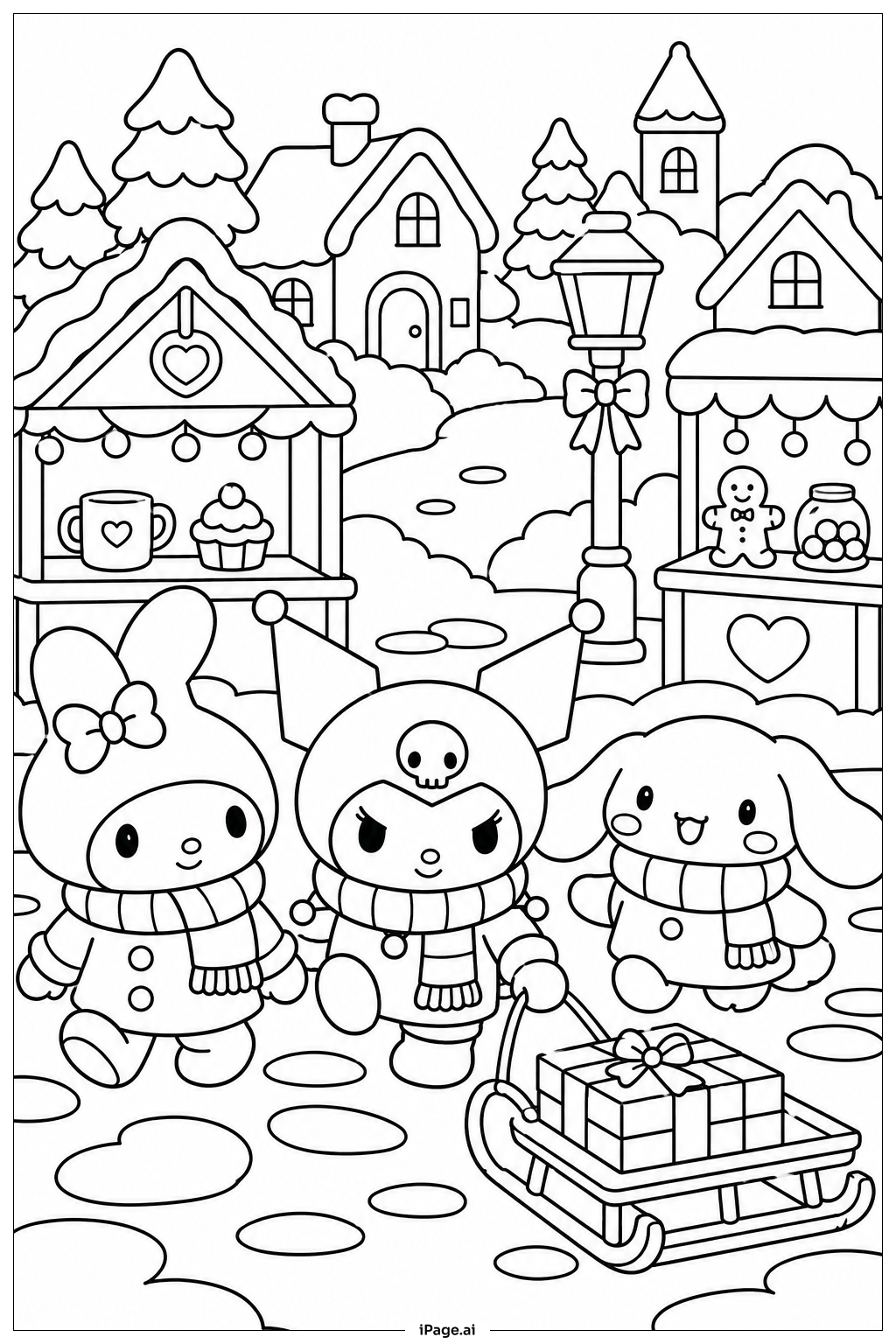
Coloring tips: How to color Kuromi Walking Dog coloring page well?
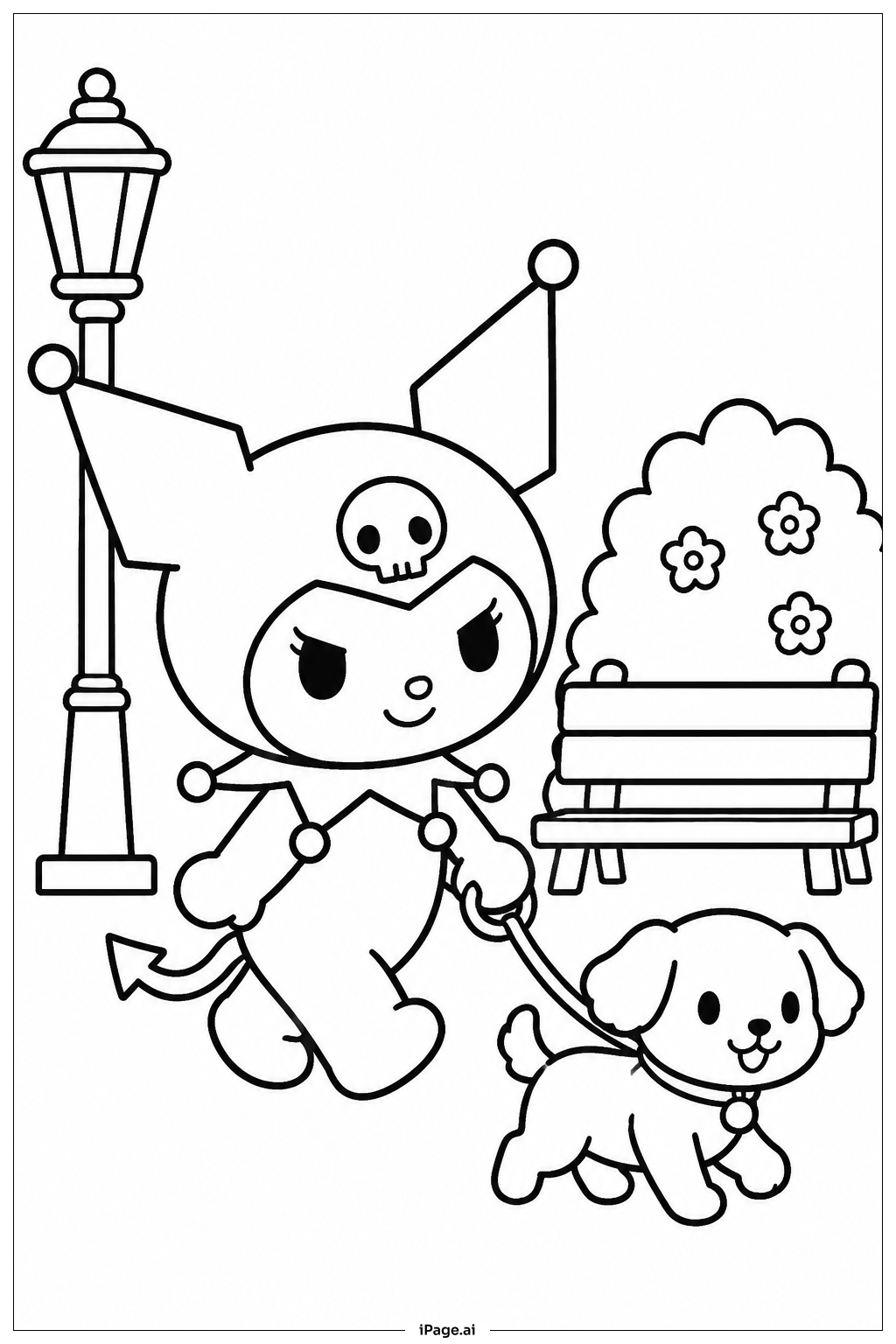
For this coloring page, try using bright and playful colors to bring Kuromi and her dog to life. Kuromi’s hat is usually black with a white skull, so you can use dark shades like black or deep purple for the hat, and add pink for her outfit to keep her classic look. The dog can be colored with soft browns, cream, or white tones depending on your favorite breeds. Feel free to use green or blue for the ground or sky to create a cheerful outdoor scene. Adding colorful details like flowers or a sunny background can make the image even more lively and fun.
Coloring challenges: Which parts are difficult to color and need attention for Kuromi Walking Dog coloring page?
• Fine Details on Kuromi’s Hat: The small skull and jester points on Kuromi’s hat require careful coloring to keep the crisp shapes clear and prevent colors from spilling over.
• Small Dog Features: The dog’s tiny paws, face, and tail need delicate strokes to capture its lively expression and movement.
• Leash and Accessories: The thin leash and any small accessories might be tricky to color without going outside the lines, demanding steady hand control.
• Overlapping Shapes: Where the leash crosses Kuromi’s hand or overlaps with the dog’s body, careful attention is needed to separate the colors distinctly.
• Limited Large Spaces: Most areas to color are small and detailed rather than large open spaces, requiring patience and precision to achieve neat coloring.
Benefits of coloring books: Advantages of drawing Kuromi Walking Dog coloring page
Coloring this Kuromi Walking Dog page helps develop fine motor skills by encouraging children to color within small, detailed spaces. It boosts hand-eye coordination through careful attention to outlines and shapes. The playful subject inspires creativity as kids can choose colors freely and imagine outdoor scenes. Additionally, coloring characters like Kuromi supports emotional expression and relaxation, making it a fun and calming activity. By focusing on the small parts and patterns, children also improve concentration and patience, building skills helpful for other arts or learning goals.