Coloring tips: How to color Kuromi At School coloring page well?
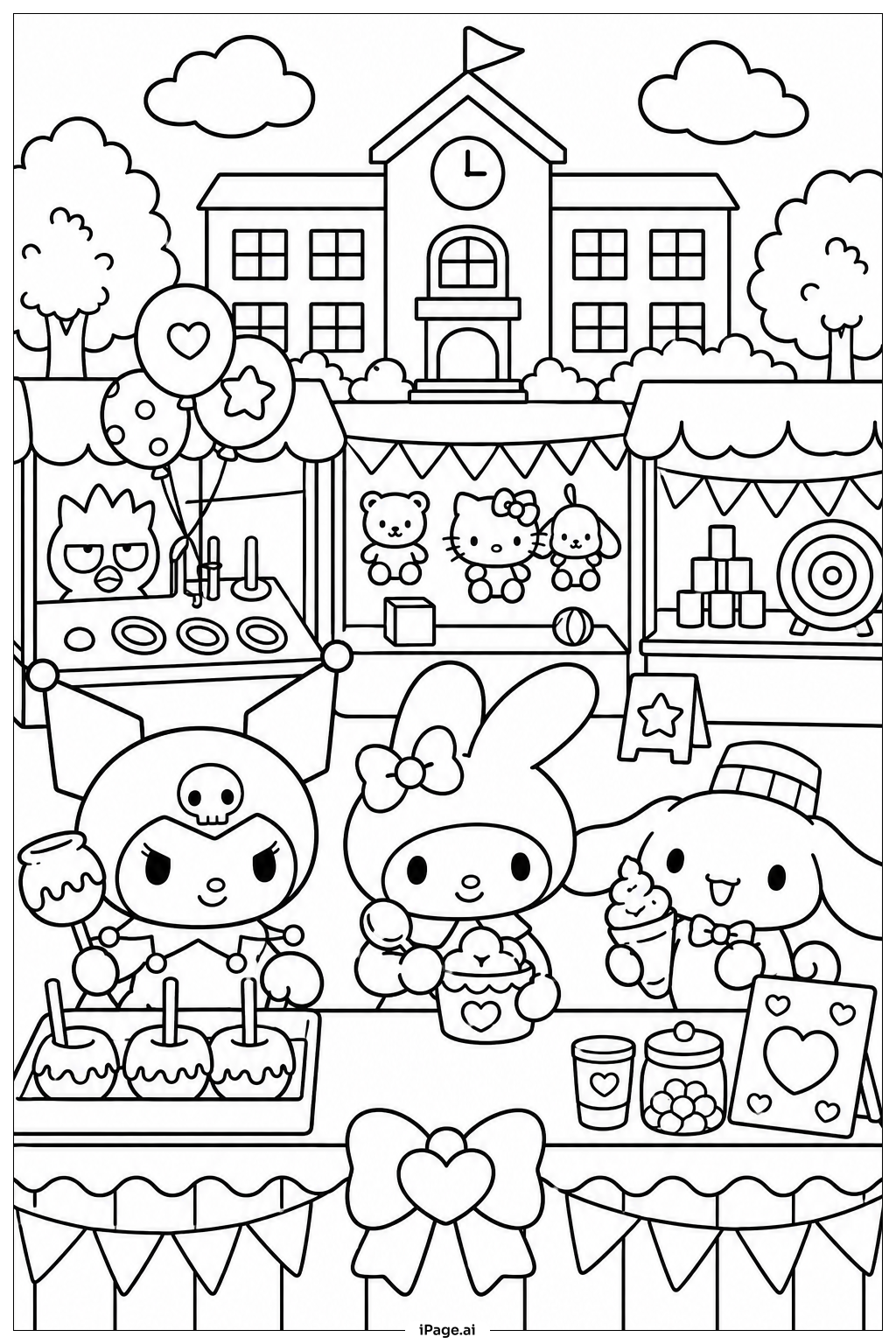
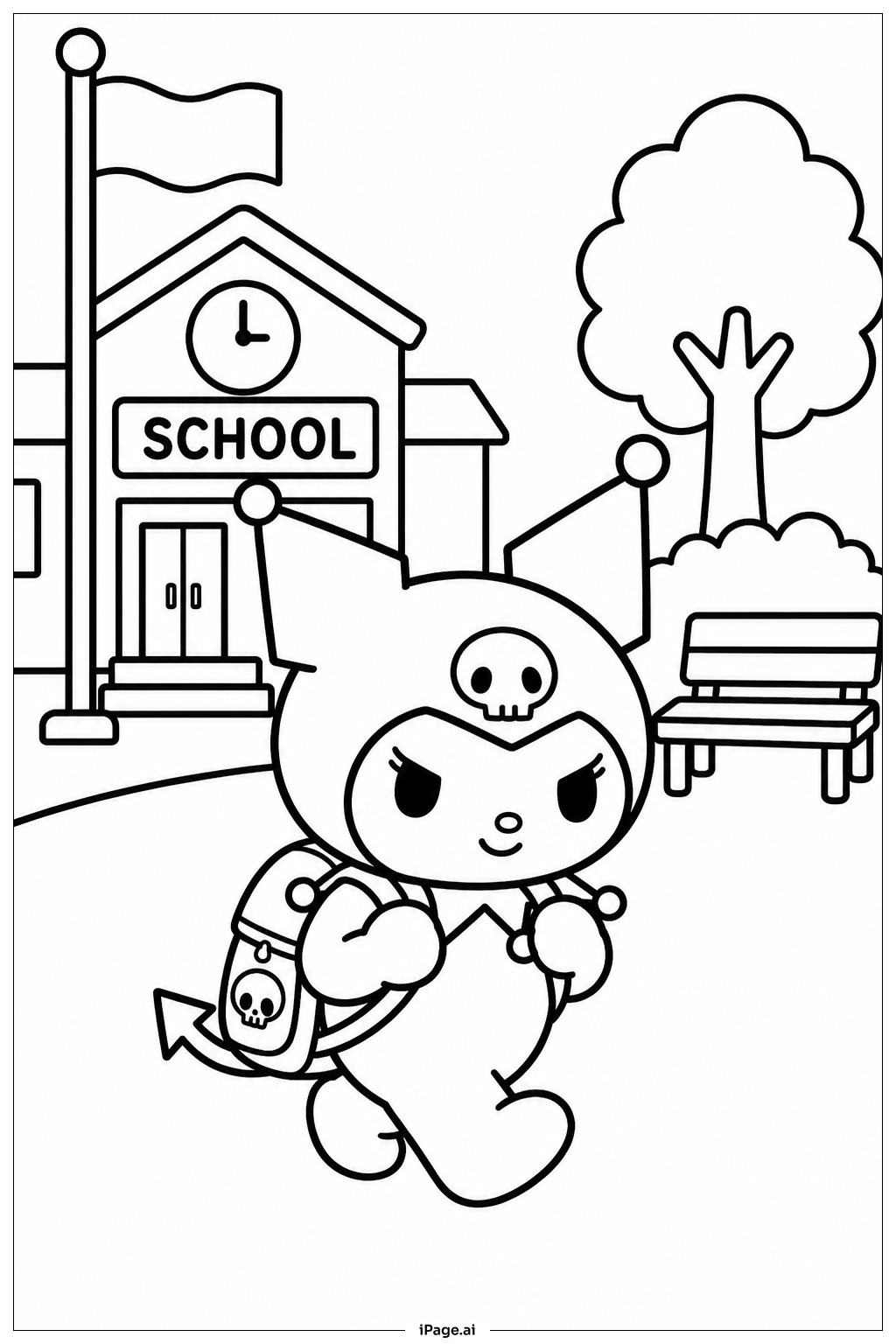
For coloring this image, consider using soft and bright colors to highlight Kuromi’s playful personality. You can color Kuromi’s hat in black and pink, matching her classic look. Her school uniform can be colored with shades of purple, white, or pastel tones to keep it friendly and fun. Use light colors like yellow or sky blue for the classroom walls and desks to create a cheerful background. Don’t forget to color the book and school supplies with vibrant colors like red, green, or orange to add detail and interest. This combination will make the picture lively and inviting.
Coloring challenges: Which parts are difficult to color and need attention for Kuromi At School coloring page?
• Small Details: Kuromi’s jester hat and skull accessory have small shapes that require careful coloring to stay within lines and preserve the design’s clarity. • Mixing Bright and Dark Colors: The contrast between Kuromi’s dark hat and the light environment of the classroom can be tricky to balance without overpowering the image. • School Supplies: Tiny items like pencils and notebooks need steady handwork to color without overlapping the edges. • Uniform Patterns: If any patterns or folds appear in Kuromi’s clothes, shading them to show depth while keeping clean lines can be challenging for younger colorers. • Background Elements: Coloring the classroom while making Kuromi stand out demands attention to color placement and avoiding cluttering the picture with too many bold colors.
Benefits of coloring books: Advantages of drawing Kuromi At School coloring page
Coloring this Kuromi At School image helps develop focus and patience, especially since it contains detailed parts that encourage careful attention. For children aged 4 to 16, it improves fine motor skills by requiring precise hand movements on small areas like the hat and school supplies. The school theme invites kids to think about learning and creativity, promoting positive feelings about education and imagination. Finally, choosing colors and blending shades fosters decision-making and artistic expression, making the coloring experience both fun and educational.