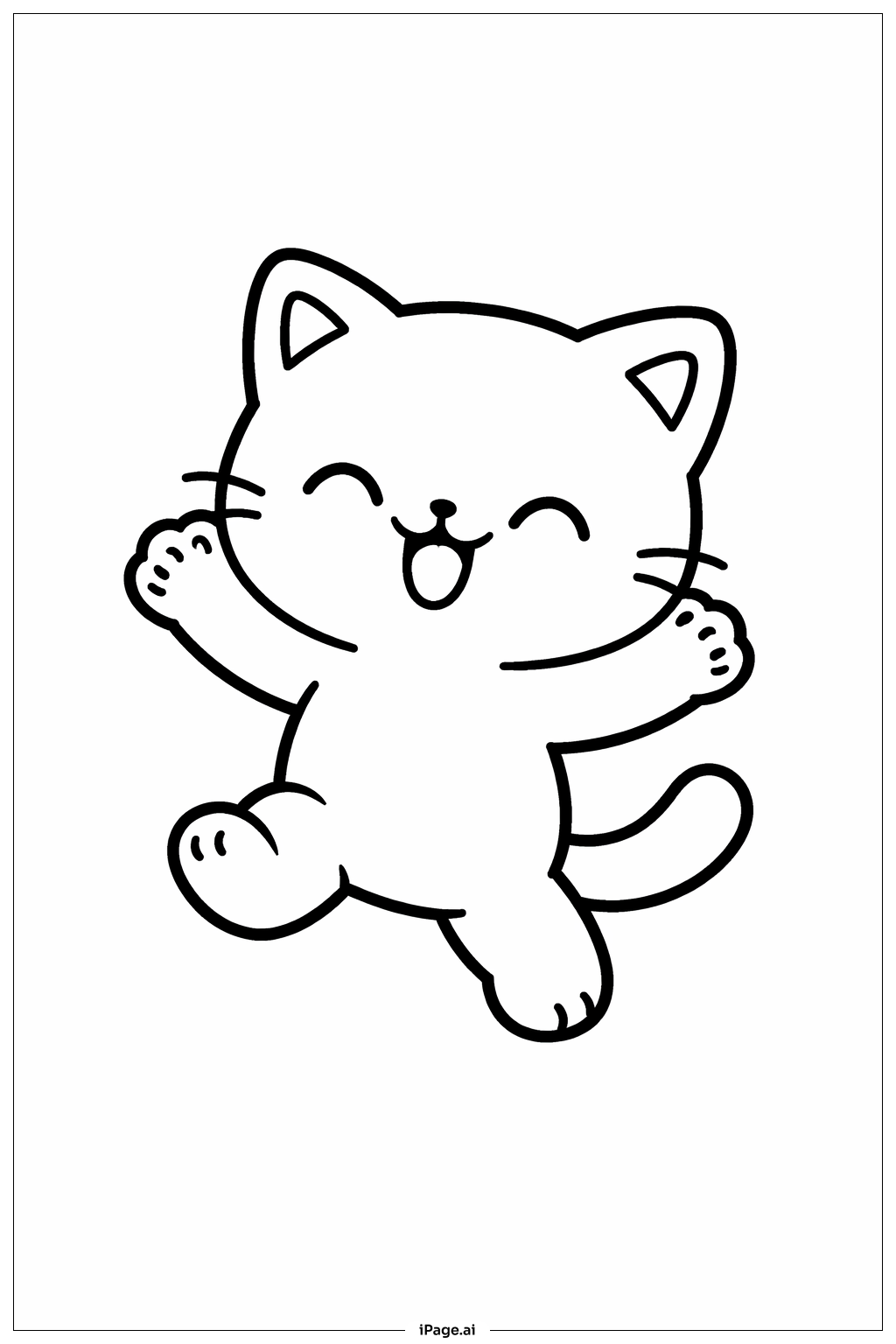
Coloring tips: How to color Kitty Cat Jumping coloring page well?
Start with the cat's body. Light orange, soft tan, or classic gray are great choices for the fur. You can also go with a creamy white for a gentle look. Use a slightly darker shade of the same color to add depth along the belly, paws, and tail edges. For the eyes, try bright green, golden yellow, or sky blue to make them pop. Color the nose a soft pink and the inner ears a pale pink as well. The paw pads can be a light rosy pink. If you want to add a background, think about a sunny yard, a cozy living room, or a grassy garden to show where the kitty is jumping. Use warm yellows and greens to keep the scene cheerful and fun. Feel free to mix colors to create a unique, one-of-a-kind kitty!
Coloring challenges: Which parts are difficult to color and need attention for Kitty Cat Jumping coloring page?
• Fur Texture Details: The kitty's fur has many fine lines showing texture across the body. Staying within these small areas while switching between a base color and a darker shading tone takes patience and a steady hand. Using a sharp colored pencil tip helps a lot here.
• Facial Features: The face is packed with small details — tiny eyes, a little nose, delicate whiskers, and a small mouth. These areas are very close together, so using a fine-tipped marker or a well-sharpened pencil is important to avoid colors bleeding into each other.
• Dynamic Pose Shading: Because the cat is mid-jump, parts of its body like the belly, the undersides of the legs, and the tail curve in ways that benefit from light and shadow. Adding shading to show the three-dimensional shape of a moving body can be tricky for younger colorists.
• Paw and Claw Details: Each paw has small rounded toe shapes and tiny claw outlines. These are very small sections, and keeping each one neatly colored without going over the lines requires careful control, especially for beginners.
• Background Integration: If you choose to add a background, blending it naturally with the jumping cat so it does not look flat or disconnected is a challenge. The white space around the airborne cat needs to feel like open air rather than an empty gap, which requires thoughtful color choices and smooth gradients.
Benefits of coloring books: Advantages of drawing Kitty Cat Jumping coloring page
Coloring this jumping kitty cat page brings a whole bunch of wonderful benefits for kids and beginners alike. First, it helps build fine motor skills. Carefully filling in small areas like the paws, face, and fur lines trains the hand muscles and improves pencil control. Second, it boosts focus and patience. Staying within the lines and working through each section one at a time teaches kids to slow down and concentrate. Third, it sparks creativity. Choosing colors for the fur, eyes, and background lets kids express their own imagination and personal style. There is no wrong answer — every kitty can look unique and special. Fourth, it introduces basic art concepts like shading, color mixing, and depth in a fun, low-pressure way. Kids naturally start experimenting with light and dark tones as they work. Finally, completing the page gives a real sense of achievement and pride. Finishing a coloring page and seeing a bright, beautiful result is a confidence booster that encourages kids to keep creating and exploring art.