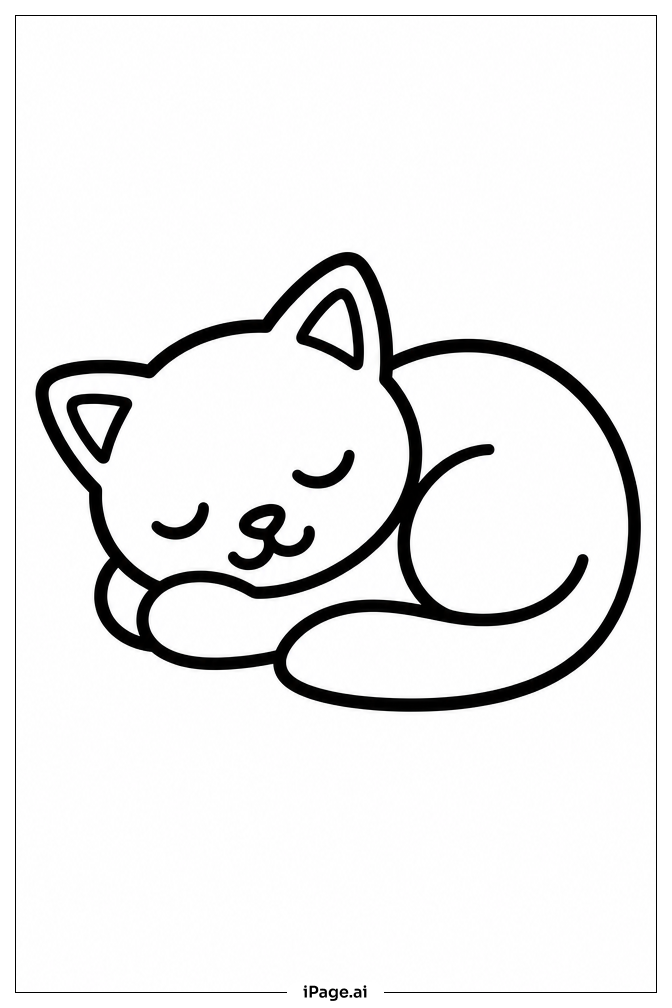
Coloring tips: How to color Sleeping Kitten coloring page well?
Start with the kitten's body fur. Light colors like cream, soft orange, tan, or gray work beautifully for a natural look. You can also use fantasy colors like lavender or sky blue for a magical feel. Use a slightly darker shade of the same color to add depth along the edges of the fur and where the tail overlaps the body. Color the nose a pale pink and the inner ears a soft rosy pink. Leave the whiskers white or use a light silver pencil. For the "zzz" symbols, try a soft blue or purple to give them a dreamy, nighttime feel. Add a warm background color like light yellow or pale blue to make the sleeping kitten stand out. You can even draw a tiny pillow or blanket beneath the kitten for extra fun. Take your time and enjoy the process. There is no wrong way to color this sweet scene.
Coloring challenges: Which parts are difficult to color and need attention for Sleeping Kitten coloring page?
• Fur Texture and Layering: The kitten's body is covered in flowing fur lines that curve and overlap in multiple directions. Coloring these lines smoothly without making the fur look flat requires careful blending. You need to follow the direction of the lines and gradually build up layers of color to create a soft, realistic texture. This takes patience and a steady hand, especially for younger artists.
• Small Facial Details: The kitten's face includes tiny features such as a small nose, a delicate mouth, closed eyelids with fine lashes, and thin whiskers. These details are very close together in a small area. Coloring them neatly without going outside the lines can be tricky. Using a fine-tipped colored pencil or a thin marker is recommended for best results.
• Tail Overlap and Shading: The tail curves around the body and overlaps in a way that creates a layered effect. To make the image look three-dimensional, you need to use a darker shade where the tail passes behind or under the body. Understanding which area sits in front and which sits behind helps make the drawing look more realistic.
• "Zzz" Symbol Placement: The small floating "zzz" letters near the kitten require careful coloring to keep them looking clean and separate from the background. If the background color is too similar to the letters, they can get lost. Choosing a contrasting color for either the symbols or the background helps them stand out clearly.
• Background Balance: The open background space around the kitten needs to be filled thoughtfully. Too many colors or overly bold shades can distract from the cute kitten at the center. Choosing soft, calm tones keeps the focus on the sleeping subject and gives the whole image a peaceful, harmonious feel.
Benefits of coloring books: Advantages of drawing Sleeping Kitten coloring page
Coloring this Sleeping Kitten page offers a wide range of wonderful benefits for kids and beginners alike. First, it helps build fine motor skills. Carefully filling in the kitten's tiny facial features and delicate fur lines trains small muscles in the hand and improves pencil control. Second, it encourages creativity. Choosing colors for the fur, background, and dreamy "zzz" symbols lets each child express their own imagination and personal style. No two finished pages will ever look the same. Third, it promotes focus and patience. The soft, detailed lines of the kitten's coat require slow, mindful coloring, which helps children practice sitting still and concentrating on a task. Fourth, it has a calming effect. The peaceful subject of a sleeping kitten naturally creates a relaxed, soothing mood. Coloring this scene can help reduce stress and quiet a busy mind, making it a perfect activity before bedtime or after a long school day. Finally, completing the page gives children a strong sense of pride and accomplishment. Finishing a beautiful piece of art, no matter how simple, builds confidence and motivates kids to keep creating. This little sleeping kitten is a perfect starting point for any young artist.