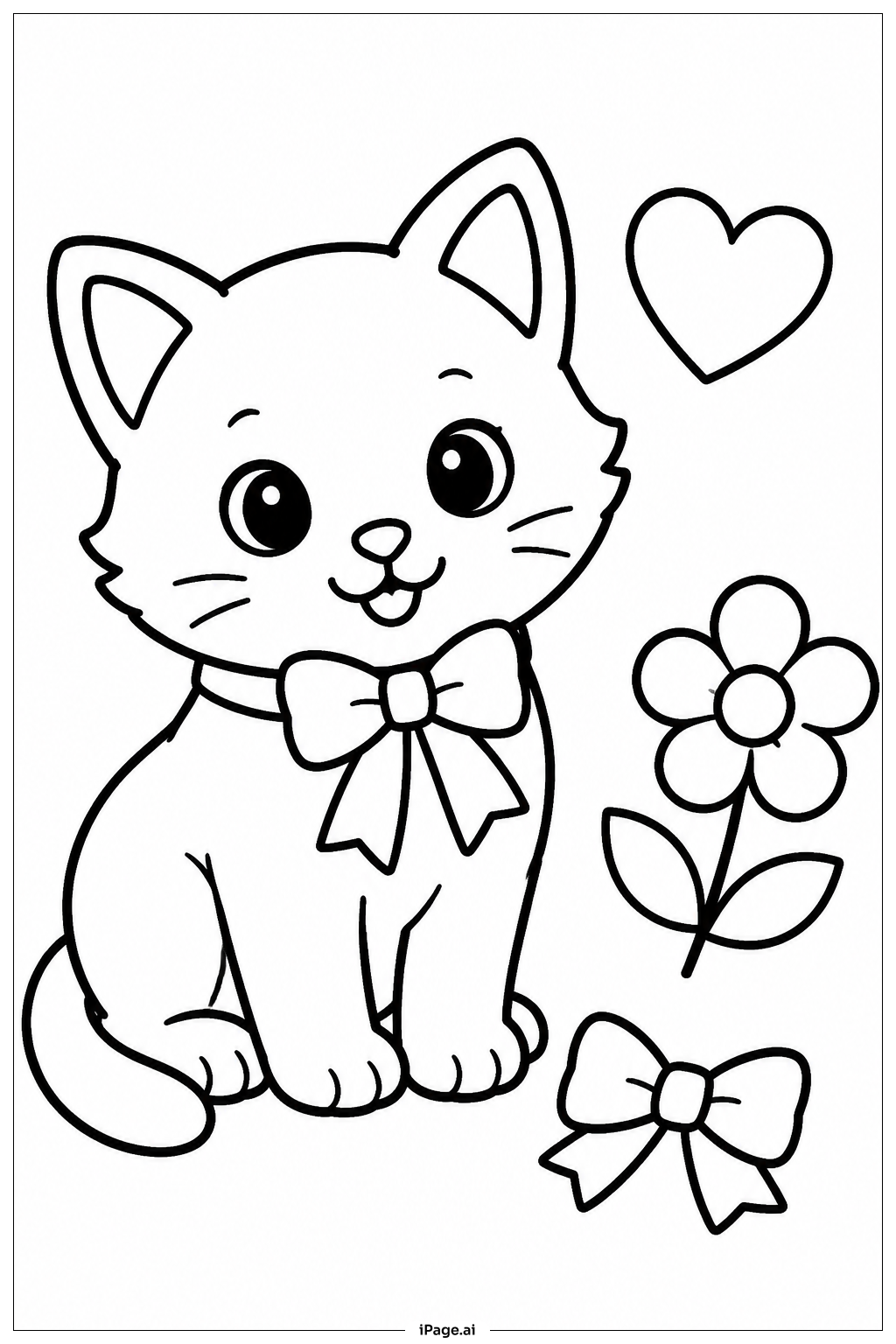
Coloring tips: How to color Kitten With Ribbon coloring page well?
Start by choosing a base color for the kitten's fur. You can make it orange, gray, tan, or even white — any color works! Use light pencil strokes to build the fur texture gradually. Apply a slightly darker shade along the edges of the body and face to give the fur more depth and a fluffy look. For the ribbon, pick a bright, cheerful color like red, pink, or blue to make it stand out. Color the bow with care, leaving a small highlight area to make it look shiny. Use soft yellow or light green for the background to keep the focus on the kitten. The eyes can be colored in bright green, blue, or amber — add a tiny white dot in each eye to make them look alive and sparkling. Take your time with the small details like the whiskers and the tiny nose. Light pink works great for the nose and inner ears. Have fun mixing colors and making this kitten your own!
Coloring challenges: Which parts are difficult to color and need attention for Kitten With Ribbon coloring page?
• Fur Texture and Direction: One of the trickiest parts is coloring the kitten's fur realistically. Fur does not lie flat — it flows in different directions across the body, face, and tail. Coloring each section in the correct direction using short, light strokes takes patience and a steady hand. Beginners may find it hard to avoid making the fur look stiff or flat.
• Shading and Depth: To make the kitten look three-dimensional and fluffy, you need to add darker tones in shadowed areas such as under the chin, along the sides, and beneath the tail. Getting this shading smooth and natural without harsh lines is a real challenge, especially for younger or less experienced colorists.
• Ribbon and Bow Details: The ribbon tied around the kitten's neck has folds and curves that require careful attention. Each fold catches light differently, so you will need both a base color and a darker shade to show depth. Keeping the bow looking neat and well-defined while also making it look soft and fabric-like is a balancing act.
• Small Facial Features: The kitten's face contains several tiny details — the nose, mouth, whiskers, and eyes — all packed closely together. Coloring these without smudging or going outside the lines requires fine-tip tools and a very careful touch. The eyes especially need multiple layers and a small highlight to look expressive and lively.
• Smooth Blending: Transitioning smoothly between light and dark tones across the kitten's rounded body is difficult. Uneven blending can make the figure look patchy. Using colored pencils in circular or layered strokes helps, but achieving a truly smooth gradient takes practice.
Benefits of coloring books: Advantages of drawing Kitten With Ribbon coloring page
Coloring this sweet Kitten With Ribbon page offers many wonderful benefits for kids and beginners alike. First, it helps build fine motor skills. Carefully staying within the lines and adding small details like fur strokes and ribbon folds trains the hands and fingers for better control and coordination. This skill supports writing and other everyday tasks too.
Second, it encourages creativity. Choosing fur colors, ribbon shades, and background tones gives colorists the freedom to express themselves. There is no single right answer — every kitten can look unique and special.
Third, it teaches patience and focus. A detailed image like this one cannot be rushed. Kids learn to slow down, pay attention, and work through each section one step at a time. This builds concentration skills that are useful in school and daily life.
Fourth, coloring is a great stress reliever. The calm, repetitive motion of coloring is soothing and relaxing. It helps children and adults alike unwind after a busy day.
Finally, completing this page gives a genuine sense of pride and accomplishment. Finishing a detailed piece of art — and seeing how beautifully it turns out — builds self-confidence and motivates kids to try more creative projects. It is a simple, joyful activity with real, lasting benefits.