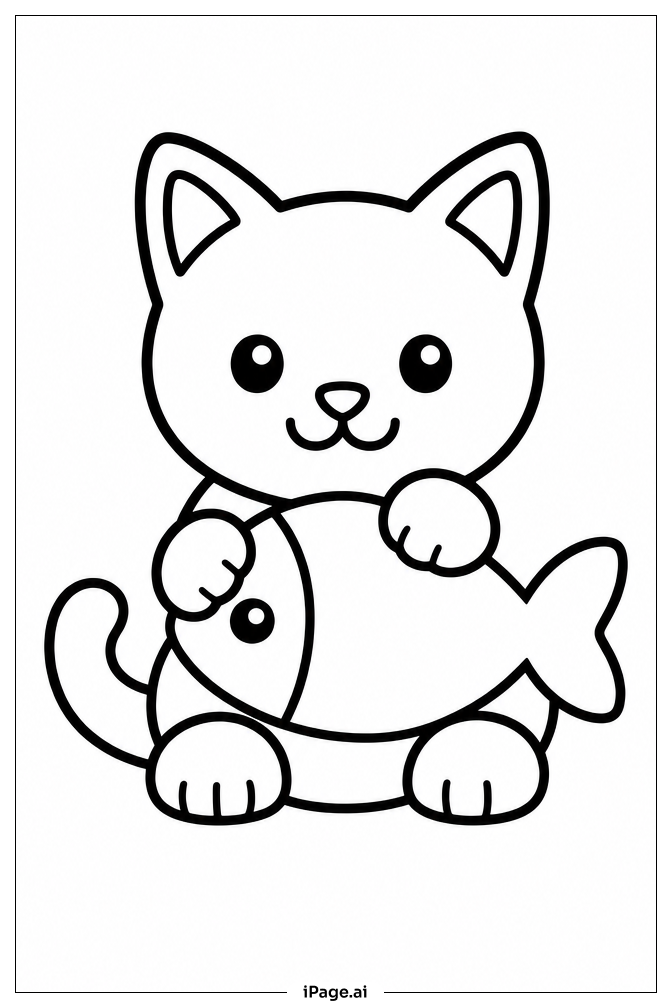
Coloring tips: How to color Kitten With Fish Toy coloring page well?
Start with the kitten's body using soft, warm colors. Light orange, cream, or golden yellow work beautifully for the fur. You can add darker stripes in brown or amber to give the fur texture and depth. Use a soft pink for the inner ears and the nose. Color the eyes in bright green, blue, or amber to make them pop. For the fish toy, try vibrant colors like red, orange, or teal to make it stand out against the kitten. Add small details like shiny dots on the eyes for extra life. Use light blue or purple shading around the background to create a soft, playful atmosphere. Kids can keep it simple with flat colors, while older colorists can try blending and shading for a more realistic look. Have fun and let your imagination guide your color choices!
Coloring challenges: Which parts are difficult to color and need attention for Kitten With Fish Toy coloring page?
• Fur Texture and Layering: The kitten's fur requires careful layering to look realistic and soft. Using a single flat color will make the fur appear dull. To achieve depth, colorists need to apply a base color first and then add darker tones along the edges and lighter highlights near the center. This technique can be tricky, especially for younger children who are still developing fine motor control.
• Small Facial Features: The kitten's face includes tiny details like the eyes, nose, whiskers, and mouth. These areas are small and close together, which makes them difficult to color without accidentally overlapping lines. Choosing the right colors for each feature and staying within the boundaries requires patience and a fine-tipped coloring tool.
• Fish Toy Details: The fish toy has its own set of small features such as fins, scales, and eyes. Keeping the toy's colors distinct and vibrant while ensuring they complement the kitten's colors without clashing is a design challenge. Younger colorists may find it hard to color such a small object neatly.
• Paw and Claw Precision: The kitten's extended paw and visible claws are detailed areas that require careful attention. The claws are narrow and close to the paw pads, making it easy to color outside the lines. A sharp pencil or fine marker is recommended for this section.
• Overall Color Harmony: Choosing colors that work well together across the whole image is a subtle but real challenge. Balancing the warm tones of the kitten with the bright colors of the fish toy, while keeping the overall image visually pleasing, takes thoughtful planning and a good eye for color coordination.
Benefits of coloring books: Advantages of drawing Kitten With Fish Toy coloring page
Coloring this playful kitten image offers a wide range of benefits for children and young artists. First, it helps improve fine motor skills. Carefully staying within the lines and handling coloring tools strengthens hand muscles and builds coordination that is useful in everyday tasks like writing.
Second, it encourages creativity and self-expression. Choosing colors for the kitten's fur, eyes, and fish toy allows children to make their own artistic decisions and develop a personal sense of style.
Third, it promotes focus and concentration. Completing a detailed coloring page requires attention and patience, helping children practice sitting still and working through a task from start to finish.
Fourth, coloring can be a calming activity. The repetitive, gentle motion of coloring helps reduce stress and anxiety, creating a relaxing experience that is great after a busy school day.
Fifth, this particular image introduces children to the theme of animal play and pet behavior, gently sparking curiosity about cats and the natural world. It can open conversations about pets, kindness to animals, and imaginative play.
Overall, this kitten coloring page is a fun, enriching activity that supports both creative and developmental growth in a joyful and approachable way.