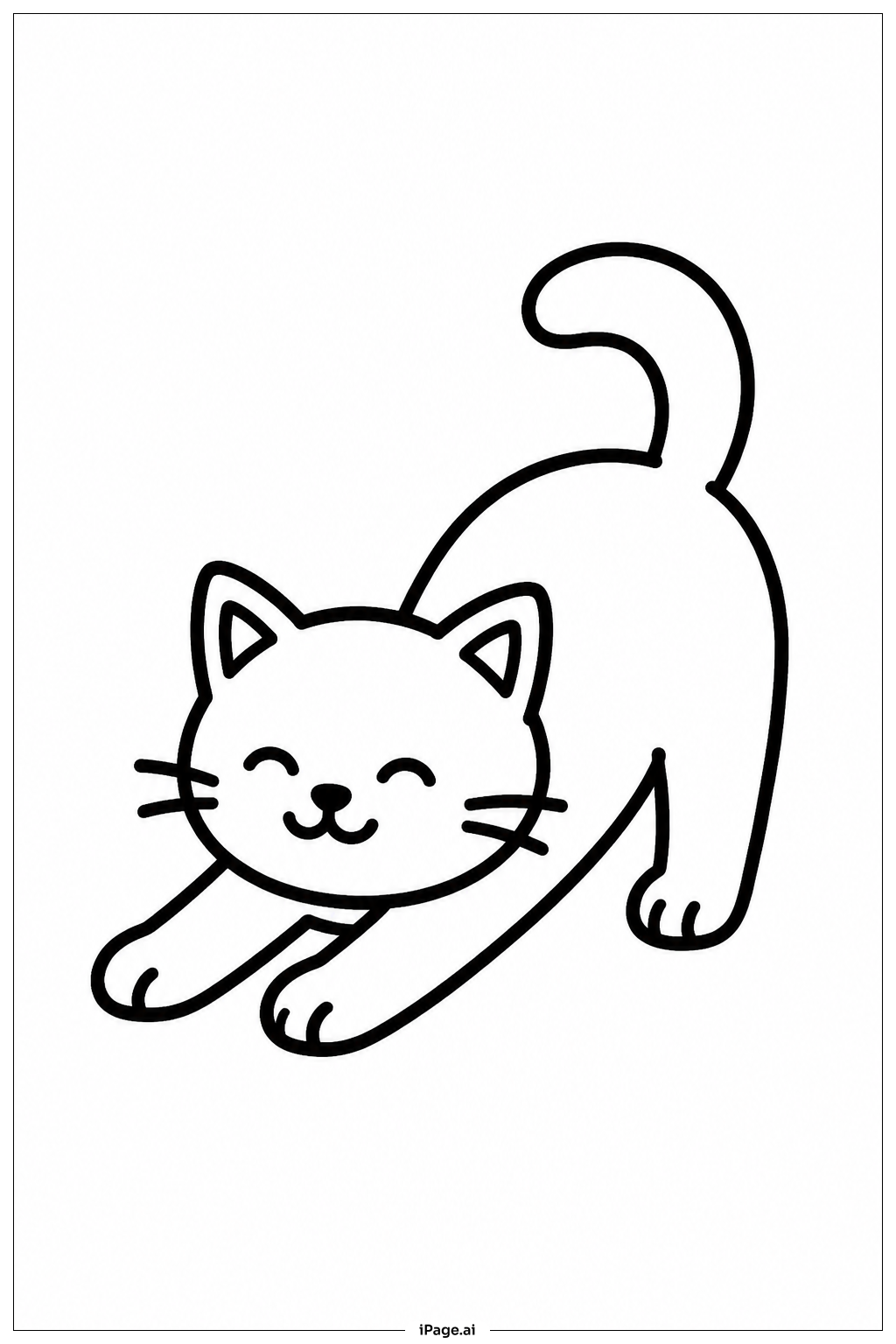
Coloring tips: How to color Kitten Stretching coloring page well?
Start with the kitten's main body using soft shades like cream, orange, gray, or white. For a classic tabby look, add stripes in darker tones across the back and tail. The paw pads can be colored in pink or dark gray for a realistic touch. Consider using light pink for the inner ears and nose to add warmth. The eyes, though closed, can have a darker outline. Layer different shades of the same color family to create depth in the fur, making the kitten look more three-dimensional. Use light strokes for a fluffy appearance. The ground can be colored in soft browns or greens, or left simple to keep focus on the kitten. Colored pencils work beautifully for blending the fur textures smoothly.
Coloring challenges: Which parts are difficult to color and need attention for Kitten Stretching coloring page?
• Fur Texture Details: The kitten's fur contains many fine lines that create a fluffy, realistic appearance. Coloring these areas requires patience and careful attention to avoid going outside the lines. Young children may find it challenging to color each small section without the colors bleeding together. Using light pressure with colored pencils or markers helps maintain the delicate fur texture while building up color gradually.
• Small Facial Features: The kitten's face includes tiny details such as closed eyes, a small nose, whiskers, and inner ear sections. These small areas require precision and steady hands. Children may struggle to color within these tight spaces without accidentally covering important details. Fine-tipped coloring tools like thin markers or sharpened colored pencils work best for these intricate facial elements.
• Paw Pad Precision: The individual paw pads on the stretched legs are small and require careful coloring to distinguish them from the rest of the paw. Keeping each pad a distinct color while maintaining clean edges can be tricky. This detail-oriented work helps develop fine motor control but may frustrate younger colorists.
• Shading and Dimension: To make the kitten look realistic and three-dimensional, colorists need to understand where to add darker and lighter shades. The curved body, arched back, and rounded limbs all require thoughtful shading techniques. Understanding light sources and applying gradual color transitions takes practice and spatial awareness that develops over time.
Benefits of coloring books: Advantages of drawing Kitten Stretching coloring page
Coloring this kitten stretching image offers wonderful developmental benefits for children. The detailed fur texture helps improve fine motor skills and hand-eye coordination as they carefully fill in small spaces. The various elements, from whiskers to paw pads, encourage focus and concentration, building patience and attention span. Children learn about animal anatomy and can explore creative color choices, whether realistic or imaginative. The peaceful, gentle nature of the stretching kitten promotes a calming coloring experience, reducing stress and anxiety. This activity also provides an opportunity to discuss pets, animal care, and empathy for living creatures. Successfully completing this detailed image boosts confidence and gives children a sense of accomplishment. It's an excellent way to spend quiet time while developing important cognitive and creative skills.