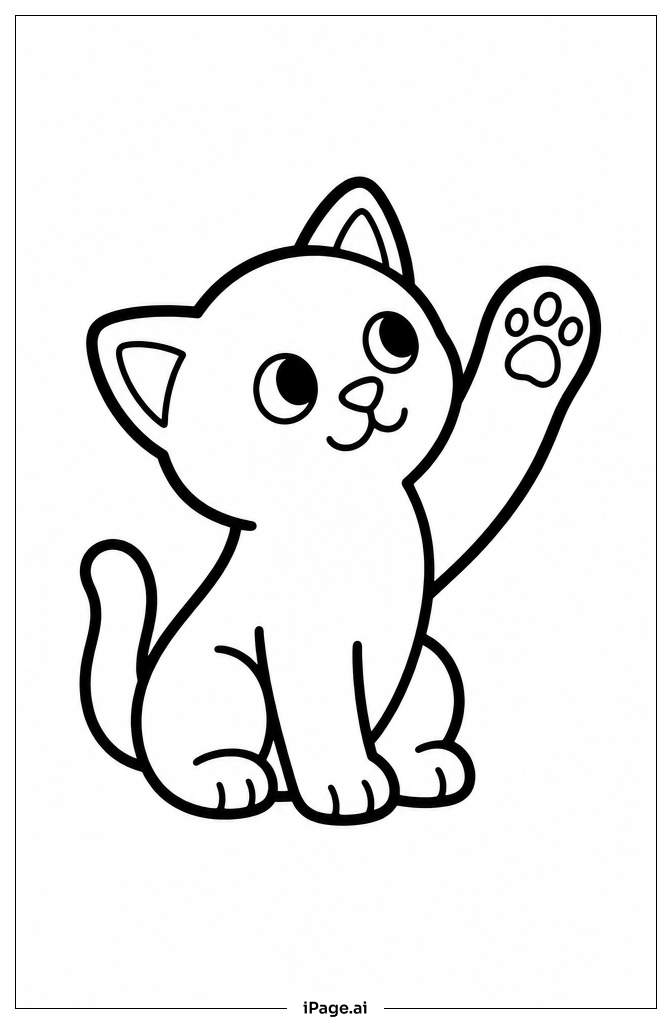
Coloring tips: How to color Kitten Reaching Up coloring page well?
Start with the kitten's body using a light base color. Common choices include orange, gray, brown, cream, or white — pick your favorite cat color! Use a slightly darker shade of the same color to add fur texture along the edges of the body, legs, and tail. This gives the kitten a soft, fluffy look.
For the eyes, try bright green, blue, or golden yellow to make them pop. Add a small white highlight dot in each eye to bring them to life.
The inner ears look great in a soft pink. Use the same pink for the nose and keep the whiskers light gray or white.
If you want to add a background, think about a sunny window sill, a garden, or a cozy living room. Soft, warm colors like light yellow or sky blue work well to set a cheerful mood.
Use colored pencils for smooth blending on the fur, and markers for bold outlines. Crayons are great for younger colorists who want bright, solid colors. Take your time and have fun with it!
Coloring challenges: Which parts are difficult to color and need attention for Kitten Reaching Up coloring page?
Coloring this kitten image is fun, but it does come with a few tricky areas to watch out for. Here are the main challenges:
• Fur Texture and Shading: Creating realistic-looking fur requires layering colors carefully. You need to use short, light strokes that follow the direction of the fur growth. Blending a base color with a darker shade along the edges helps add depth, but it takes patience and a steady hand to avoid a flat or messy result.
• Small Facial Details: The kitten's face has many tiny features packed closely together — the eyes, nose, whiskers, and mouth. Coloring these neatly without smudging or going outside the lines can be difficult, especially for younger colorists. Using fine-tipped tools like colored pencils works best here.
• Paw and Claw Outlines: The outstretched paws have small, curved lines indicating individual toes and claws. These tight spaces are hard to fill precisely. Rushing through this area often leads to colors bleeding into each other or details getting lost.
• Eye Highlights and Expression: Getting the eyes to look bright and expressive requires careful color placement. The iris, pupil, and highlight each need their own defined space. Leaving a tiny white dot for the highlight is easy to forget but makes a big difference in bringing the kitten to life.
• Body Proportions and Shading Balance: The kitten's stretched pose means one side of the body may need more shading than the other to suggest the angle and movement. Keeping the shading balanced without making the figure look flat or oddly shaped is a subtle but real challenge for beginners.
Benefits of coloring books: Advantages of drawing Kitten Reaching Up coloring page
Coloring this sweet kitten reaching up offers a wonderful range of benefits for kids and beginners alike.
First, it helps build fine motor skills. Staying inside the small lines around the paws, whiskers, and face trains hand control and precision — skills that carry over into writing and other detailed tasks.
Second, it encourages creativity. Choosing colors for the fur, eyes, and background gives colorists the freedom to imagine their own unique kitten. There are no wrong choices, which builds confidence.
Third, it supports focus and concentration. The detailed areas of this image — like the tiny facial features and textured fur — require attention and patience. Practicing this kind of calm, focused work is great for kids who need help slowing down and staying on task.
Fourth, coloring animals like this kitten can spark a love of nature and empathy for animals. It's a gentle way to connect with the animal world in a creative, hands-on way.
Finally, finishing a coloring page gives a real sense of accomplishment. Seeing a completed, colorful kitten at the end of the session boosts self-esteem and motivates kids to keep creating. It's a simple activity with genuinely meaningful rewards.