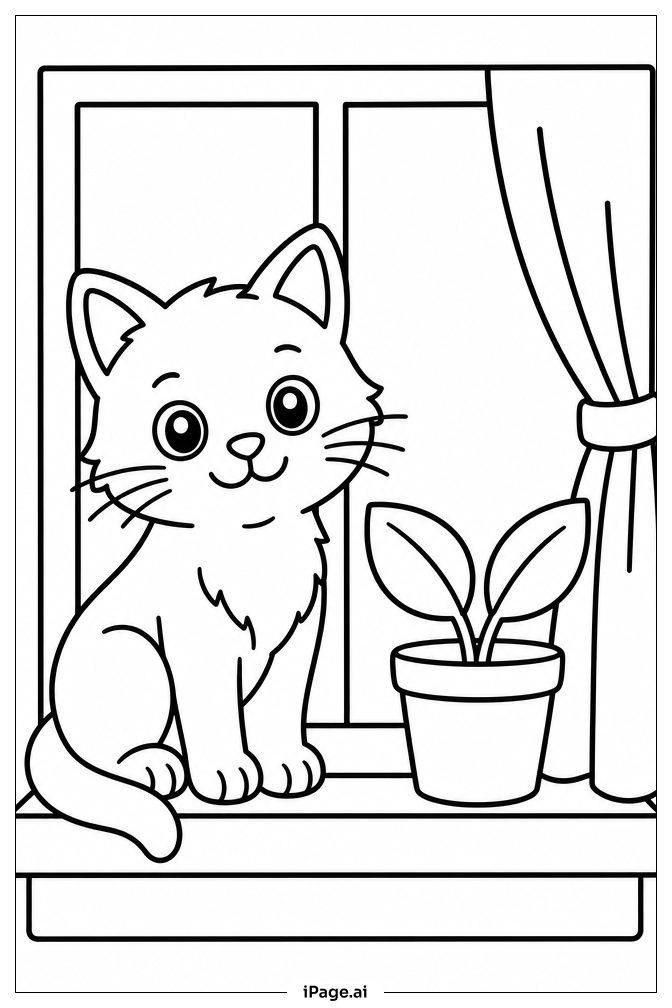
Coloring tips: How to color Kitten On Window Sill coloring page well?
Start with the kitten's fur. Light orange and cream tones work beautifully for a classic tabby look. You can also try gray, white, or even a calico mix of orange, black, and white. Use light strokes to create a soft, fluffy texture. For the eyes, bright green or golden yellow will make them pop. Color the window frame white or light brown to keep it looking clean and natural. The curtains can be soft yellow, pale blue, or lavender for a cozy indoor feel. For the potted plants, use fresh greens with earthy brown pots. The outside scene through the window can be painted in soft sky blues and gentle greens. Keep the overall color palette warm and peaceful to match the relaxed mood of the image. Children can experiment with fun patterns on the curtains or try different fur colors to make the kitten uniquely their own.
Coloring challenges: Which parts are difficult to color and need attention for Kitten On Window Sill coloring page?
• Kitten Fur Texture: One of the trickiest parts is making the kitten's fur look soft and fluffy rather than flat. To do this well, you need to use short, gentle strokes that follow the direction the fur grows. Blending lighter and darker shades of the same color adds depth and makes the fur feel three-dimensional. Rushing through this section can make the kitten look stiff or plain.
• Facial Details: The kitten's face has many small features packed close together, including the eyes, nose, mouth, and whiskers. Coloring the eyes neatly without going outside the lines requires a steady hand and a fine-tipped tool. The whiskers are especially delicate. Leaving them white or very lightly colored is often the best approach, but it takes careful planning before you begin.
• Window Frame and Glass: The window involves straight lines and sections that represent glass or light. Keeping these areas even and clean while showing the difference between the frame, the glass, and the outside view can be challenging. Using lighter, cooler tones for the glass area helps suggest transparency without confusion.
• Curtain Folds: Curtains have flowing curves and overlapping folds. Shading these folds correctly requires understanding where the light falls. Darker tones in the recessed areas and lighter tones on the raised parts create a realistic fabric effect.
• Background Scene: The view outside the window needs to feel distant and soft. Using lighter, less saturated colors for the outdoor elements helps push them into the background so the kitten remains the clear focal point of the image.
Benefits of coloring books: Advantages of drawing Kitten On Window Sill coloring page
Coloring this kitten image brings a wide range of benefits for children and beginners alike. Working on the kitten's soft fur encourages kids to practice smooth, even strokes and to experiment with blending colors, which builds fine motor skills over time. Staying within the detailed lines of the face, paws, and window frame helps improve hand-eye coordination and concentration. This image is also a wonderful way to explore color choices freely. Kids can invent their own kitten colors or recreate a pet they love, which sparks creativity and personal expression. The calm, cozy scene of a kitten resting on a window sill creates a peaceful coloring experience that can help reduce stress and encourage mindfulness. Focusing quietly on a single image for a period of time builds patience, which is a valuable skill for young learners. The variety of textures in this image, including fur, fabric, glass, and plants, gives colorists a chance to practice different coloring techniques within one page. Completing the full image also gives children a strong sense of accomplishment and pride in their work. Overall, this is a warm and inviting page that makes coloring both fun and genuinely rewarding.