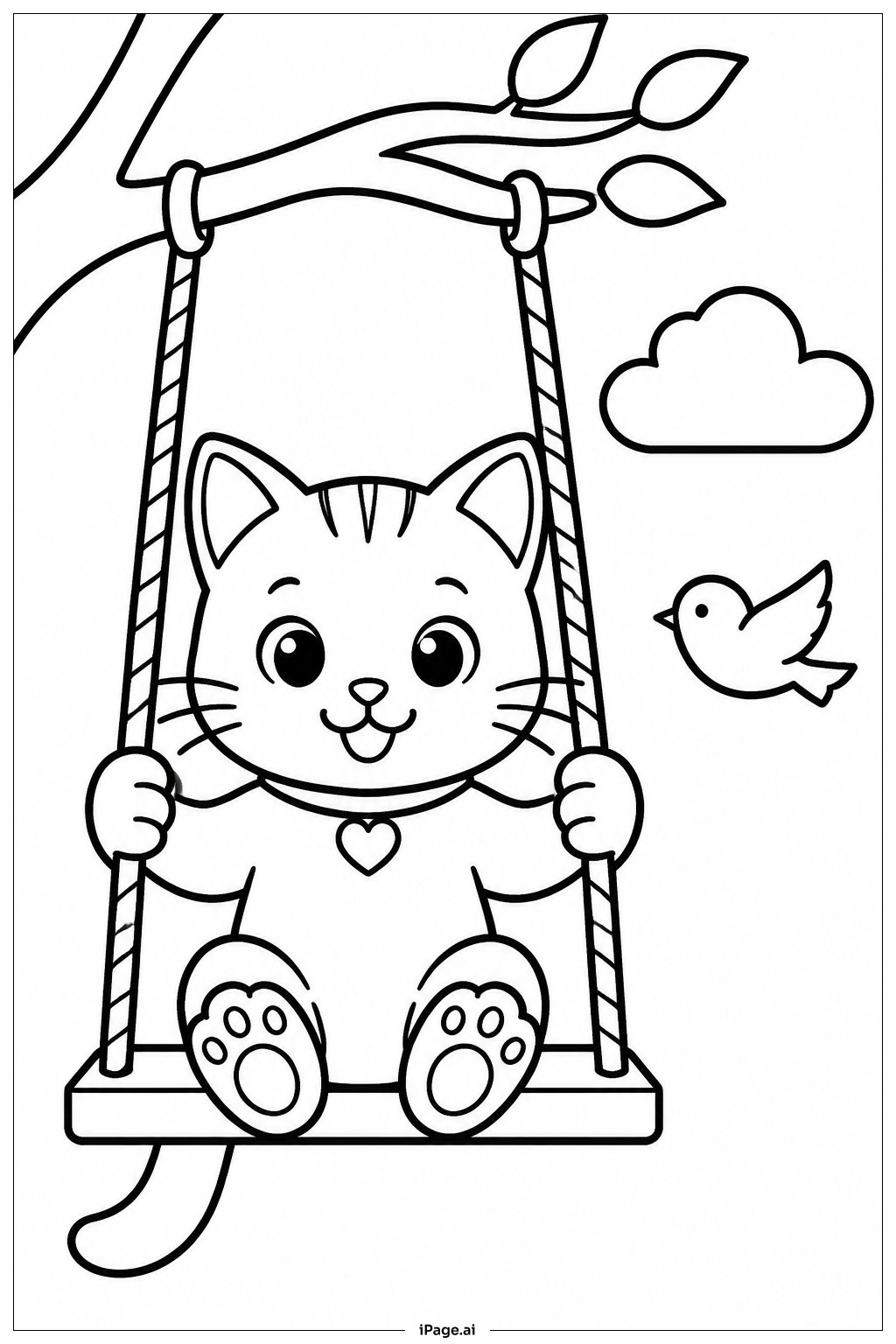
Coloring tips: How to color Kitten On Swing coloring page well?
Start with the kitten's body using soft, warm shades like cream, light orange, or pale gray to give it a fluffy, realistic look. Use a slightly darker shade on the edges of the fur to add depth and dimension. Color the eyes with bright shades like green, blue, or amber to make them pop with life. For the swing's wooden seat, try a warm golden brown, and use tan or rope-brown for the hanging ropes. The background flowers can be colored in cheerful pinks, purples, and yellows, while the leaves work beautifully in various shades of green. Keep lighter colors in the center and darker tones toward the edges to create a glowing, storybook feel. Use blending techniques if you have colored pencils to make the fur look soft and smooth. This image is great for experimenting with color layering and shading in a fun, low-pressure way.
Coloring challenges: Which parts are difficult to color and need attention for Kitten On Swing coloring page?
• Fur Texture Details: The kitten's fur is made up of many small, overlapping lines that suggest softness and volume. Coloring each section while maintaining a consistent fur direction takes patience. Using short, feathery strokes with colored pencils or a fine brush will help capture the fluffy texture without losing the delicate linework.
• Small Facial Features: The kitten's face includes tiny details like whiskers, a small nose, and expressive eyes. These areas are very small and easy to color outside the lines. Using fine-tipped tools and working slowly in this area will help keep the face looking clean and expressive.
• Rope and Swing Details: The twisted rope texture on the swing requires careful attention to stay within the narrow lines. Alternating light and shadow tones along the rope helps give it a three-dimensional look, but this demands a steady hand and controlled coloring.
• Background Floral Elements: The flowers and leaves in the background are layered and close together. Keeping each element a distinct color without muddying the surrounding areas can be tricky, especially where shapes overlap. Planning your color choices in advance and leaving thin uncolored borders between shapes can help separate them visually.
• Overall Color Balance: Because the kitten is the main focus, its colors should stand out from the background. Balancing warm kitten tones against the cooler or brighter background colors without making either too overpowering requires thoughtful color selection and gradual layering throughout the entire page.
Benefits of coloring books: Advantages of drawing Kitten On Swing coloring page
Coloring this adorable Kitten On Swing image offers a wide range of wonderful benefits for children and young artists. First, it helps build fine motor skills as kids carefully color within the small, detailed lines of the kitten's fur, face, and swing. This kind of focused hand movement strengthens finger control and improves pencil grip over time. Second, it encourages creativity and color exploration. Choosing fur colors, flower shades, and background tones lets children express their imagination freely. There are no wrong answers, which builds confidence and a love for art. Third, coloring this peaceful, cheerful scene promotes relaxation and emotional calm. Focusing on a gentle, happy image like a kitten on a swing helps reduce stress and supports mindfulness, even in young children. Fourth, it introduces basic art concepts like shading, blending, and color balance in a playful, accessible way. Kids naturally learn how colors interact as they work through the image. Finally, completing the page gives a strong sense of accomplishment and pride, encouraging children to take on more creative challenges with enthusiasm and joy.