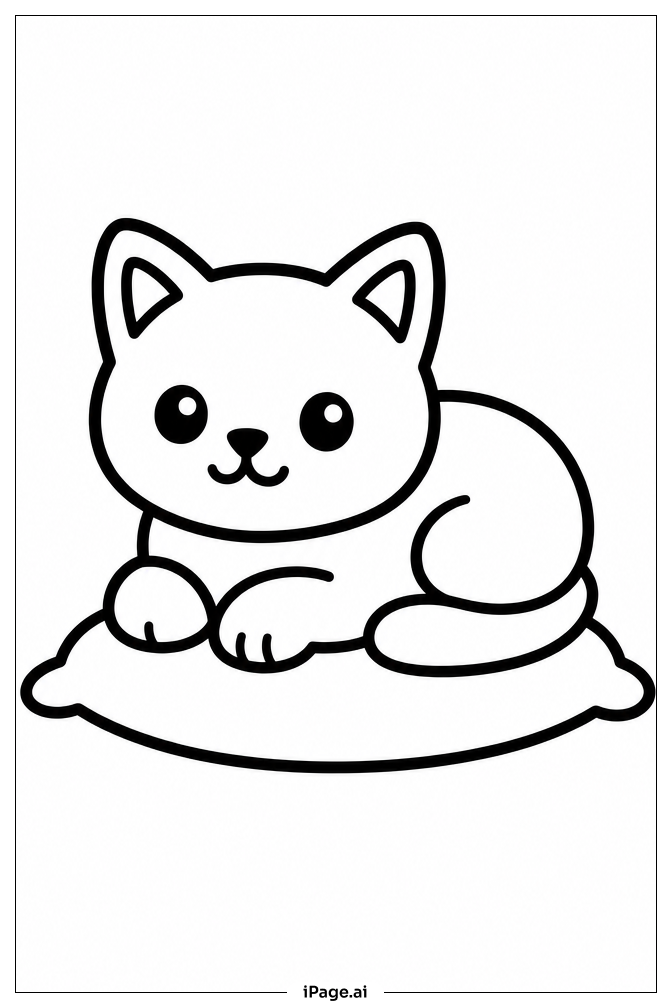
Coloring tips: How to color Kitten On Pillow coloring page well?
For coloring this image, start by choosing soft and gentle colors for the kitten’s fur, such as light gray, cream, or a warm orange. You can add subtle shading to highlight the fluffiness of the kitten’s fur. For the pillow, try pastel colors like soft pink, baby blue, or light lavender to create a cozy and inviting look. You might also consider coloring the pillow with patterns, such as stripes or polka dots, to add some playful detail. Use light shades for the background to keep the focus on the kitten and pillow. Feel free to mix colors creatively to make the scene lively and warm.
Coloring challenges: Which parts are difficult to color and need attention for Kitten On Pillow coloring page?
• Fur Texture: Capturing the soft, fluffy texture of the kitten’s fur can be challenging. It requires gentle shading and layering of colors to show depth and softness.
• Pillow Folds: The pillow has several folds and creases that need careful coloring to show volume and cushioning. Smooth gradients can help achieve this effect.
• Small Details: The kitten’s paws and facial features are small and require precision to color neatly without going outside the lines.
• Blending Colors: To make the kitten and pillow look realistic yet gentle, blending different shades smoothly is important, which can be tricky for beginners.
• Maintaining Contrast: Keeping the kitten distinct from the pillow while using soft colors needs attention to contrast and outlining techniques.
Benefits of coloring books: Advantages of drawing Kitten On Pillow coloring page
Coloring this image helps improve fine motor skills due to the delicate details of the kitten and pillow. It encourages focus and patience as children and adults work to blend colors and create realistic textures. Coloring soft, calming subjects like a kitten on a pillow also promotes relaxation and reduces stress. Additionally, it sparks creativity by allowing color choices that can transform the mood of the whole image. This coloring activity supports hand-eye coordination and attention to detail, making it both enjoyable and beneficial for developing artistic skills.