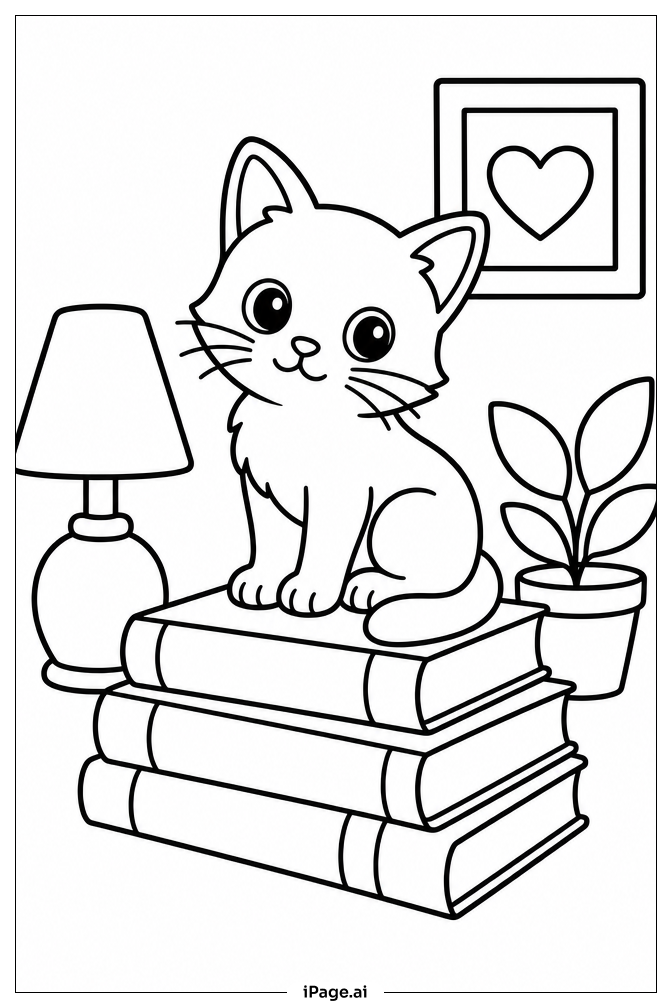
Coloring tips: How to color Kitten On Books coloring page well?
Start with the kitten's fur. Use warm shades like cream, orange, gray, or brown depending on the type of cat you imagine. Add darker tones in areas like the ears, tail tip, and around the eyes to create depth. Use pink for the nose, inner ears, and paw pads. Color the eyes in bright shades like green, blue, or amber to make them pop. For the books, use a variety of bold colors such as red, blue, yellow, and green to make the stack look lively and fun. You can add stripes or patterns to the book spines for extra detail. Use a light background color like soft yellow or sky blue to make the whole image feel warm and cheerful. Take your time with small details like whiskers and book edges. There is no wrong way to color this image, so have fun and be creative with your choices.
Coloring challenges: Which parts are difficult to color and need attention for Kitten On Books coloring page?
• Kitten Fur Texture: Fur is one of the trickiest things to color. You need to follow the direction of the fur lines to make it look natural. Using short, light strokes helps create a soft and fluffy effect. Blending two close shades together, such as light orange and white, can make the fur look more realistic and dimensional rather than flat.
• Small Facial Features: The kitten's face has many tiny details packed into a small space. The eyes, nose, mouth, and whiskers are all close together. Coloring these features neatly requires a fine-tipped pencil or marker. Be careful not to go outside the lines, especially around the eyes and nose, as these are the most expressive parts of the image.
• Book Spine Details: Each book in the stack may have thin lines, small text areas, or decorative borders on the spine. These narrow sections can be hard to fill in cleanly. Using a sharp coloring pencil works best here. Choosing clearly different colors for each book helps them stand out from one another and makes the stack look more interesting.
• Shading and Depth: The stack of books sits beneath the kitten, meaning some areas are naturally in shadow. Adding light shading under the kitten and between the books gives the image a three-dimensional feel. This can be done using a slightly darker version of each book's base color along the edges and bottom.
• Whiskers and Fine Lines: The kitten's whiskers are very thin and delicate. These lines are easy to accidentally color over. It is best to leave them uncolored or use a very light hand with a white or pale pencil to keep them visible and clean against the surrounding fur.
Benefits of coloring books: Advantages of drawing Kitten On Books coloring page
Coloring this sweet image of a kitten sitting on books offers many wonderful benefits for children and beginners alike. It helps improve fine motor skills as kids carefully fill in small areas like the kitten's face, paws, and book spines. This kind of focused hand movement builds control and precision over time.
The image also encourages creativity. Choosing colors for the fur, eyes, and books invites kids to make their own decisions and express their personal style. There is no single right answer, which builds confidence and imagination.
Focusing on a calm, detailed image like this one also supports concentration. Children learn to slow down, stay within the lines, and pay attention to small details. This kind of mindful activity can reduce stress and help kids feel more relaxed and focused.
The books in the image create a natural connection to learning and reading. It can spark conversations about favorite books or stories, making the activity both artistic and educational.
Coloring is also a great way for children to practice patience. Completing the full image from the kitten's fluffy fur to the colorful book stack gives a real sense of accomplishment. It is a simple, screen-free activity that brings joy and a feeling of pride when finished.