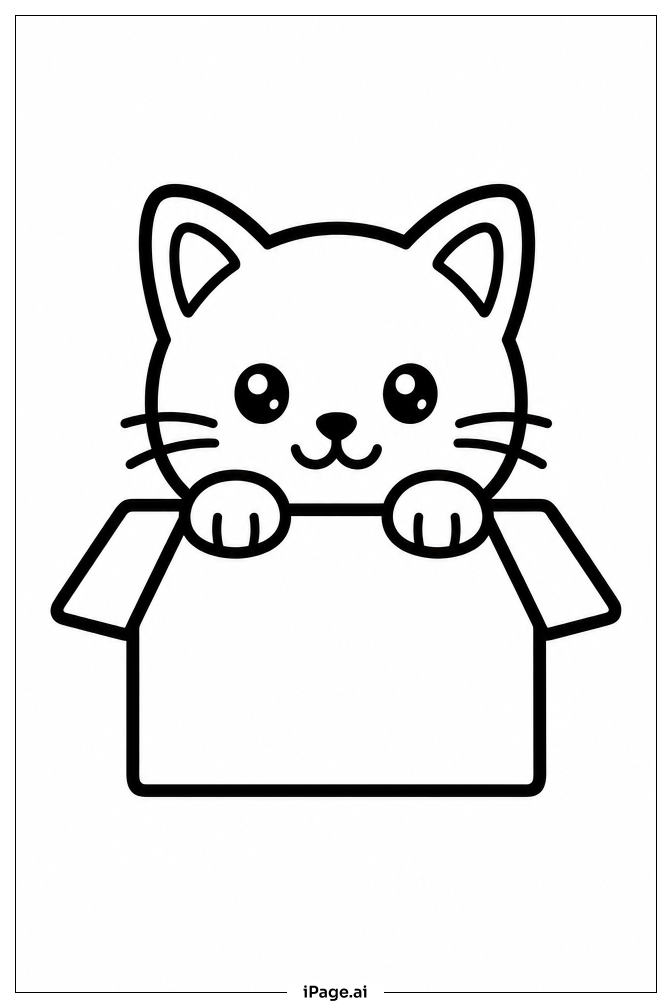
Coloring tips: How to color Kitten In Box coloring page well?
Start with the kitten's body before moving to the box. For the kitten, you can use warm orange and cream shades for a tabby look, or soft gray and white for a classic kitten feel. Add gentle stripes or spots on the fur using a slightly darker version of the base color. Use light pink for the inner ears and nose. The eyes can be bright green, golden yellow, or sky blue to make them pop. For the box, use tan, light brown, or sandy yellow to give it a natural cardboard look. Add some shading along the fold lines and edges using a darker brown to show depth. Keep the background simple — a light pastel color or plain white works great so the kitten stays the center of attention. Use colored pencils or crayons to layer colors softly for a fluffy fur effect.
Coloring challenges: Which parts are difficult to color and need attention for Kitten In Box coloring page?
• Kitten Fur Texture: Fur is one of the trickiest parts to color. The challenge is creating a soft, fluffy look rather than a flat, solid fill. You need to use short, light strokes that follow the direction of the fur. Layering two or three shades of the same color family helps add depth and a realistic feel to the coat.
• Facial Details: The kitten's face has many small features packed closely together — eyes, nose, mouth, and whiskers. Coloring the eyes neatly without going outside the lines takes a steady hand. Each eye may have a pupil, iris, and highlight spot, all requiring different colors or careful pressure control.
• Box Shading and Depth: The cardboard box looks simple, but making it look three-dimensional is a real challenge. The fold lines, flaps, and inner shadows all need to be shaded differently. The inside of the box should be darker than the outside to suggest depth. Blending light and dark brown tones smoothly takes practice and patience.
• Small Paw Details: The kitten's tiny paws resting on the box edge have small toes and soft pads. These are very small areas that need precise coloring. Using a sharpened pencil tip or a fine-tipped marker helps stay within the lines without smudging neighboring areas.
• Balancing the Overall Color Palette: Keeping a harmonious balance between the kitten and the box is important. If both are similar in color, the kitten may blend into the box and lose visual impact. Choosing colors that contrast just enough — like a warm kitten on a cool-toned box — helps the main subject stand out clearly.
Benefits of coloring books: Advantages of drawing Kitten In Box coloring page
Coloring this sweet kitten scene brings a wide range of benefits for kids and families alike. First, it helps children develop fine motor skills. Carefully coloring the kitten's tiny paws, facial features, and fur lines requires controlled hand movements that strengthen grip and coordination. Second, it encourages creativity. Choosing colors for the kitten's coat, the box, and the background lets kids express their own imagination and personal style. There is no single right answer — every child can create a unique version. Third, it supports focus and patience. The scene has a variety of details, from the fluffy fur to the textured cardboard box, which encourages children to slow down, concentrate, and work through each section thoughtfully. Fourth, it introduces basic color theory in a fun way. Children learn how layering and shading change the look of colors, which builds early art skills. Finally, coloring this cozy, happy image is simply calming and joyful. The image of a kitten safe in a box is comforting and familiar, making the whole coloring experience relaxing and emotionally rewarding for children of all ages.