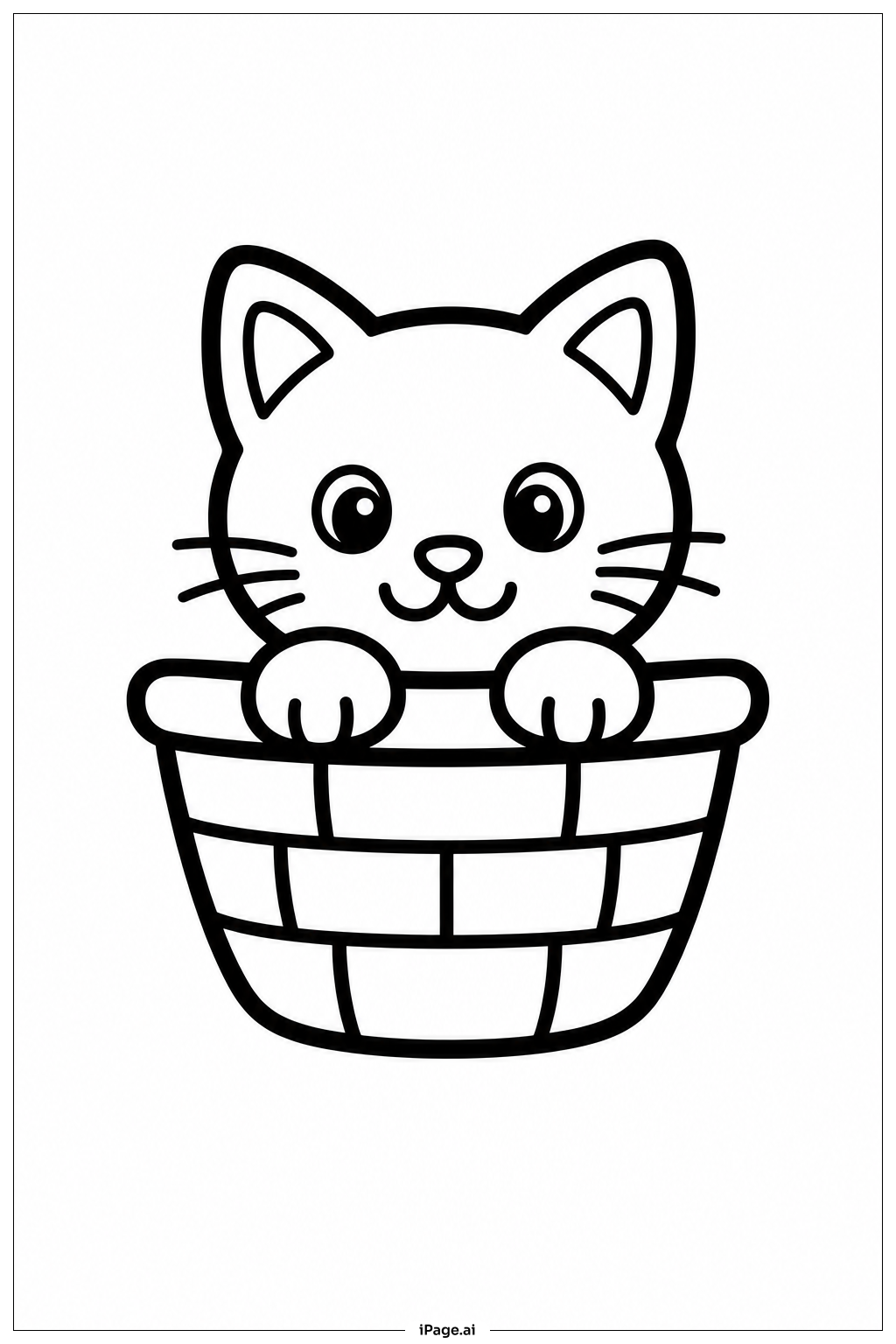
Coloring tips: How to color Kitten In Basket coloring page well?
Start with the kitten's body using soft, warm shades. Light orange, cream, gray, or tan all work beautifully for the fur. Use a slightly darker shade of the same color to add depth along the edges and between fur tufts. For the eyes, try bright green, blue, or amber to make them pop. Color the nose a soft pink and the inner ears a pale rose. For the basket, use golden yellow, warm brown, or tan to give it a natural woven look. Add darker brown lines along the weave pattern to show texture. If there are flowers in the scene, use cheerful colors like yellow, pink, or purple. Keep the background light so the kitten stays the star of the picture. Younger kids can use crayons and bold colors freely, while older kids can try blending colored pencils for a softer, more realistic look. Have fun and make it your own.
Coloring challenges: Which parts are difficult to color and need attention for Kitten In Basket coloring page?
• Kitten Fur Texture: The kitten's fluffy fur requires careful attention. Short, light strokes work best to mimic the look of real fur. Coloring in one flat shade can make the kitten look stiff, so try using two or three tones of the same color to build depth and softness. The direction of your strokes matters too — follow the natural flow of the fur for a more lifelike result.
• Facial Details: The kitten's face is the most expressive part of the image. The eyes, nose, whiskers, and mouth are all very close together and small in size. Coloring these areas neatly without going outside the lines takes a steady hand and a well-sharpened pencil or fine-tipped marker. The eyes especially benefit from layering colors, such as a base tone with a darker ring and a tiny white highlight dot.
• Basket Weave Pattern: The woven basket has a repeating interlaced pattern with many small sections. Each strip of the weave can be colored with slightly different shades of brown or tan to emphasize the over-under texture. This is time-consuming and requires patience, but the result looks impressive and realistic when done carefully.
• Small Paws and Claws: The kitten's tiny paws resting on the basket edge are delicate and detailed. The small rounded toes and subtle claw lines are easy to accidentally smudge or overfill with color. Use a fine-point tool and light pressure in these areas.
• Balancing Light and Shadow: The overall scene has a soft, cozy mood. Keeping consistent light direction — such as imagining light coming from the upper left — helps make the coloring feel unified. Without this balance, the image can look flat or confusing.
Benefits of coloring books: Advantages of drawing Kitten In Basket coloring page
Coloring this sweet kitten in a basket image brings a wide range of benefits for children of all ages. First, it helps develop fine motor skills. Carefully filling in the small fur details, the basket weave, and the tiny facial features trains hand-eye coordination and builds control over pencils and markers. These skills directly support writing and other everyday tasks.
Second, it encourages focus and patience. The intricate weave pattern and layered fur textures invite children to slow down, concentrate, and work through each section step by step. This kind of calm, focused activity is great for building attention span.
Third, coloring sparks creativity. There is no single right way to color a kitten — children can choose any fur color, any basket shade, and any background they like. This freedom builds confidence and encourages imaginative thinking.
Fourth, it offers emotional comfort. Animals, especially kittens, are naturally soothing subjects. The cozy, peaceful scene of a kitten nestled in a basket creates a relaxing coloring experience that can help reduce stress and anxiety in children.
Finally, completing the image gives children a sense of pride and accomplishment. Finishing a detailed coloring page and seeing the colorful result is genuinely rewarding, boosting self-esteem and motivation to keep creating.