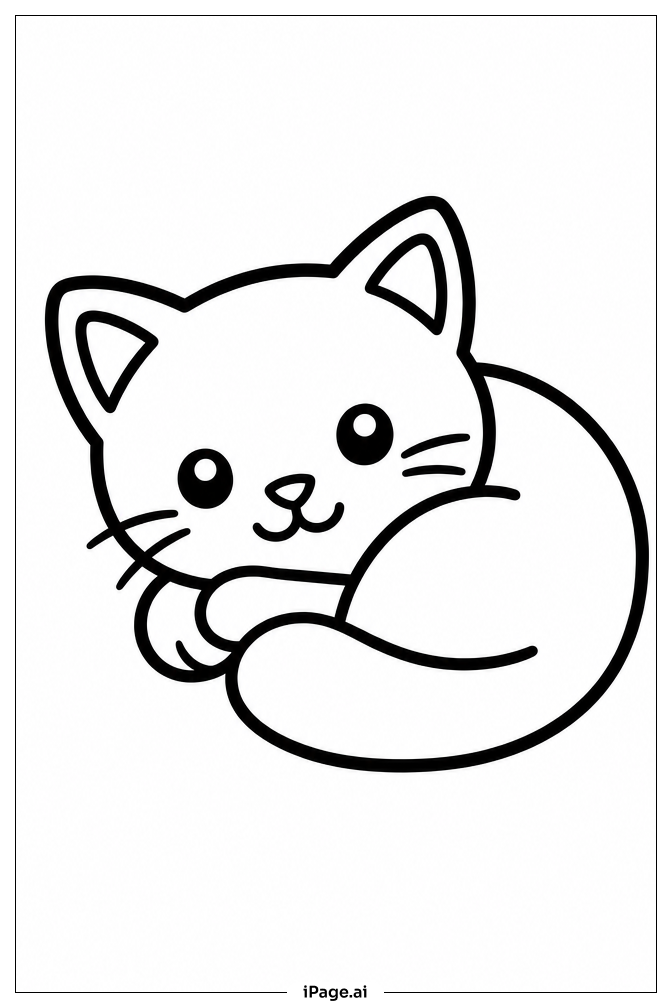
Coloring tips: How to color Kitten Curled Up coloring page well?
Start with the kitten's body using soft, warm colors. Light orange, creamy beige, or pale gray work beautifully for a fluffy cat. You can add darker shades of the same color to show where the fur folds and curves. Use light brown or golden yellow for striped tabby markings. The nose can be a soft pink, and the paw pads can match. For the background, try a warm pastel color like light yellow or soft lavender to give the kitten a cozy, dreamy feel. Younger kids can use a single color for the whole body to keep it simple. Older kids can practice blending colors to make the fur look soft and real. Try using colored pencils with light pressure first, then layer more color on top for deeper shading. Adding little short strokes in the direction of the fur will make it look extra fluffy and lifelike.
Coloring challenges: Which parts are difficult to color and need attention for Kitten Curled Up coloring page?
• Fur Texture Details: The kitten's body is covered with many fine fur lines flowing in different directions. Coloring these lines neatly while following the curves of the body takes patience. If the lines are colored randomly, the fur may look messy instead of soft and smooth. Try to follow the direction of each line for the best result.
• Shading the Curved Body: Because the kitten is curled up, different parts of its body are at different angles. The areas that curve inward, like where the belly tucks in or where the paws overlap, should be colored slightly darker. Getting this shading right can be tricky, especially for younger colorists who are still learning about light and shadow.
• Small Facial Features: The kitten's face has tiny details like a small nose, thin whiskers, and delicate eyelids. These are very small and close together, making it easy to accidentally color outside the lines. Using a fine-tipped colored pencil or marker works best in these areas.
• Tail and Paw Overlap: The tail wraps around the paws, creating areas where two body parts overlap. Deciding which part to color darker to show depth can be confusing. Using slightly different shades of the same color for the tail and paws can help separate them clearly.
• Keeping Colors Consistent: Since the kitten is one animal, all parts of its body should use colors that match and flow naturally from one area to another. Making sure the belly, back, tail, and face all look like they belong to the same cat requires planning your color choices before you begin.
Benefits of coloring books: Advantages of drawing Kitten Curled Up coloring page
Coloring this image of a curled-up kitten brings many wonderful benefits for kids and beginners alike. First, it helps improve fine motor skills. Staying inside the small lines of the fur and facial features trains the hands and fingers to move with care and control. This skill also helps with writing and drawing.
Second, it encourages creativity. Choosing colors for the kitten's fur, nose, and background lets kids make their own unique version of the image. There is no single right answer, so every child can express themselves freely.
Third, coloring can be very calming. The peaceful pose of the sleeping kitten sets a relaxing mood. Focusing on coloring can help kids feel less stressed and more focused, making it a great quiet-time activity.
Fourth, this image teaches kids about shading and depth. Practicing how to make one area darker than another helps build early art skills that will be useful as they grow.
Finally, finishing the coloring page gives a strong sense of accomplishment. Seeing a completed, colorful picture is rewarding and builds confidence. Kids feel proud of what they have made, which motivates them to keep creating.