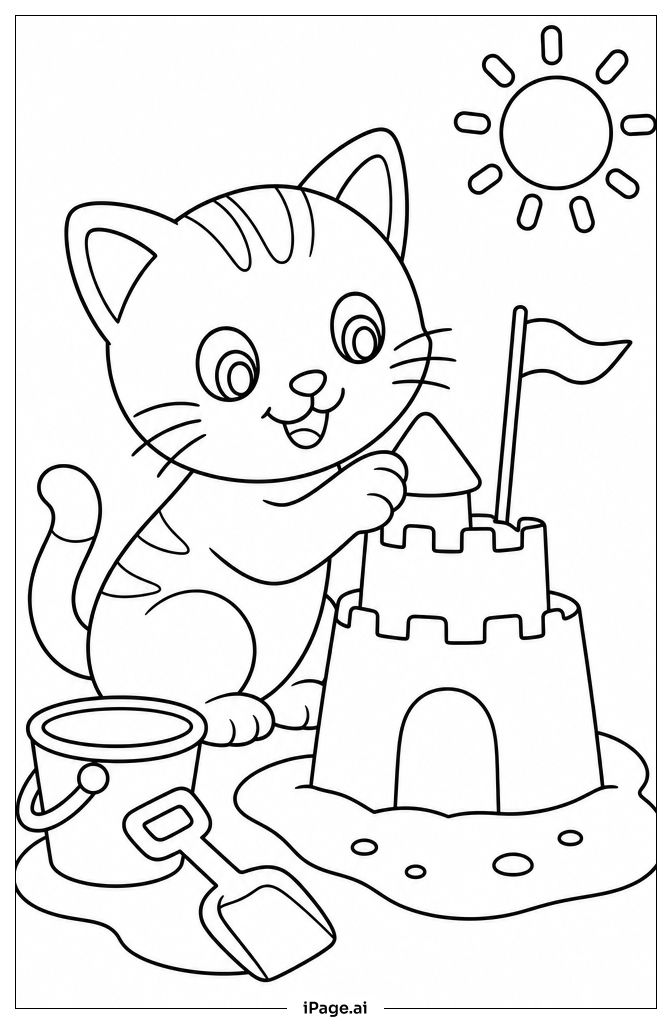
Coloring tips: How to color Kitten At Beach coloring page well?
Start with the kitten's fur. Use warm colors like cream, tan, orange, or soft gray. Add darker shades for stripes or spots to give the fur some texture and depth. Use bright yellow or golden tones for the sunny sky. Color the ocean water in light blue or turquoise shades. Blend in white near the wave tips to show the foam. Use sandy yellow and beige tones for the beach. Give the seashells pastel colors like pink, peach, or lavender to make them pop. Color the beach bucket and shovel in bold, fun colors like red, yellow, or blue. Use green for the palm tree leaves and brown for the trunk. Keep the clouds white or add a soft light blue tint. Try to use lighter colors first, then slowly layer darker tones on top. This helps create a natural, lively look. Most importantly, have fun with your color choices and let your imagination shine!
Coloring challenges: Which parts are difficult to color and need attention for Kitten At Beach coloring page?
• Kitten Fur Texture: The kitten's fur can be tricky to color well. Fur has many layers and directions. Try using short, light strokes that follow the direction the fur grows. Use at least two shades of the same color — one lighter, one darker — to show depth and fluffiness. Blending smoothly between shades will make the fur look soft and realistic.
• Small Details on Seashells: The seashells scattered on the sand have small patterns, ridges, and curves. These tiny details require a steady hand and a well-sharpened pencil or thin marker. Take your time and color each section carefully. Using multiple pastel colors can help each shell look unique and beautiful.
• Ocean Waves and Water: Coloring water to look natural is a common challenge. The ocean should have a gradient effect — darker blue near the horizon and lighter, almost white near the shoreline where waves break. Blending blue and white smoothly without hard lines takes practice. Try layering light strokes of blue, then add white on top for the foamy wave edges.
• Sky and Sun Blending: Creating a natural-looking sunny sky means blending yellow near the sun into light orange, then into a soft blue across the rest of the sky. Avoiding harsh color boundaries makes the sky feel warm and open. Working with light pressure and gradually building color will give the best results.
• Background vs. Foreground Balance: Keeping the kitten as the main focus while still making the background colorful and interesting is a real challenge. Use brighter, bolder colors on the kitten and softer, more muted tones on the beach and sky background to create a sense of depth and visual balance.
Benefits of coloring books: Advantages of drawing Kitten At Beach coloring page
Coloring this Kitten At Beach scene offers many wonderful benefits for kids and beginners alike. First, it helps build fine motor skills. Carefully coloring small details like fur, seashells, and waves trains little hands to control a pencil or crayon with precision. This prepares children for writing and other detailed hand tasks. Second, it sparks creativity. Choosing colors for the sky, ocean, and kitten encourages kids to think imaginatively and express themselves freely. There are no wrong color choices, which builds confidence. Third, it teaches color blending and shading. By experimenting with light and dark tones on the fur and water, young colorists begin to understand how colors interact — a foundational art skill. Fourth, it promotes focus and patience. Detailed scenes like this one require sustained attention, which helps children practice concentration in a fun and rewarding way. Fifth, it is calming and relaxing. The cheerful beach theme and the repetitive motion of coloring reduce stress and create a sense of peace. Spending time with this page is a great way to unwind after a busy day. Overall, this coloring page is both enjoyable and educational for children of all skill levels.