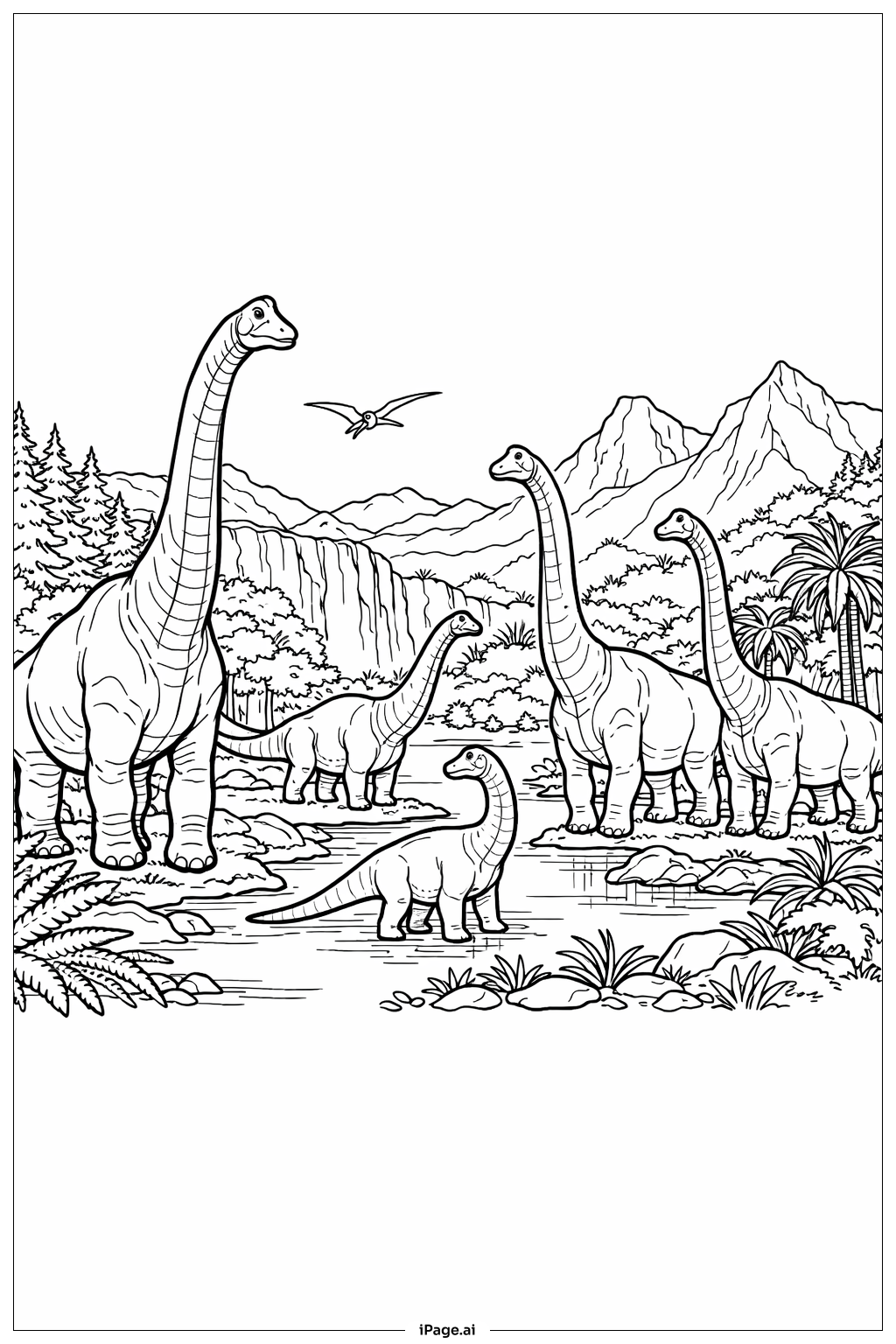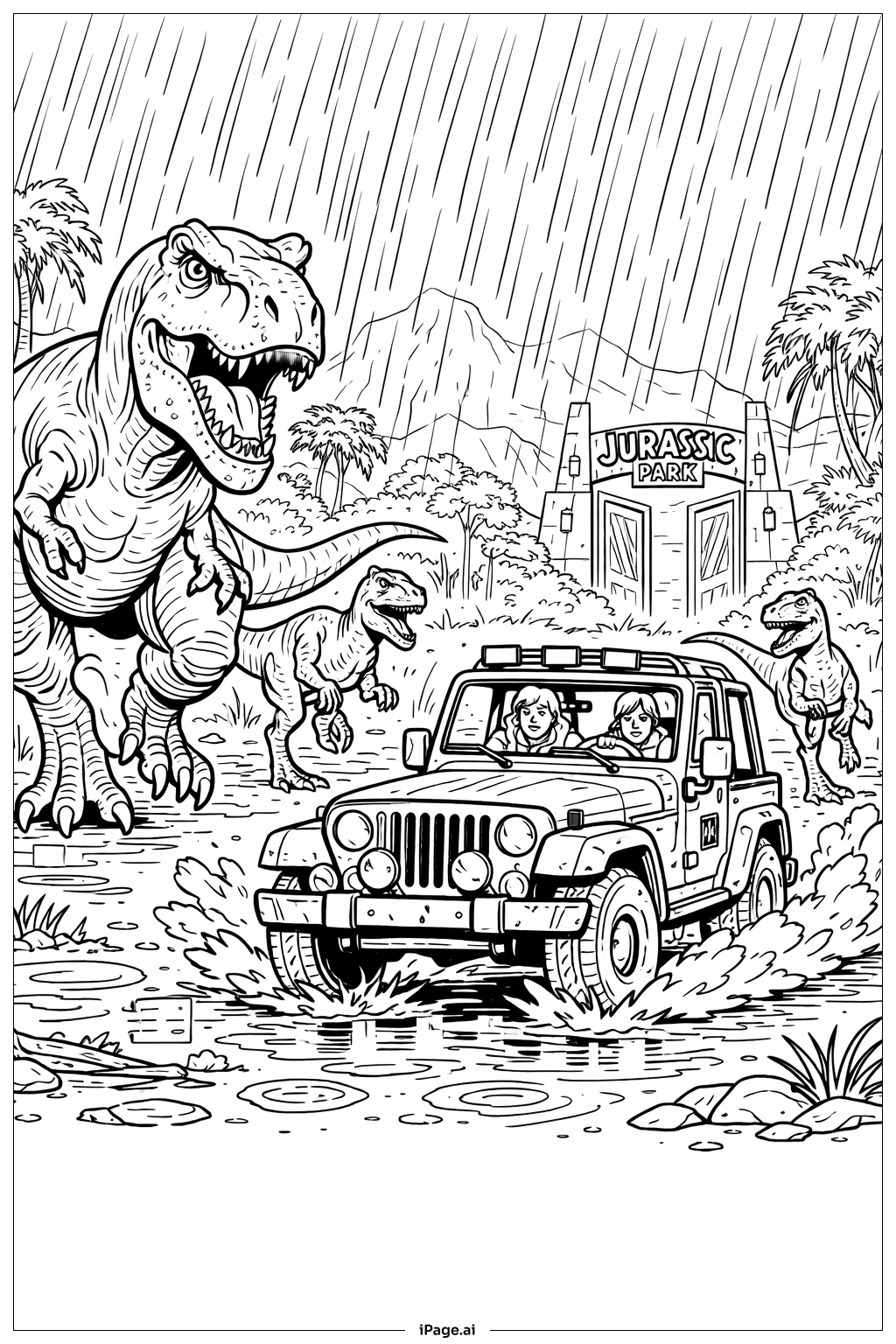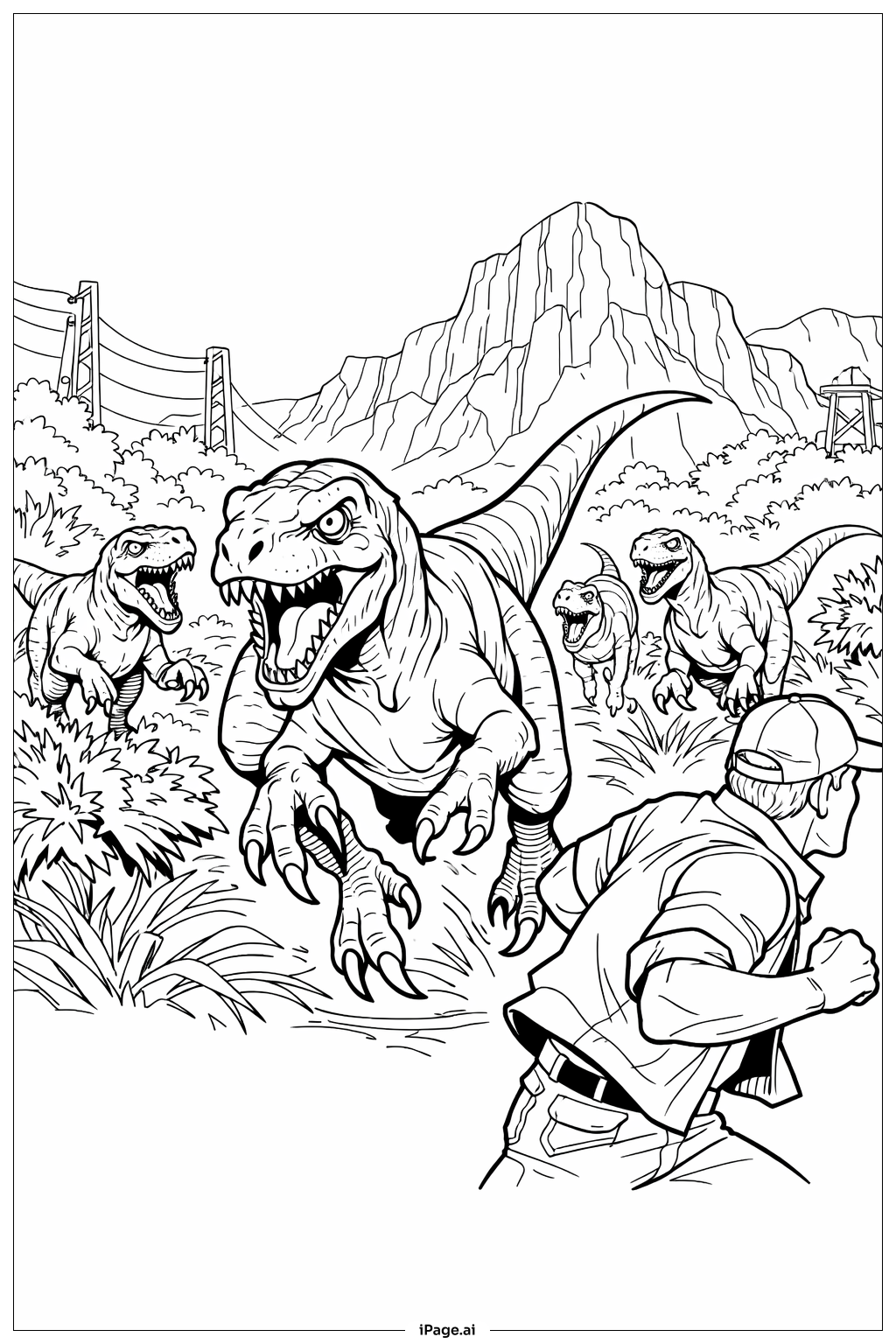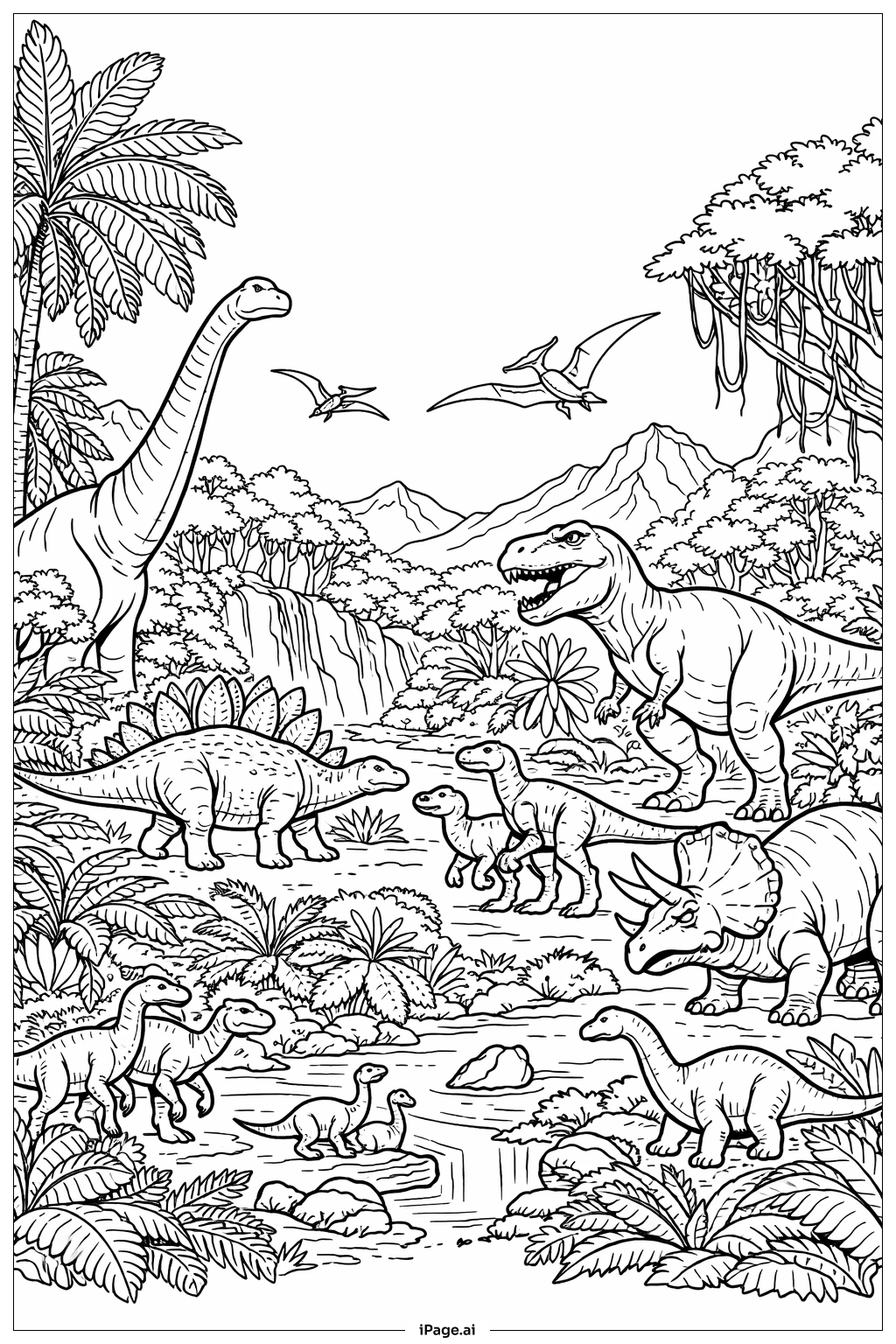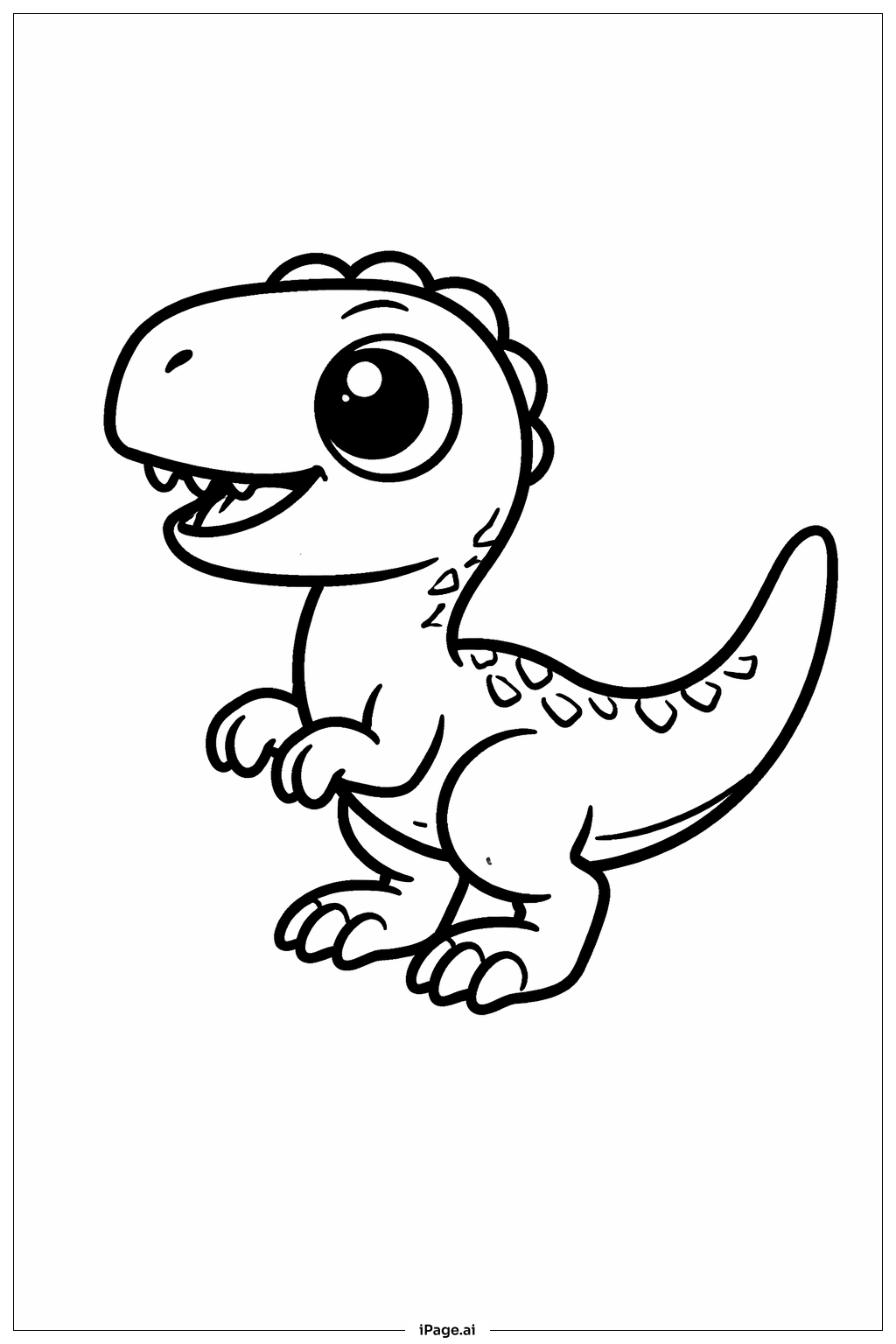
Coloring tips: How to color Jurassic Park Tiny Velociraptor coloring page well?
Start with the body of the tiny Velociraptor. You can use earthy tones like olive green, brown, or tan for the main body, just like real dinosaurs might have looked. Add darker stripes or spots along the back and tail to give the raptor a wild, natural look. Use a lighter shade, like cream or pale yellow, for the belly area. The claws and teeth can be colored with off-white or light gray. For the eyes, try a bright amber or yellow with a dark pupil to make them pop. The jungle background can be filled with rich greens and deep shadows. Feel free to mix shades to create depth and make your raptor look truly alive. There are no wrong color choices — let your imagination run free and make your Velociraptor totally unique!
Coloring challenges: Which parts are difficult to color and need attention for Jurassic Park Tiny Velociraptor coloring page?
• Scale and Skin Texture Details: The Velociraptor's body is covered in small overlapping scales and subtle skin folds. Coloring these tiny details requires a sharp-tipped colored pencil or fine-tipped marker. Rushing through this area may cause colors to bleed together and lose the textured effect. Take your time and work section by section for the best result.
• Striping and Pattern Placement: Adding natural-looking stripes or spots along the back and tail can be tricky. If the pattern lines are not carefully planned, they may look uneven or out of place. Lightly sketching the pattern placement before applying color can help keep things consistent and balanced across the body.
• Shading and Depth: Creating a three-dimensional look on a flat outline requires thoughtful shading. The belly, underside of the tail, and inner arms should be lighter, while the top of the head, back, and outer legs should be darker. Blending from light to dark using two or three shades of the same color family brings the little raptor to life.
• Small Claw and Tooth Areas: The tiny claws on the feet and hands, as well as the small teeth inside the mouth, are very small and close together. These tight spaces are hard to color neatly without accidentally going outside the lines. Using a very fine tool and working slowly is the key to keeping these areas clean and crisp.
• Background Jungle Foliage: The leafy jungle background has overlapping leaves and layered plant shapes. Choosing colors that contrast well with the raptor's body tones is important so the character stands out clearly from the background. Using lighter greens near the raptor and darker greens further back creates a nice sense of depth.
Benefits of coloring books: Advantages of drawing Jurassic Park Tiny Velociraptor coloring page
Coloring this Jurassic Park Tiny Velociraptor page brings a whole range of wonderful benefits for kids and young dinosaur lovers. First, it builds fine motor skills. Carefully staying inside the lines and shading small details like scales and claws strengthens hand muscles and improves pencil control. These are skills that help with writing and other everyday tasks. Second, it encourages creativity. Choosing colors for a dinosaur that no one has ever actually seen gives kids total creative freedom. There are no rules, which builds confidence and imagination. Third, it teaches focus and patience. Coloring a detailed image takes time and attention, helping children practice sitting still, concentrating, and working toward a finished goal. Fourth, it sparks curiosity about science and nature. The Velociraptor is a real dinosaur, and coloring it may inspire kids to learn more about prehistoric life, fossils, and paleontology. Finally, it is simply fun and relaxing. Coloring is a screen-free activity that calms the mind, reduces stress, and gives children a sense of pride and accomplishment when they see their finished artwork. It is a perfect creative outlet for any young Jurassic Park fan.