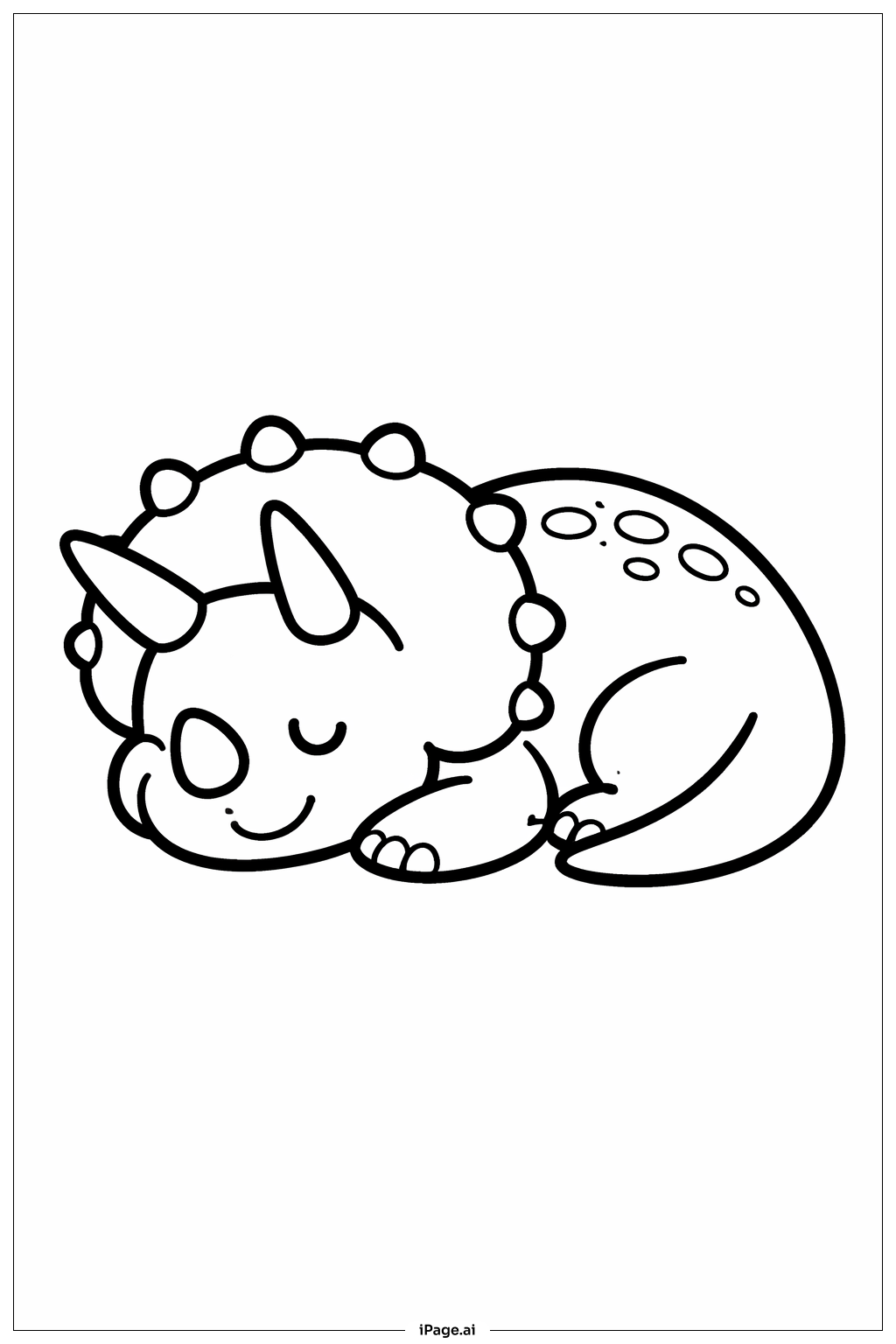
Coloring tips: How to color Jurassic Park Sleeping Triceratops coloring page well?
Start by choosing soft and natural colors for the Triceratops, such as light greens, browns, and tans. You can use a darker shade for the body and a lighter one for the frill around the head. The horns can be colored gray or ivory. Add some gentle shading on the dinosaur’s body to show its shape and texture. For the spots on the back, try a slightly different shade to make them stand out. The background can be colored with light blue or green to suggest a calm environment, but keep it simple so the Triceratops remains the focus.
Coloring challenges: Which parts are difficult to color and need attention for Jurassic Park Sleeping Triceratops coloring page?
1. Shading the rounded body evenly might be tricky because you need to show softness without making it look flat.
2. Coloring the small details like the horns and spots requires patience and a steady hand to stay inside the lines.
3. Deciding on the right colors for the frill and body involves balancing similar shades to keep a natural look.
4. Making the spots different yet harmonious with the body color takes some practice.
5. Keeping the picture calm and peaceful while using colors can be challenging because bright colors might change the mood.
Benefits of coloring books: Advantages of drawing Jurassic Park Sleeping Triceratops coloring page
Coloring this sleeping Triceratops helps children practice fine motor skills by staying within the lines. It also encourages creativity when picking colors to represent nature. This activity supports focus and patience while working on details like horns and spots. Additionally, it introduces kids to dinosaurs and prehistoric creatures in a friendly, approachable way. Coloring peaceful images like this can also be relaxing and help children develop their artistic expression.