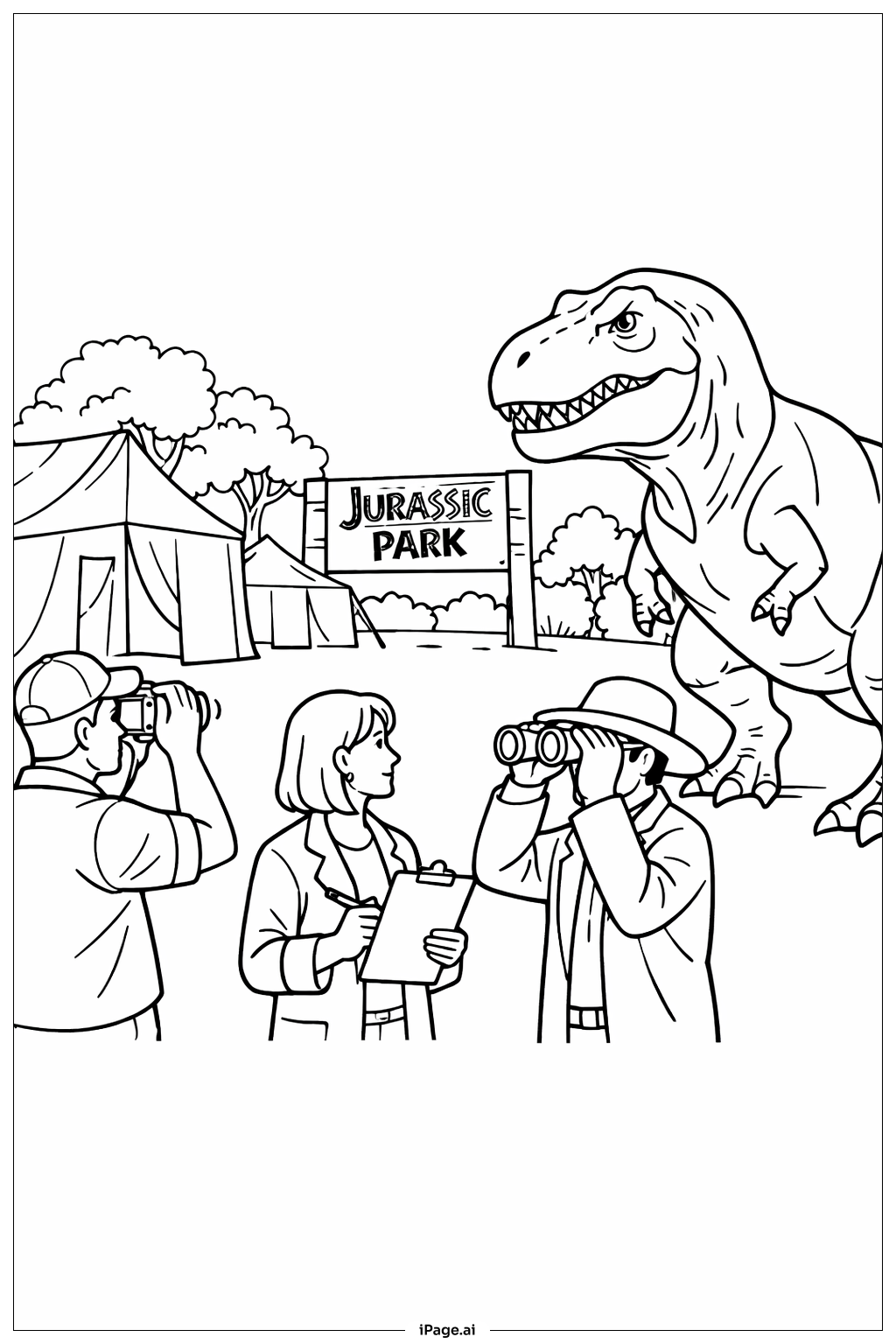
Coloring tips: How to color Jurassic Park Scientists and Dino coloring page well?
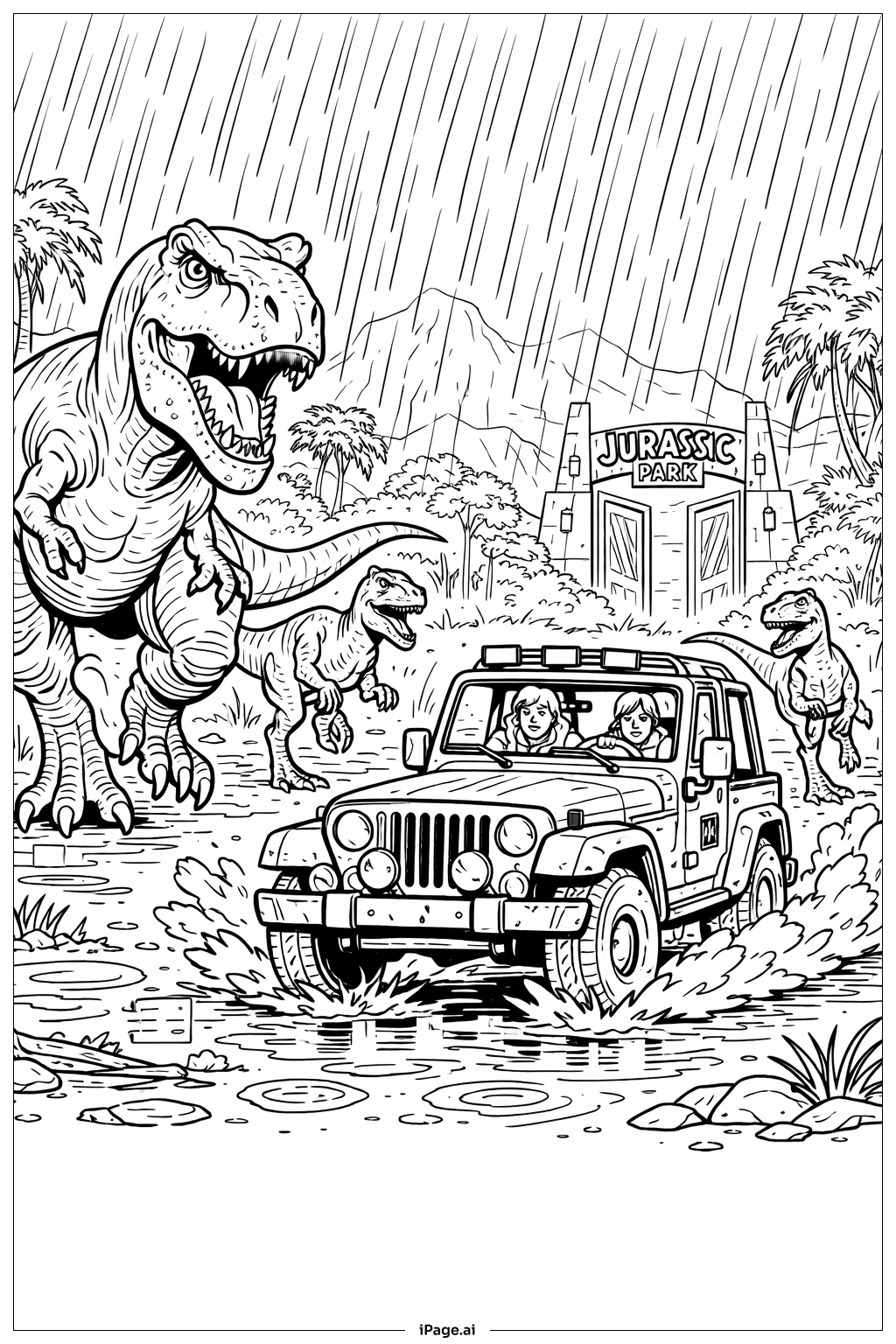
For the dinosaur, consider using earthy greens, browns, or grays for the main body, with lighter shades for the underbelly. Add yellow or orange accents for eyes to create intensity. The scientists' clothing can be colored in practical expedition colors like khaki, olive green, or navy blue. Use lighter skin tones for faces and hands. The jungle background offers wonderful opportunities for various shades of green, from deep forest to bright lime. Add pops of color with tropical flowers in reds, purples, or yellows. Consider using colored pencils for fine details and markers for larger areas to create interesting textures and depth throughout the scene.
Coloring challenges: Which parts are difficult to color and need attention for Jurassic Park Scientists and Dino coloring page?
• Dinosaur Scale Texture: The dinosaur's skin features intricate scale patterns that require patience and attention to detail. Young colorists may find it challenging to maintain consistent color within small scale sections while creating realistic texture. Using different shades of the same color family can add depth, but requires careful blending and control to avoid muddy results.
• Multiple Characters and Depth: This scene includes both scientists and a dinosaur, requiring colorists to distinguish between foreground and background elements. Maintaining appropriate color contrast between the human figures and the dinosaur helps create visual separation. Younger children may struggle with understanding which elements should be lighter or darker to show distance.
• Vegetation Details: The tropical background includes various types of leaves, fronds, and plants with overlapping elements. Coloring each leaf distinctly while maintaining a cohesive jungle environment requires planning. The fine lines between overlapping vegetation can be difficult for younger hands to color neatly without crossing boundaries.
• Clothing and Equipment Details: The scientists' outfits include pockets, zippers, and various equipment pieces that need different colors to look realistic. These small details require steady hand control and the ability to switch colors frequently, which can be challenging for beginners but rewarding for more experienced colorists.
Benefits of coloring books: Advantages of drawing Jurassic Park Scientists and Dino coloring page
Coloring this Jurassic Park scene helps children develop fine motor skills through detailed work on scales and vegetation. It encourages color theory understanding as kids experiment with realistic dinosaur colors and natural environments. The image sparks imagination about paleontology and scientific discovery, connecting creativity with learning about prehistoric life. Working on the multiple elements teaches focus and patience, as completing the detailed scene requires sustained attention. Children practice decision-making by choosing appropriate colors for different materials like skin, fabric, and plants. The exciting subject matter keeps young colorists engaged while building hand-eye coordination. Completing this complex image boosts confidence and provides a sense of accomplishment, especially for dinosaur enthusiasts.