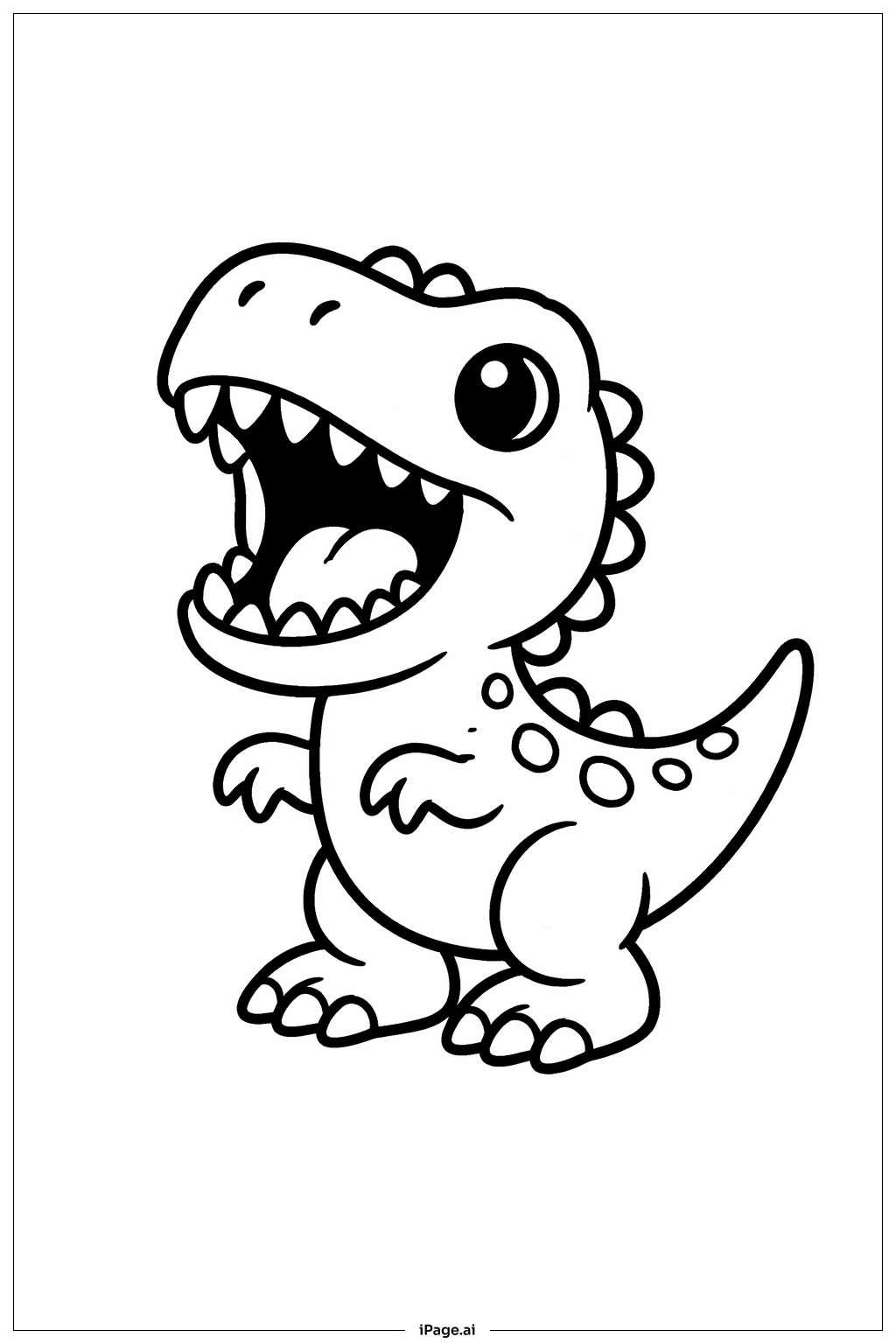
Coloring tips: How to color Jurassic Park Roaring Baby Rex coloring page well?
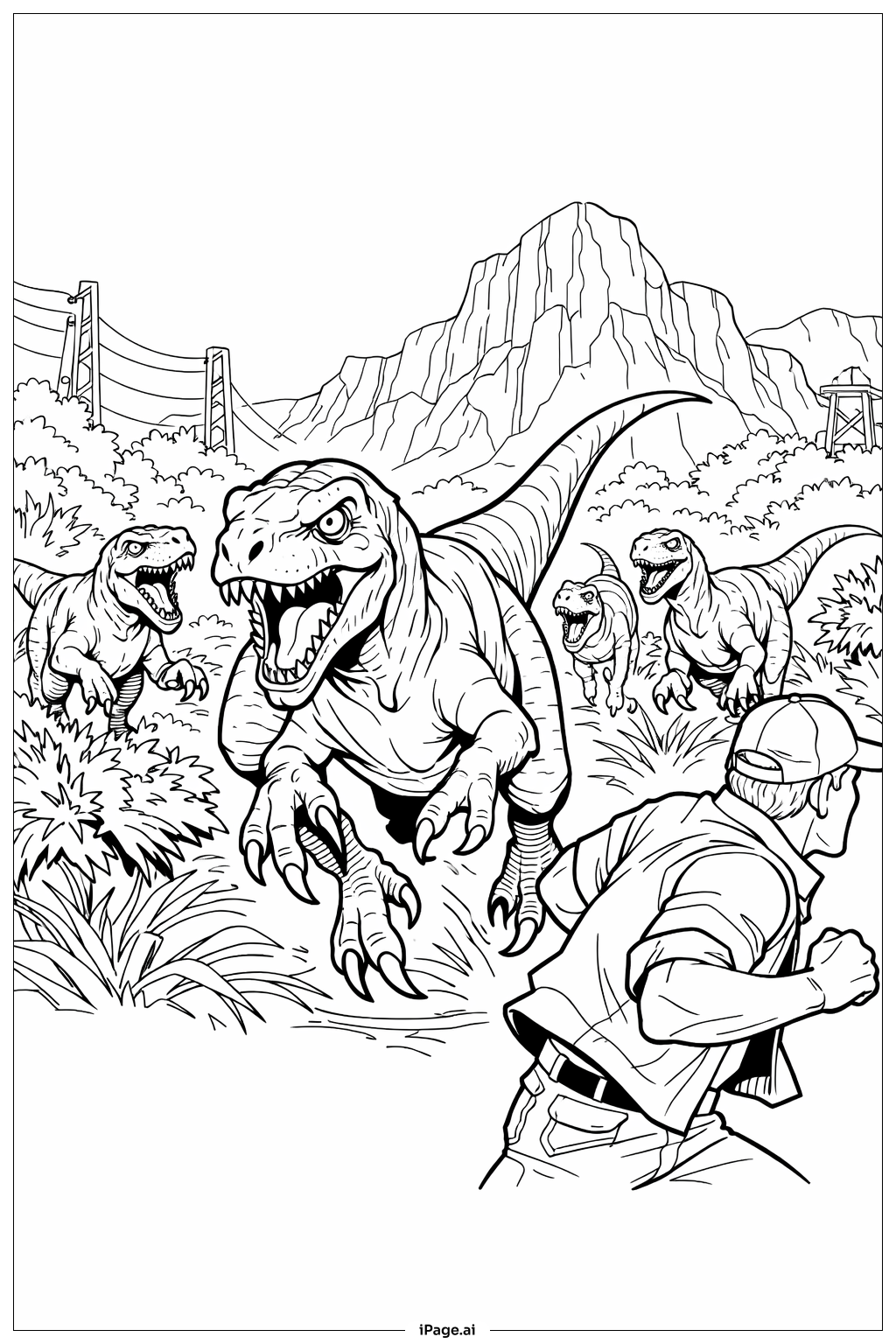
Start with the baby Rex's skin using various shades of green, from olive to bright lime, or try earthy browns and tans for a more realistic dinosaur look. Add darker tones along the spine and back for depth, and lighter shades on the belly and throat. The teeth should be bright white or cream with light gray shadows between them. Color the tongue pink or reddish-pink inside the roaring mouth. For the eyes, use yellow, orange, or amber with a black pupil to create an intense, prehistoric gaze. The claws on both hands and feet can be dark gray or black to emphasize their sharpness. Consider adding subtle texture by using multiple color layers or by varying pressure with your coloring tools to show the scaled skin texture throughout the body.
Coloring challenges: Which parts are difficult to color and need attention for Jurassic Park Roaring Baby Rex coloring page?
• Detailed Skin Texture: The baby Rex features intricate scales, wrinkles, and skin folds across its entire body that require careful attention. Young artists may find it challenging to color within these small textured areas without crossing lines. Using fine-tipped coloring tools and working slowly will help achieve the best results. Consider using different shades to emphasize the texture rather than trying to color every individual scale separately.
• Mouth Interior and Teeth: The wide-open roaring mouth contains multiple rows of small, sharp teeth that create numerous tiny spaces to fill. Coloring between the teeth without bleeding colors together requires precision and patience. The interior of the mouth, including the tongue and throat area, has curved surfaces that benefit from shading techniques to create depth, which may be difficult for younger children.
• Dimensional Shading: Creating a three-dimensional appearance on the baby Rex's muscular legs, rounded body, and thick tail requires understanding where light and shadows naturally fall. Artists need to blend multiple shades smoothly to show the curves and bulges of the dinosaur's anatomy. This technique takes practice and may be challenging for those new to shading.
• Small Details on Limbs: The tiny arms and clawed hands, along with the detailed feet, contain small areas that require precision coloring. The claws themselves are narrow and pointed, making them tricky to color without going outside the lines. Taking time and using appropriately sized coloring tools will help manage these challenging spots.
Benefits of coloring books: Advantages of drawing Jurassic Park Roaring Baby Rex coloring page
Coloring this Jurassic Park baby Rex helps children develop fine motor skills and hand-eye coordination as they navigate the detailed scales and textures. The various sizes of spaces, from large body areas to tiny teeth, provide opportunities to practice pencil control and precision. Working on the dimensional aspects of the dinosaur encourages understanding of light, shadow, and three-dimensional form, building spatial awareness. The prehistoric theme sparks imagination and interest in science, paleontology, and natural history. Completing this detailed coloring page builds patience, focus, and a sense of accomplishment. Children can experiment with realistic color palettes or create imaginative color combinations, fostering creativity and decision-making skills. The playful yet fierce character of the baby Rex makes the coloring experience both educational and entertaining.