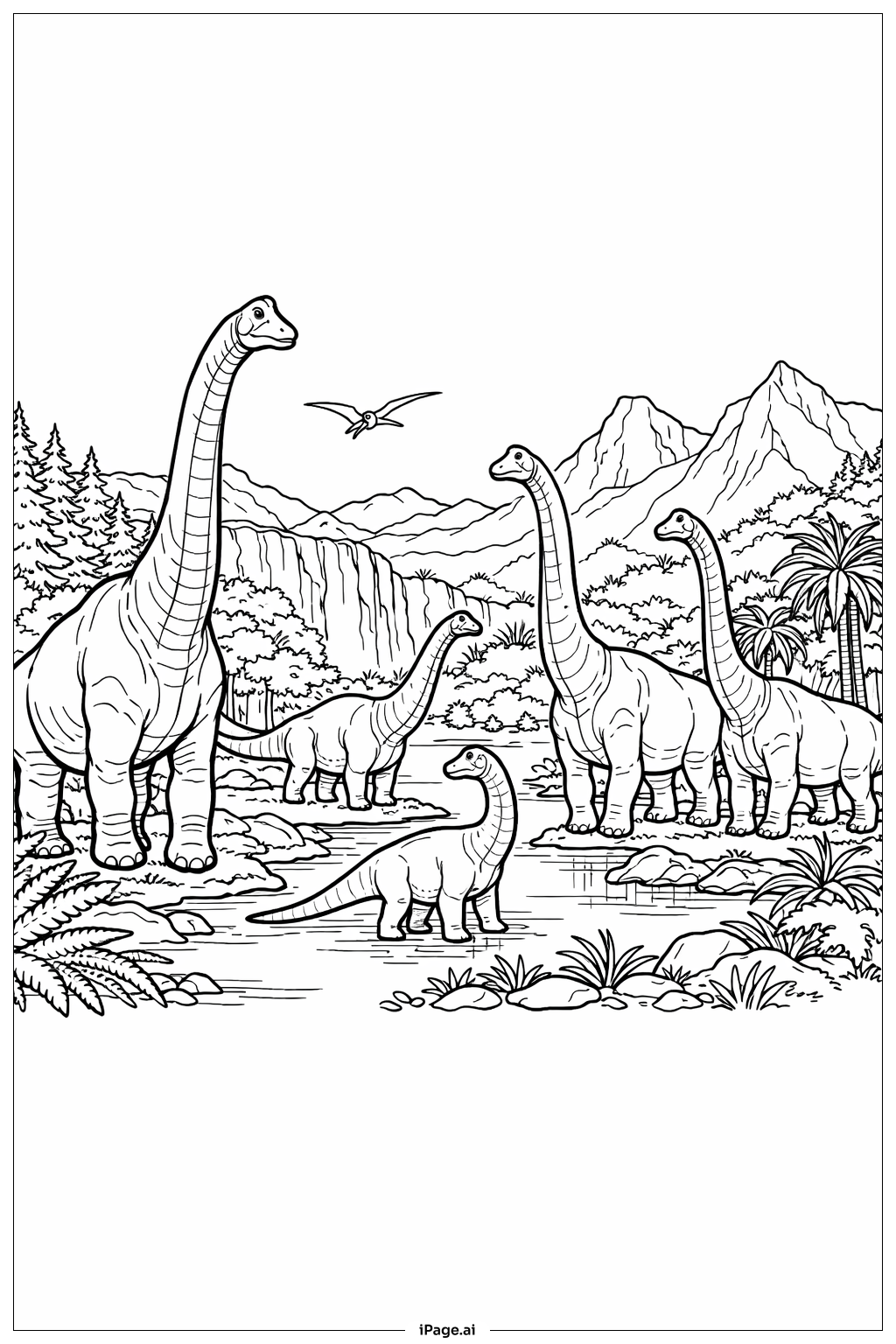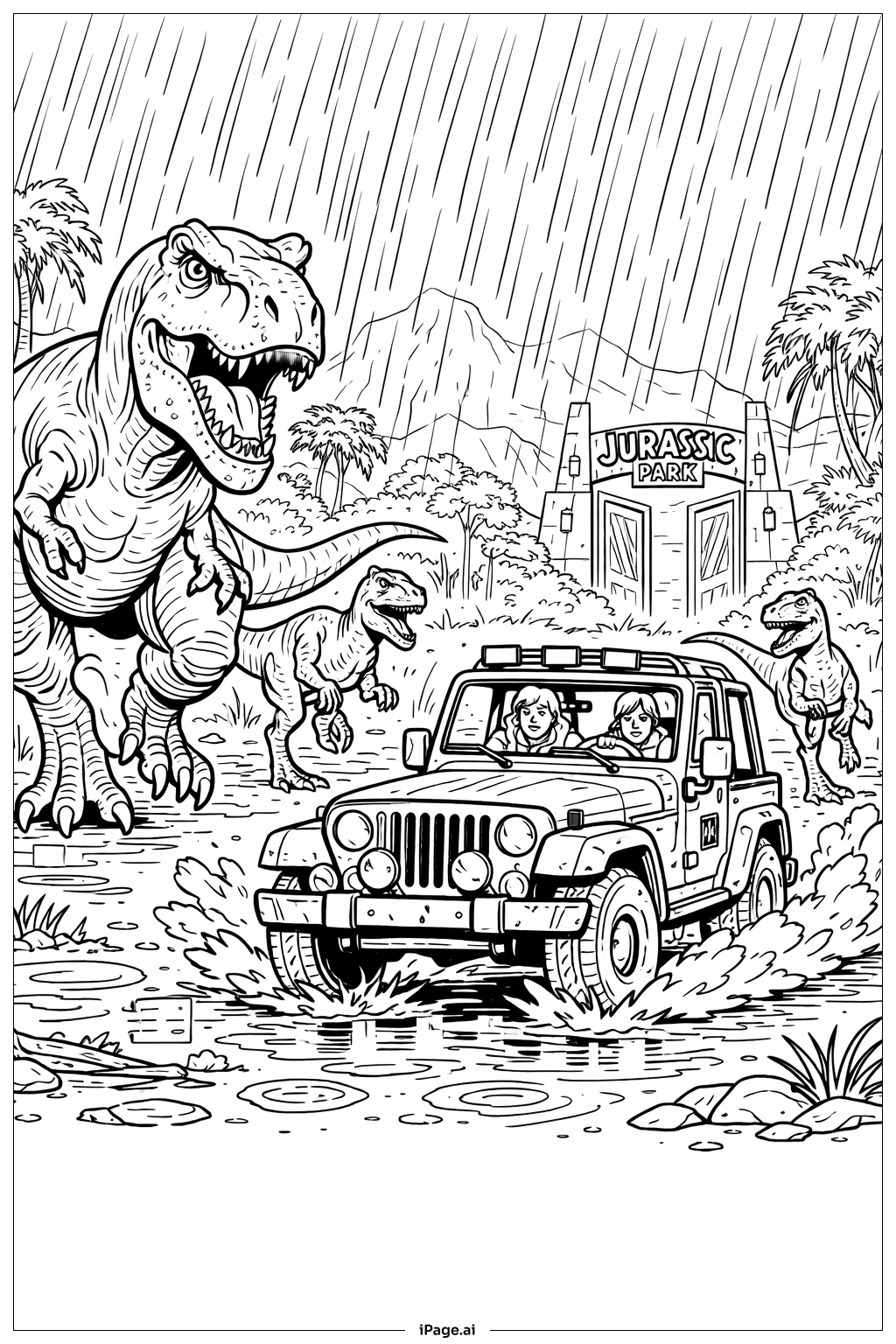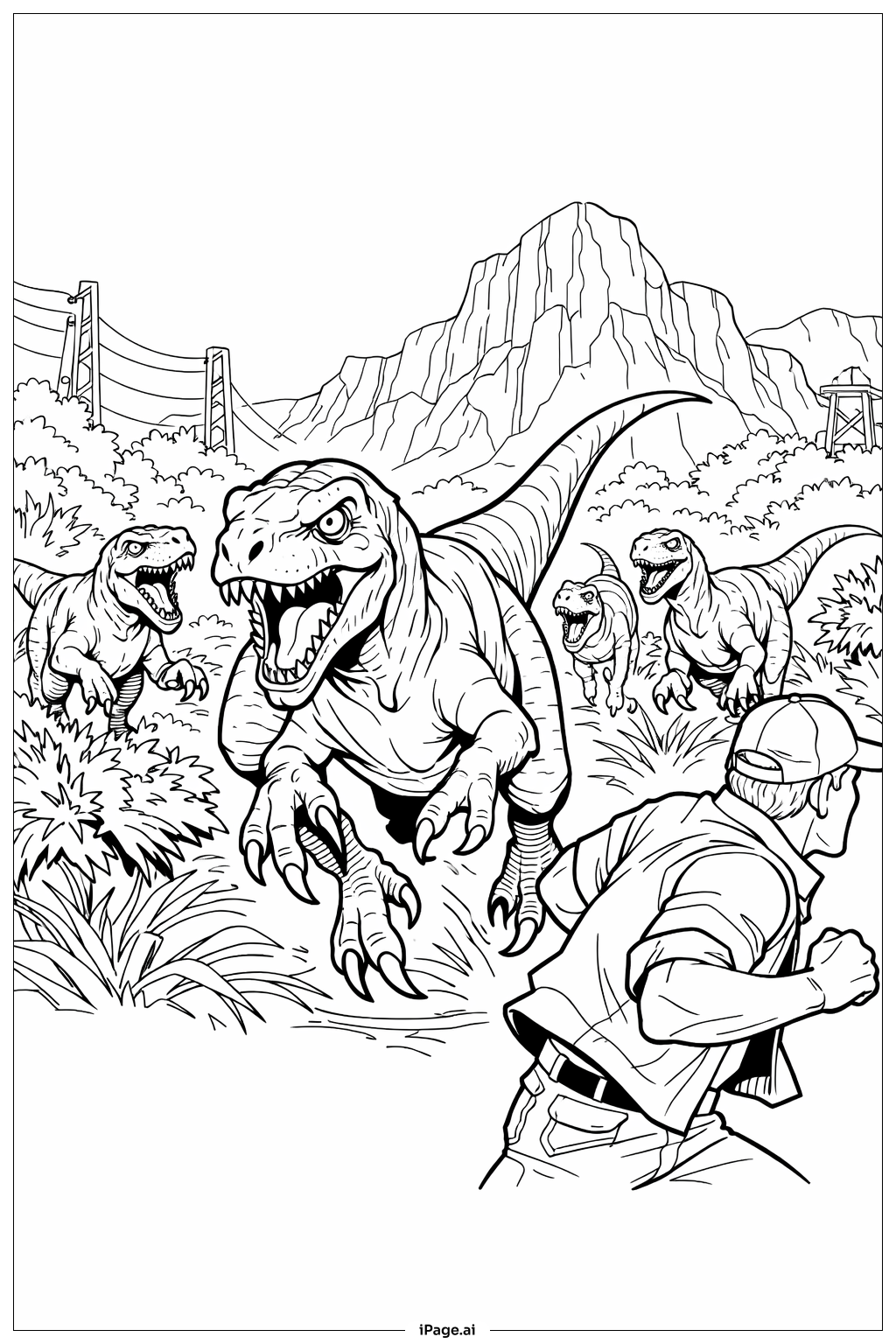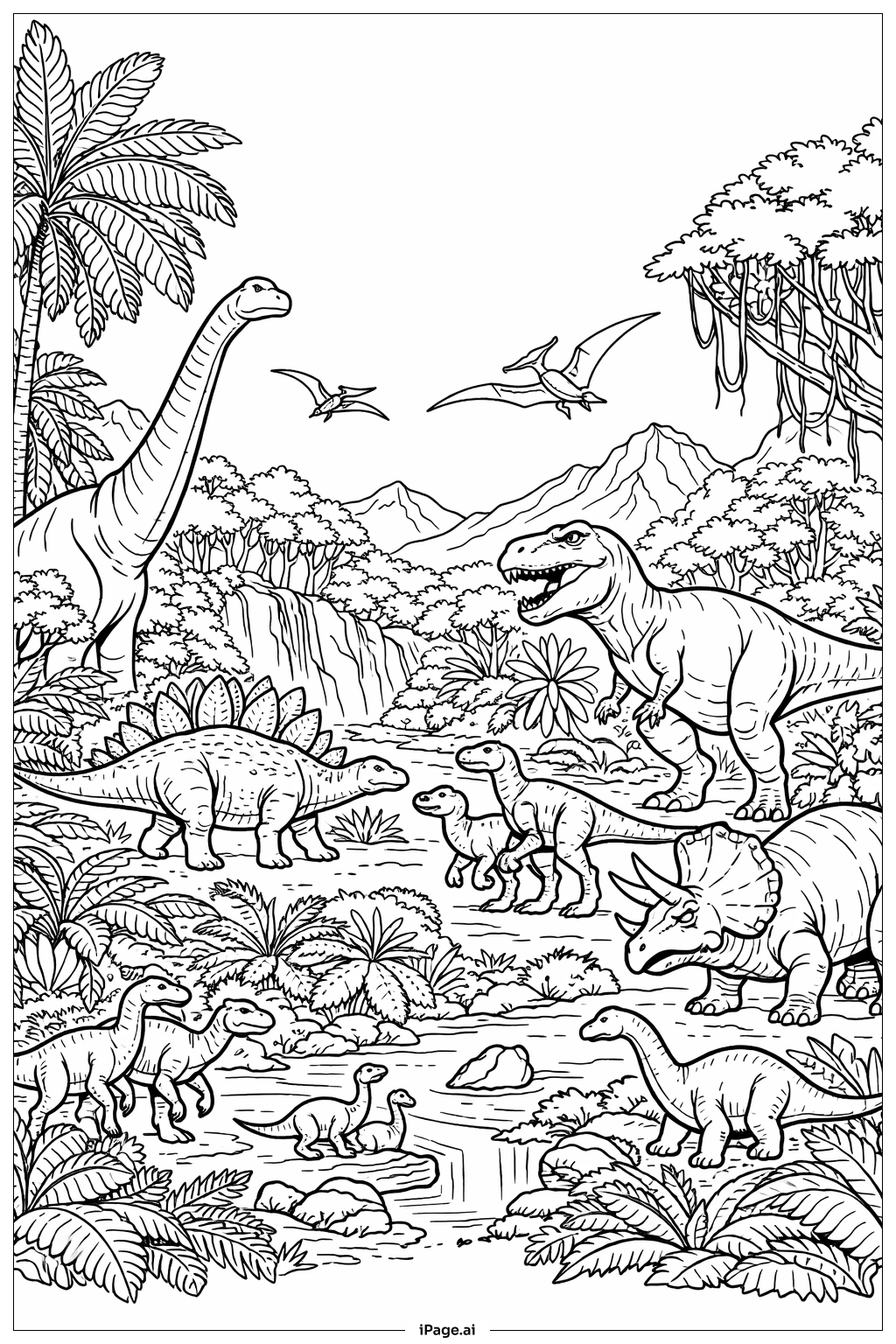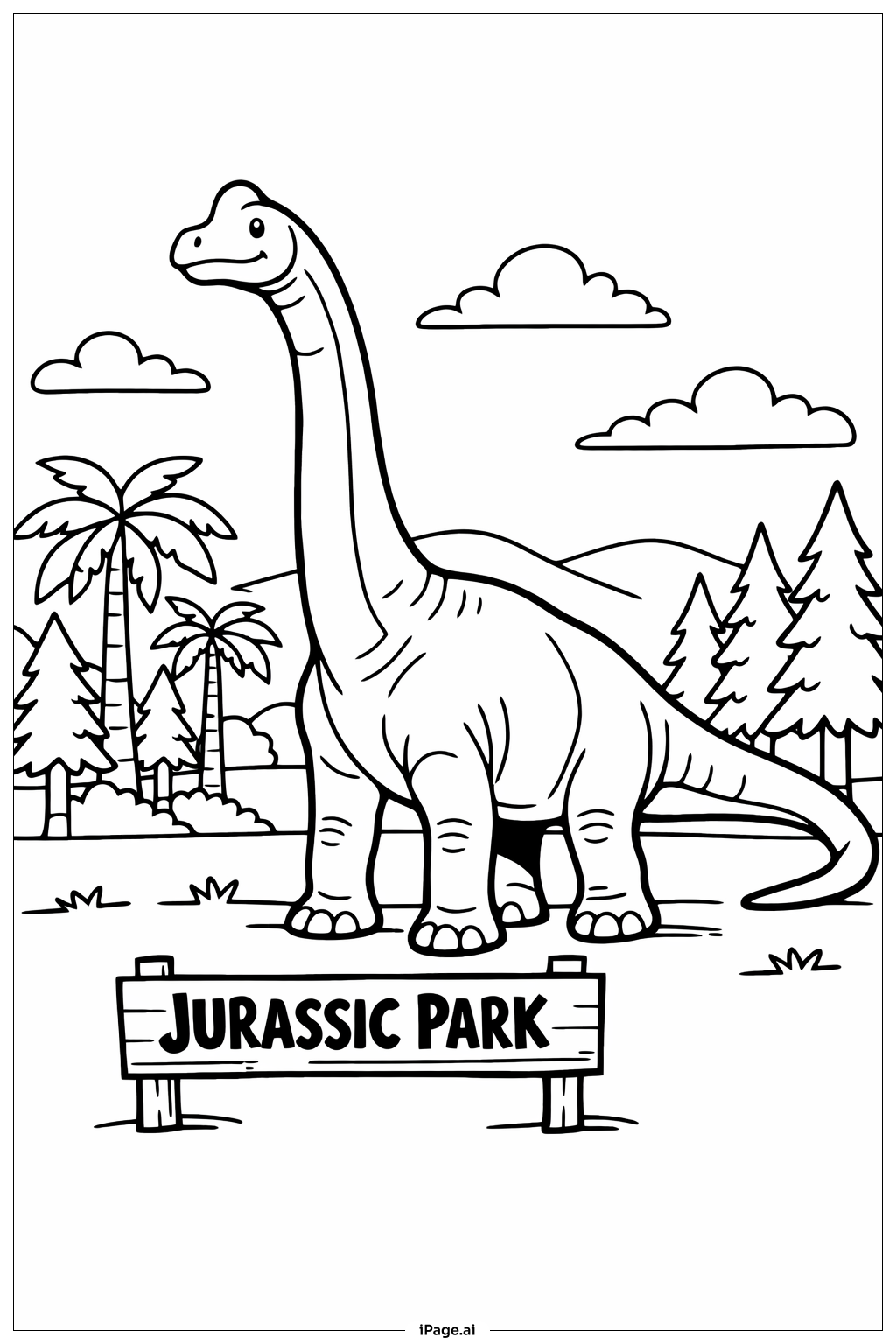
Coloring tips: How to color Jurassic Park Brachiosaurus by Trees coloring page well?
For the Brachiosaurus, consider using earthy tones like gray, brown, or olive green for the body, with lighter shades for the underbelly to create dimension. Add darker shading along the neck and legs to emphasize the muscular structure. The surrounding trees can be colored in various shades of green, from deep forest green to bright lime, creating a lush jungle canopy. Tree trunks work well in browns and grays with hints of moss green. Consider using blue-gray or purple shadows beneath the dinosaur and trees to ground the scene. The background foliage can incorporate tropical colors like emerald, teal, and yellow-green to capture the vibrant Jurassic atmosphere. Don't forget to add highlights on the dinosaur's back where sunlight might filter through the trees, using lighter yellows or whites to create a realistic lighting effect.
Coloring challenges: Which parts are difficult to color and need attention for Jurassic Park Brachiosaurus by Trees coloring page?
• Scale and Proportion Management: The Brachiosaurus's enormous size compared to the surrounding trees requires careful color planning to maintain proper visual hierarchy. Colorists must use darker, more saturated colors for the dinosaur to make it stand out while keeping background elements lighter to create depth perception. Balancing these elements without making the scene look flat or confusing can be challenging for younger artists.
• Texture Differentiation: This image contains multiple surface types including dinosaur skin, tree bark, and leafy vegetation. Each requires a different coloring approach to look realistic. The dinosaur's skin needs subtle shading to show its leathery texture, while tree bark benefits from vertical stroke patterns, and leaves require varied green tones. Maintaining consistency within each texture type while keeping them distinct from each other demands concentration and technique.
• Foliage Density and Layering: The dense jungle vegetation with overlapping leaves and branches creates complexity in determining which elements are in front and which are behind. Colorists must decide on a layering strategy, using lighter colors for distant foliage and darker, more detailed coloring for foreground plants. This depth creation through color requires planning and patience, especially in areas where multiple leaves overlap.
• Long Neck Shading: The Brachiosaurus's signature long neck presents a unique challenge for creating smooth gradients and consistent shading from the head down to the body. Maintaining even color distribution while adding shadows and highlights to show the neck's cylindrical form requires steady hand control and understanding of light direction.
Benefits of coloring books: Advantages of drawing Jurassic Park Brachiosaurus by Trees coloring page
Coloring this Jurassic Park Brachiosaurus scene offers wonderful educational benefits, helping children learn about prehistoric life while developing artistic skills. The image encourages curiosity about dinosaurs, their habitats, and Earth's ancient history. Working with the complex vegetation teaches color mixing and helps kids understand how different shades of green create realistic plant life. The large dinosaur provides an excellent opportunity to practice shading techniques and understand how light and shadow create three-dimensional effects on paper. This coloring page also improves fine motor skills and hand-eye coordination, especially when coloring detailed areas like tree branches and leaves. The project builds patience and focus as children work through the intricate jungle scene. Additionally, it sparks imagination about what life was like millions of years ago, making it both a creative and educational activity that combines art with science learning.