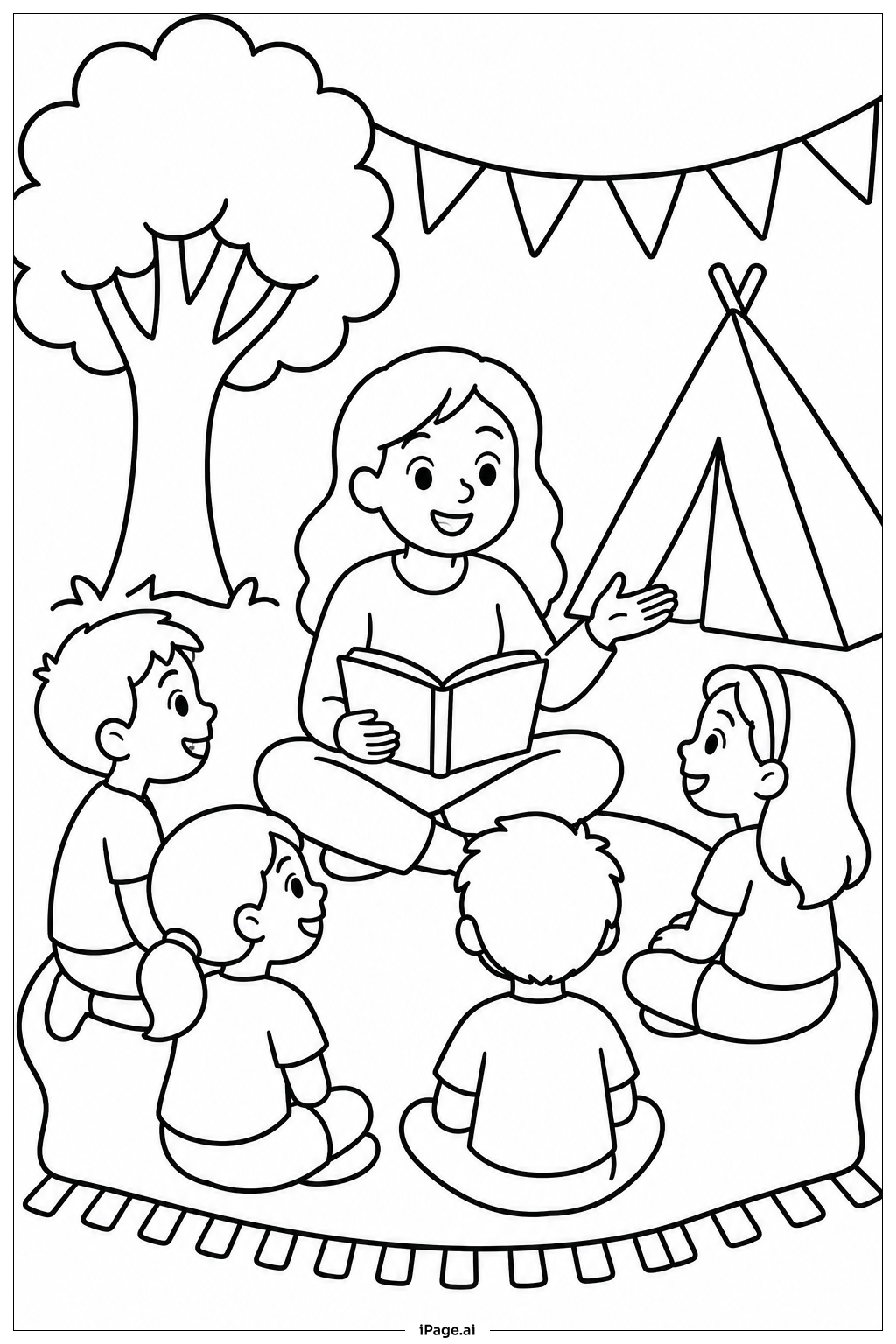
Coloring tips: How to color Juneteenth Storytelling Circle coloring page well?
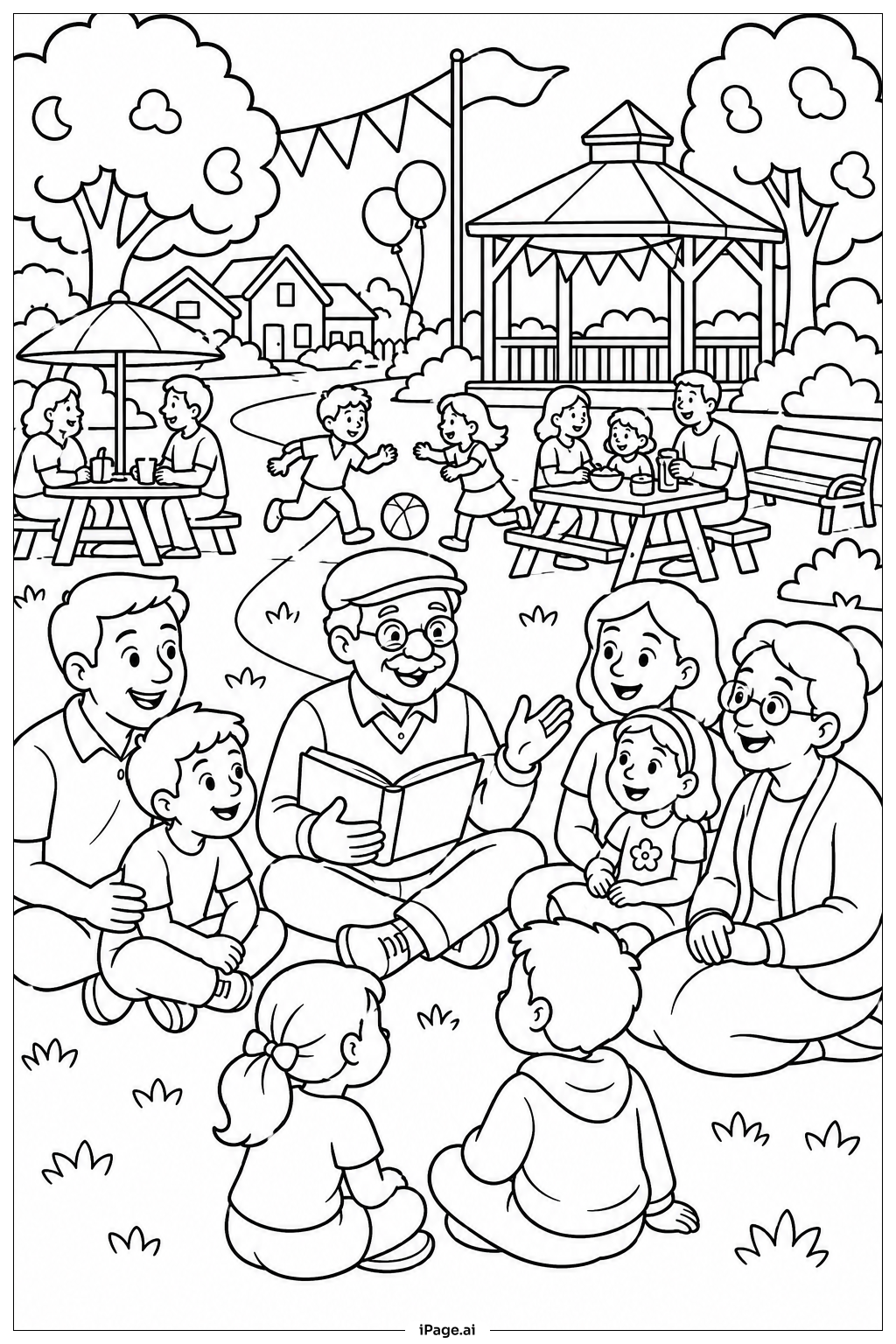
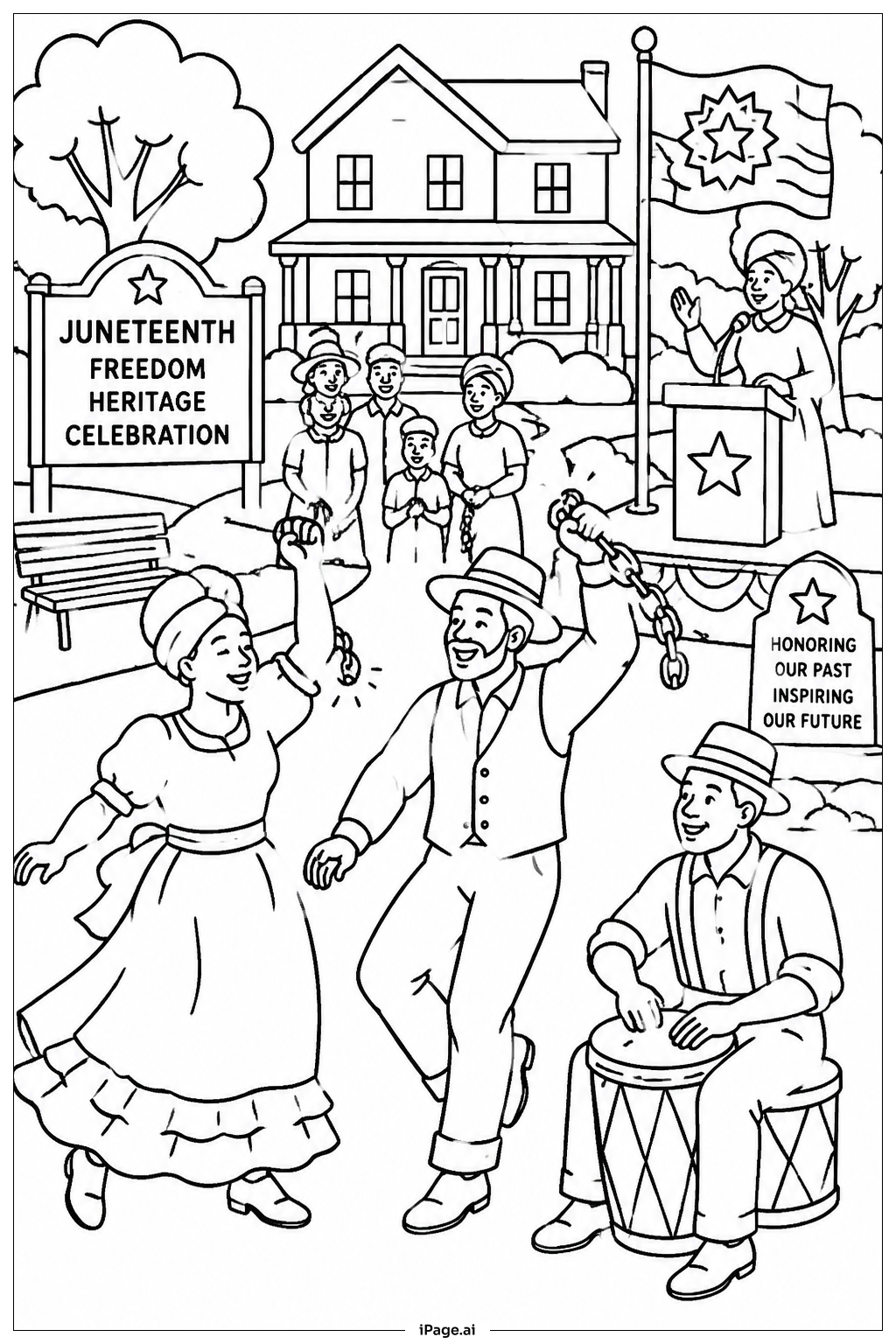
Start with the people in the circle. Use warm skin tones like browns, tans, and deep sienna for the figures to reflect the diversity of the community. Give the elder at the center a dignified look with rich, deep colors for their clothing — deep reds, royal purples, or earthy greens work beautifully. Dress the children in bright, cheerful colors like yellow, orange, and sky blue to show their energy and joy. Use red, black, and green — the colors of the Pan-African flag — somewhere in the scene to honor the spirit of Juneteenth. Color the tree with warm brown bark and lush green leaves. Fill in any quilt or pattern details with bold, contrasting colors to bring those traditional designs to life. Take your time with the background — soft gold or warm amber tones can make the whole scene glow with warmth and celebration.
Coloring challenges: Which parts are difficult to color and need attention for Juneteenth Storytelling Circle coloring page?
• Facial Expressions and Features: Each figure in the circle has a unique face with its own expression. Coloring small facial details like eyes, smiles, and brows requires a fine-tipped tool and a steady hand. Rushing this area can muddy the expressions, so take your time and use lighter tones first before adding darker details.
• Overlapping Figures: Because the people are gathered closely in a circle, their bodies and clothing overlap in many places. Keeping each person's colors distinct without bleeding into a neighboring figure takes careful attention. Use contrasting colors for people sitting next to each other so the composition stays clear and readable.
• Quilt and Pattern Details: Traditional quilt patterns and decorative borders often appear in Juneteenth-themed artwork. These geometric shapes are small and tightly packed. Staying inside the lines while alternating colors takes patience. A thin marker or colored pencil works better here than a wide brush or crayon.
• The Tree Canopy: The large tree overhead has many overlapping branches and clusters of leaves. Coloring this area with depth — using multiple shades of green and brown — adds realism, but blending so many tones in a confined space is challenging. Try layering light greens first, then adding darker greens in shadow areas.
• Cultural Symbols and Clothing Patterns: Any clothing with stripes, embroidery, or cultural motifs requires careful color planning. Deciding which colors go where before you start helps avoid clashes. Using the red, black, and green palette intentionally throughout keeps the image feeling cohesive and true to the Juneteenth celebration theme.
Benefits of coloring books: Advantages of drawing Juneteenth Storytelling Circle coloring page
Coloring this Juneteenth Storytelling Circle image is a meaningful and enriching experience for children and Adults alike. It is more than just a creative activity — it is a way to connect with history and culture in a hands-on, personal way.
For younger children, filling in the figures and patterns builds fine motor skills and hand-eye coordination. Choosing colors for each character encourages decision-making and creative thinking. It also sparks curiosity about who these people are and what stories they are sharing.
For older kids and Adults, the image invites reflection on the importance of storytelling, community, and cultural memory. Coloring can serve as a quiet moment of mindfulness, helping to reduce stress and bring focus. The repetitive motion of coloring has a calming effect that many people find deeply relaxing.
Engaging with imagery rooted in Juneteenth helps build cultural awareness and empathy. It encourages conversations between children and parents or teachers about freedom, heritage, and the value of listening to elders. Art becomes a bridge to understanding history in a gentle, accessible way.
Whether used in a classroom, at home, or as part of a Juneteenth celebration, this coloring page brings people together — just like the storytelling circle it depicts.