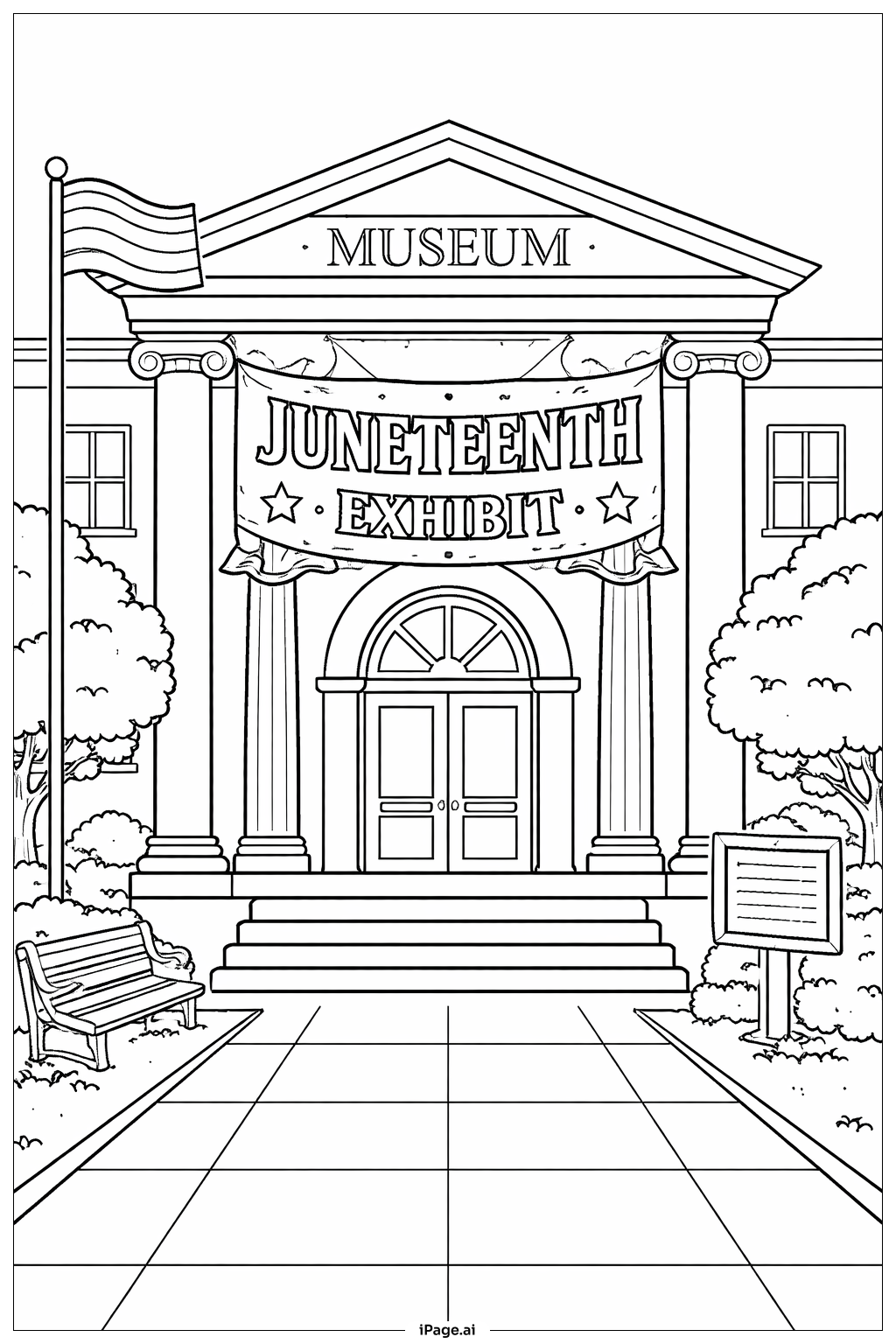
Coloring tips: How to color Juneteenth Heritage Museum coloring page well?
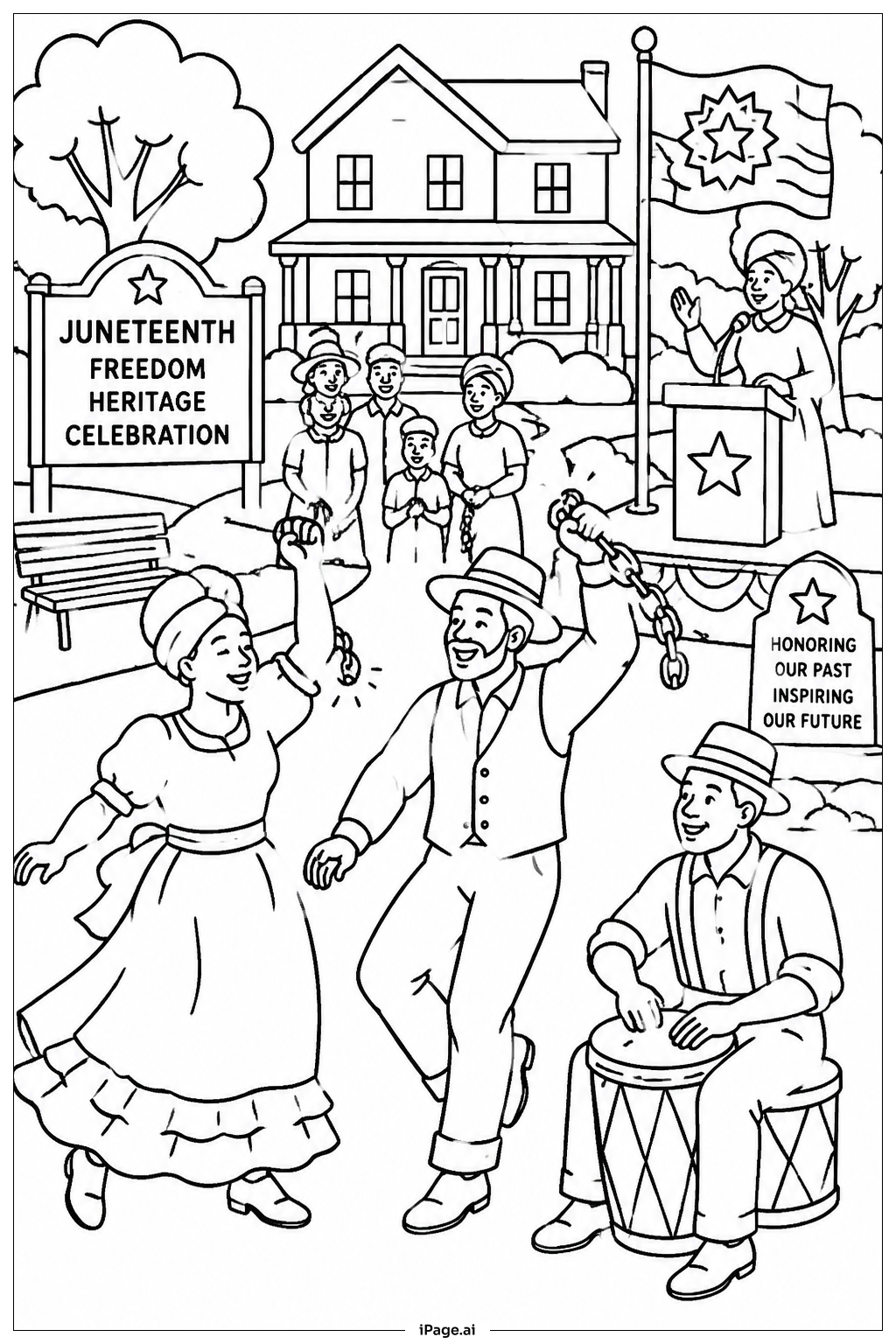
Start with the building's walls using warm tan, cream, or light brown tones to give it a classic, historic feel. Use deep red, navy blue, and gold for banners, flags, and decorative accents — colors that reflect pride and heritage. Color the tall columns white or ivory to make them stand out. The trees and surrounding greenery can be filled in with different shades of green to add life and depth. Use a bright blue for the sky and add soft white for clouds. Gold or yellow works beautifully for stars and freedom symbols throughout the design. For pathways and steps, try light gray or sandy beige. If there are people in the scene, use a rich variety of skin tones to celebrate diversity. Take your time with the smaller decorative details — windows, carvings, and border patterns look great in contrasting colors. Most importantly, have fun and let your creativity shine as you bring this celebration of history to life!
Coloring challenges: Which parts are difficult to color and need attention for Juneteenth Heritage Museum coloring page?
• Building Architecture Details: The museum building has many precise architectural features, including columns, arched windows, and decorative stonework carvings. Staying within the fine lines of these elements requires a steady hand and patience. Younger colorists may find it helpful to use thinner tools like colored pencils for these areas.
• Banner and Text Areas: The banner displaying the museum name includes lettering and ornamental borders. Coloring around small text without smudging or going outside the lines can be tricky. Using fine-tip markers or sharp colored pencils will help keep these areas neat and readable.
• Cultural Symbols and Patterns: Throughout the design, there are heritage-inspired symbols such as stars, freedom icons, and patterned borders. These intricate repeating patterns require careful attention to color placement. It helps to plan your color choices ahead of time so the patterns look consistent and balanced across the whole image.
• Depth and Shading on the Facade: The museum's exterior has layered details — columns in the foreground, walls behind them, and decorative trim in between. Creating a sense of depth without actual shading tools can be challenging. Try using slightly darker shades of the same color family to suggest shadow and dimension naturally.
• Greenery and Natural Elements: The trees and plants framing the building have overlapping leaves and branches that create busy, clustered areas. Choosing multiple shades of green and applying them in sections helps separate the foliage clearly, but requires thoughtful coloring to avoid a flat or muddled look.
Benefits of coloring books: Advantages of drawing Juneteenth Heritage Museum coloring page
Coloring the Juneteenth Heritage Museum page offers a wonderful mix of creative fun and meaningful learning. As kids and Adults fill in this detailed scene, they develop important fine motor skills by carefully navigating lines, patterns, and small decorative details. Holding coloring tools with precision and staying within boundaries strengthens hand-eye coordination over time.
This coloring page also opens up a natural opportunity to learn about Juneteenth — a historic and joyful celebration of freedom and equality. As children color the museum building and its symbols, they can ask questions and have conversations about why this day matters. It turns a creative activity into a gentle history lesson.
Choosing colors and planning how to fill each section encourages creative thinking and decision-making. Kids learn about color combinations, contrast, and visual balance without even realizing it. The process of completing a detailed image also builds focus and patience — skills that carry over into school and daily life.
For older children and Adults alike, coloring can be a calming, meditative activity that reduces stress and promotes mindfulness. Finishing the page gives a real sense of accomplishment and pride. Sharing the completed artwork with family can also spark meaningful conversations about heritage, community, and the importance of remembering history through art.