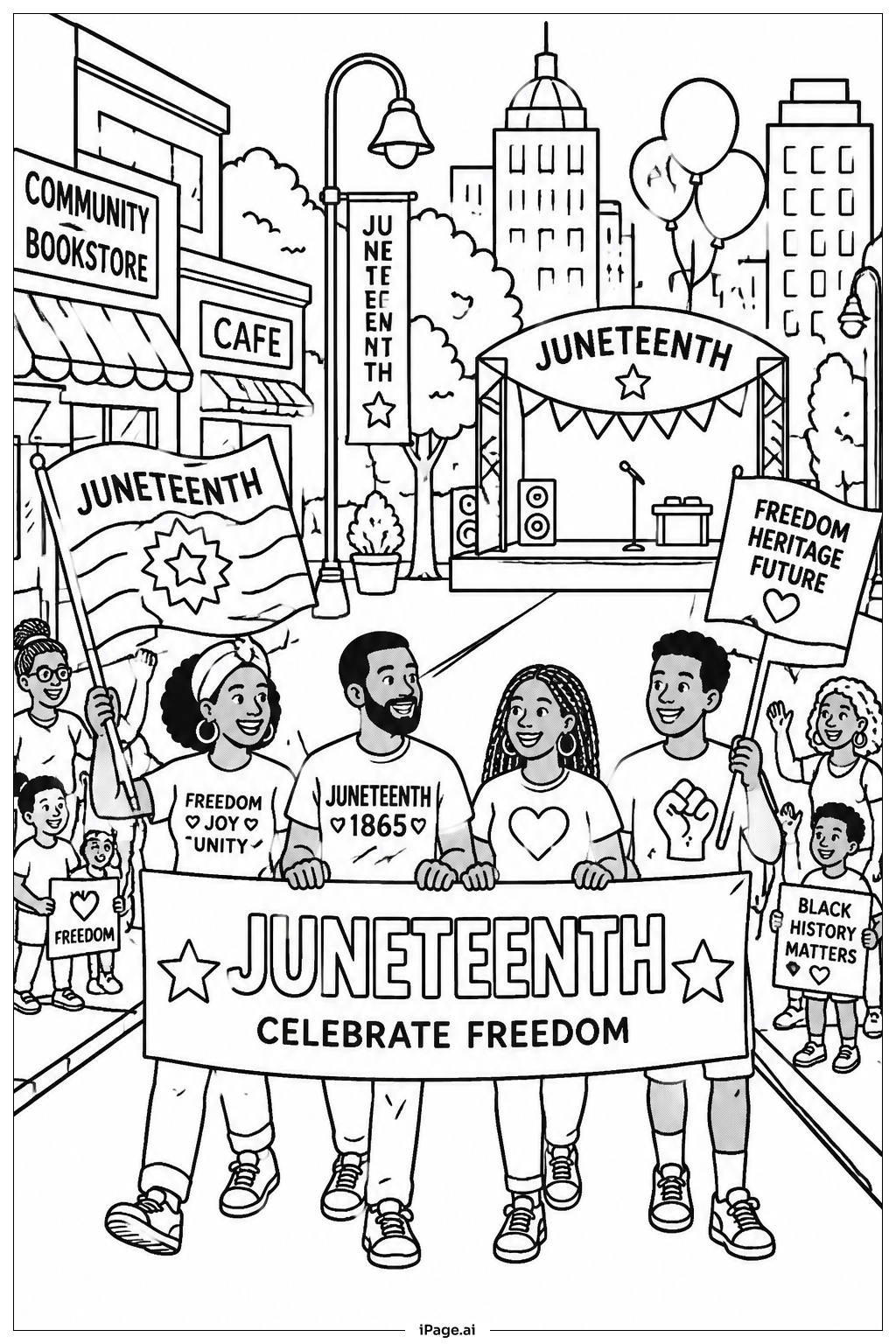
Coloring tips: How to color Juneteenth Freedom March coloring page well?
Start with the sky and background buildings using light blues and warm yellows to create a bright, celebratory daytime feel. Use red, black, and green for clothing and banners, as these colors are closely tied to Juneteenth and African heritage. Give the flags bold, deep colors like red and gold to make them stand out. Color the people's skin tones with a wide variety of warm shades — from light peach to rich brown — to celebrate the diversity of the marchers. Use bright oranges and purples for decorative ribbons and signs to add energy and excitement. Keep the ground a neutral tan or gray so the figures pop. For children coloring this page, try bold and simple strokes first, then add details. Older colorists can blend shades to add depth to faces and fabric folds. Don't be afraid to use your favorite colors freely — this is a celebration of joy and freedom!
Coloring challenges: Which parts are difficult to color and need attention for Juneteenth Freedom March coloring page?
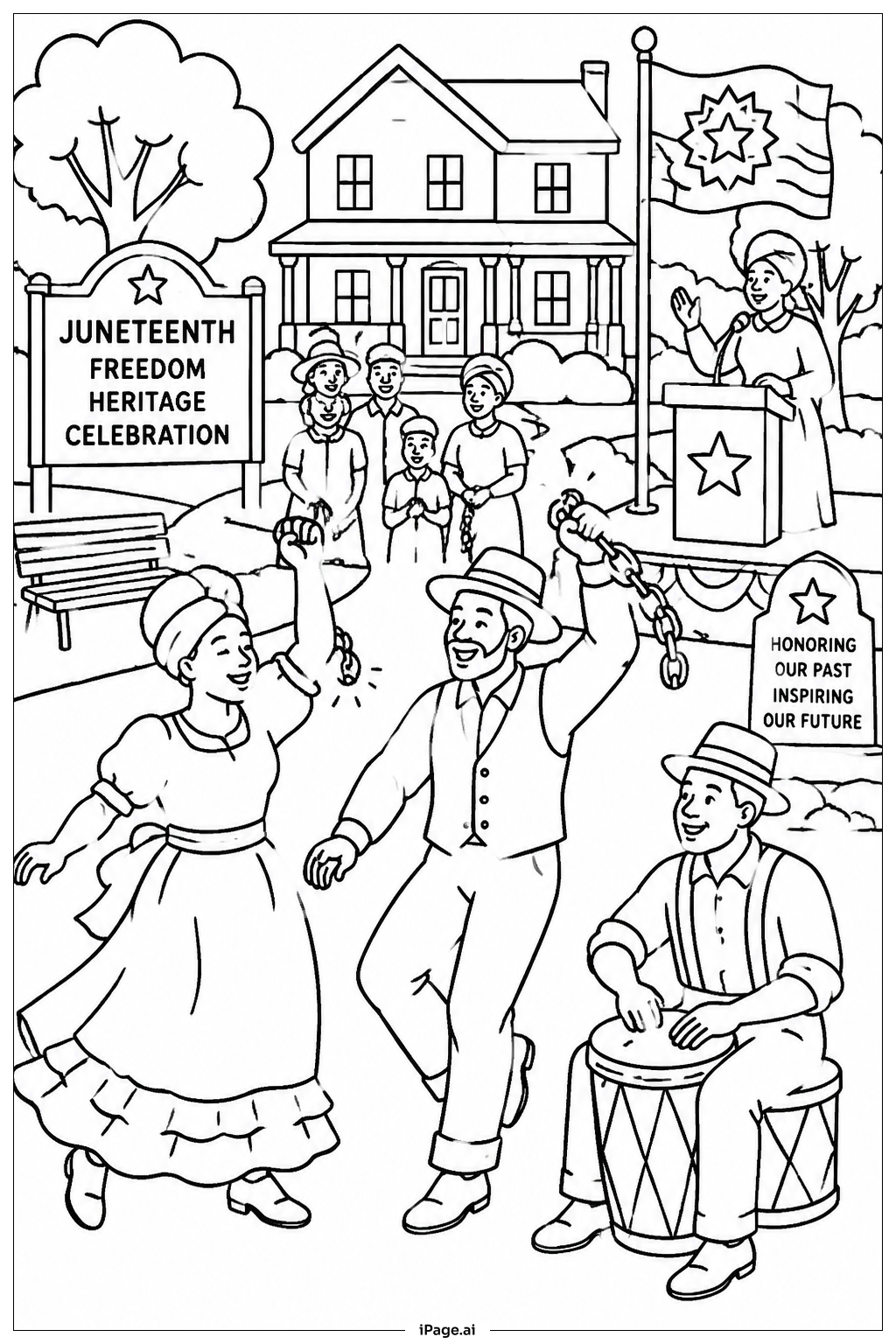
• Crowd of Figures: The march includes many people packed closely together, making it tricky to color each person individually without colors bleeding into one another. Take your time to outline each figure lightly before filling in, and use a fine-tipped tool for the areas where figures overlap.
• Diverse Skin Tones: Representing a wide range of skin tones accurately and respectfully requires careful color selection and blending. Using colored pencils or markers in sets that include many brown and peach shades will help you capture this beautifully.
• Banners and Lettering: Signs and banners contain bold text and detailed borders. Coloring around small letters without going outside the lines is one of the harder parts of this page. A thin brush or fine marker works best for these areas. Try coloring the background of the sign first, then carefully outline the letters.
• Clothing Patterns and Details: Many marchers wear patterned or detailed clothing such as stripes, prints, and layered fabrics. Keeping each outfit distinct while maintaining visual harmony across the scene takes patience. Consider alternating warm and cool colors between neighboring figures.
• Background Depth: Buildings and trees in the background need to feel further away than the marchers in the foreground. Using lighter, less saturated versions of your chosen colors for the background helps create this sense of distance and makes the marching figures feel bold and present.
Benefits of coloring books: Advantages of drawing Juneteenth Freedom March coloring page
Coloring this Juneteenth Freedom March page offers meaningful benefits for Boys, Girls, and Adults alike. For younger colorists, it builds fine motor skills and hand-eye coordination as they carefully color figures, banners, and detailed clothing. Choosing colors thoughtfully also strengthens decision-making and creative thinking.
This image is especially powerful because it connects coloring to history and culture. As children and Adults engage with the scene, they naturally begin to think about what the march represents — freedom, unity, and pride. This makes coloring a quiet but meaningful way to learn about Juneteenth and its importance in American history.
For older colorists and Adults, the complexity of the scene offers a focused, meditative activity. Staying within detailed lines, blending skin tones, and balancing colors across a busy crowd requires concentration that can reduce stress and promote calm.
Coloring diverse figures also encourages empathy and cultural awareness. Representing people of many backgrounds with care and intention helps colorists of all ages appreciate and celebrate human diversity.
Finally, completing this page gives a real sense of achievement. It is a piece of art that carries both personal creativity and historical meaning — something worth displaying and sharing with pride.