Coloring tips: How to color Juneteenth Face Painting Booth coloring page well?
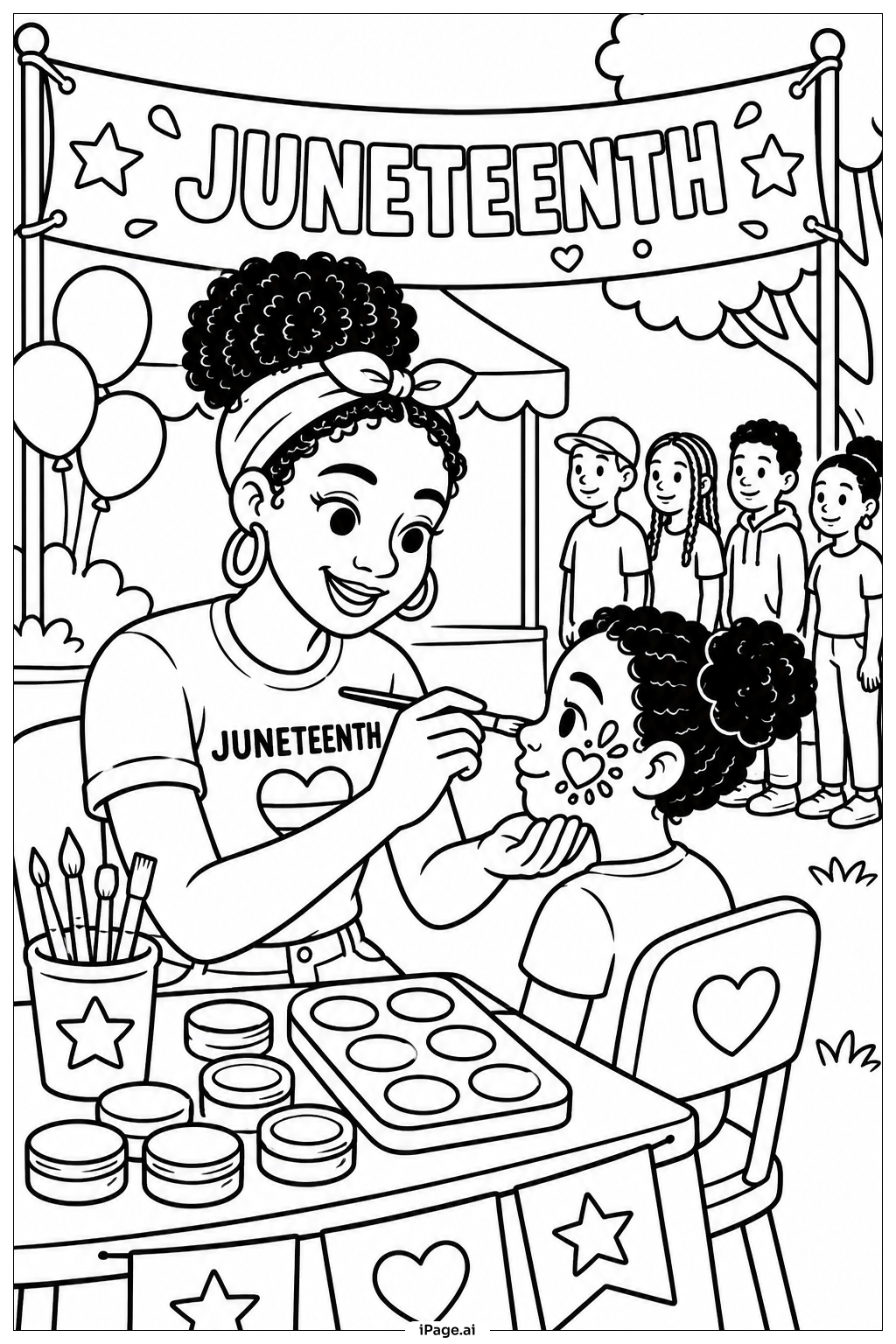
Start with the background elements like banners and booth decorations. Use red, black, and green — the Pan-African colors — to honor the spirit of Juneteenth. These colors look great on flags, streamers, and signs around the booth. Color the artist's clothing in bright, cheerful tones. For the face paint designs, use bold, vivid colors like purple, gold, and sky blue to make them pop. Give the children warm, joyful skin tones and happy expressions. Use yellow or orange for the sun in the background to create a warm summer festival feel. Paint jars and palettes on the table can be filled with every color of the rainbow. Try blending colors gently on the face designs to show the smooth, artistic look of real face paint. Keep the overall palette lively and celebratory to reflect the energy of a Juneteenth festival. There are no wrong color choices here — let your creativity shine!
Coloring challenges: Which parts are difficult to color and need attention for Juneteenth Face Painting Booth coloring page?
• Facial Features and Skin Tones: Coloring human faces requires careful attention to detail. The faces of the artist and children need smooth, even skin tones. Blending colors naturally to avoid harsh lines can be tricky, especially around the cheeks, nose, and forehead. Children should choose colored pencils or watercolors for softer blending results.
• Face Paint Designs on Skin: The face paint designs drawn on the child's face sit on top of skin tones, which means two layers of color must work together. The design must stand out clearly without looking muddy. Use bright, saturated colors for the face paint and apply them after the base skin tone has dried or settled.
• Small Booth Decorations and Details: The booth features small decorative items like banners, stars, lettering, and paint jars. These tiny elements require a fine-tipped tool such as a thin marker or sharpened colored pencil. Rushing through these details can result in smeared or overlapping colors that reduce the image's clarity.
• Crowd and Background Depth: Children waiting in line and background festival elements create layered depth in the scene. Distinguishing foreground figures from the background requires using lighter or cooler tones for objects farther away. This technique of atmospheric perspective can be challenging for younger colorists but adds a professional, polished look.
• Consistent Festival Color Theme: Maintaining a unified color theme tied to Juneteenth throughout the whole image is a creative challenge. Balancing bold Pan-African colors — red, black, and green — alongside the rainbow palette of face paints takes planning. Without a color strategy, the image can feel chaotic rather than celebratory.
Benefits of coloring books: Advantages of drawing Juneteenth Face Painting Booth coloring page
Coloring this Juneteenth Face Painting Booth page offers wonderful benefits for children of all ages. It is a fun and meaningful way to learn about Juneteenth and the cultural traditions that make the holiday special. As kids color the scene, they naturally become curious about what the holiday means and why it is celebrated.
Coloring detailed scenes like this one builds fine motor skills. Staying within lines, switching between colors, and filling small areas all strengthen hand control and pencil grip. These skills support everyday tasks like writing and drawing.
This image also sparks creativity. Children get to make real artistic decisions — choosing colors for the face paint designs, the booth decorations, and the artist's outfit. Every finished page becomes a unique piece of art that reflects the colorist's personality.
Working on a scene full of people and activity encourages focus and patience. Children practice sitting with a task from start to finish, which builds concentration skills useful in school and daily life.
Finally, this page opens the door to meaningful conversations between children and adults about Black history, freedom, and community celebration. Coloring together becomes a shared experience that connects families and classrooms to an important cultural moment. It is creative, educational, and deeply joyful all at once.