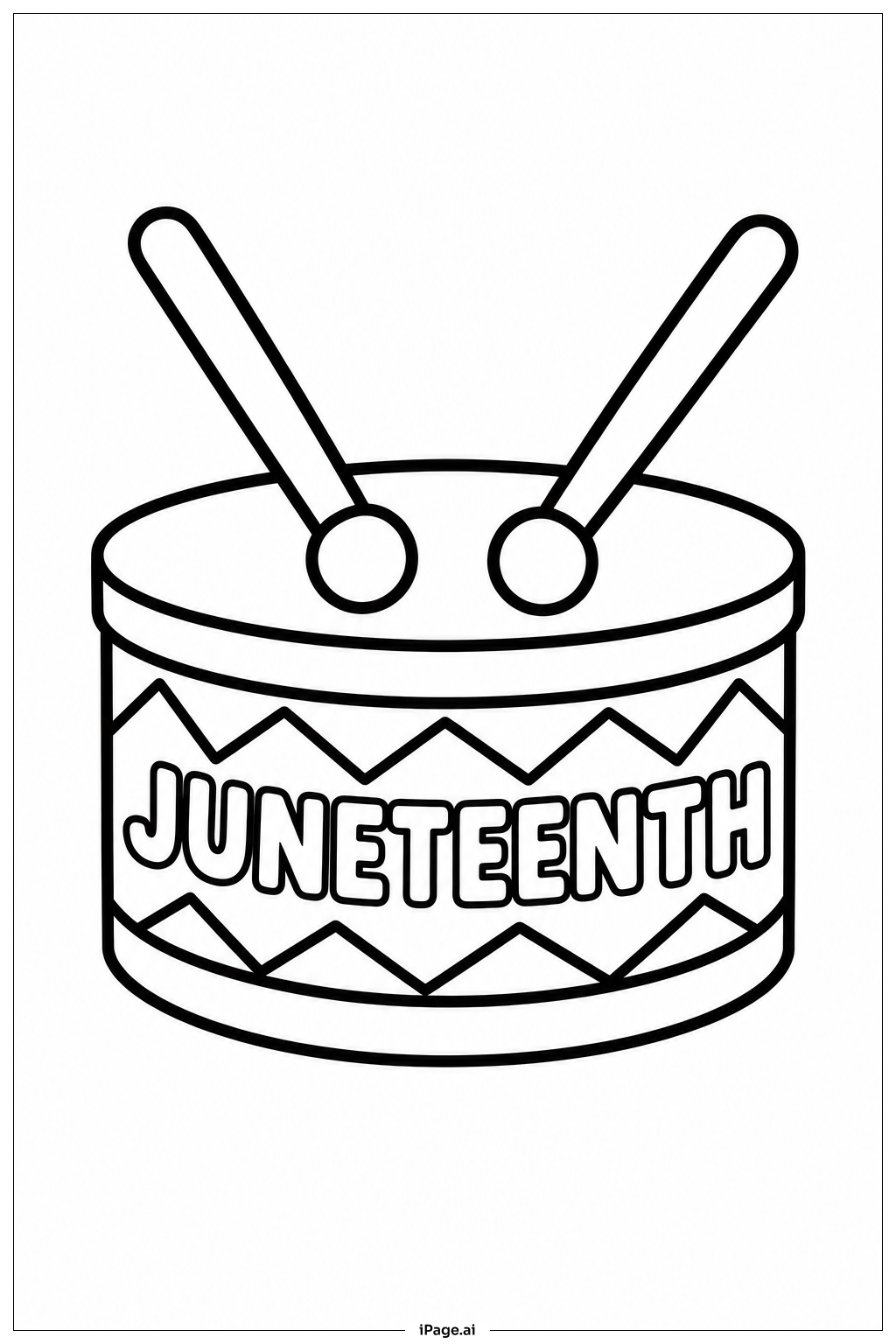
Coloring tips: How to color Juneteenth Drum Instrument coloring page well?
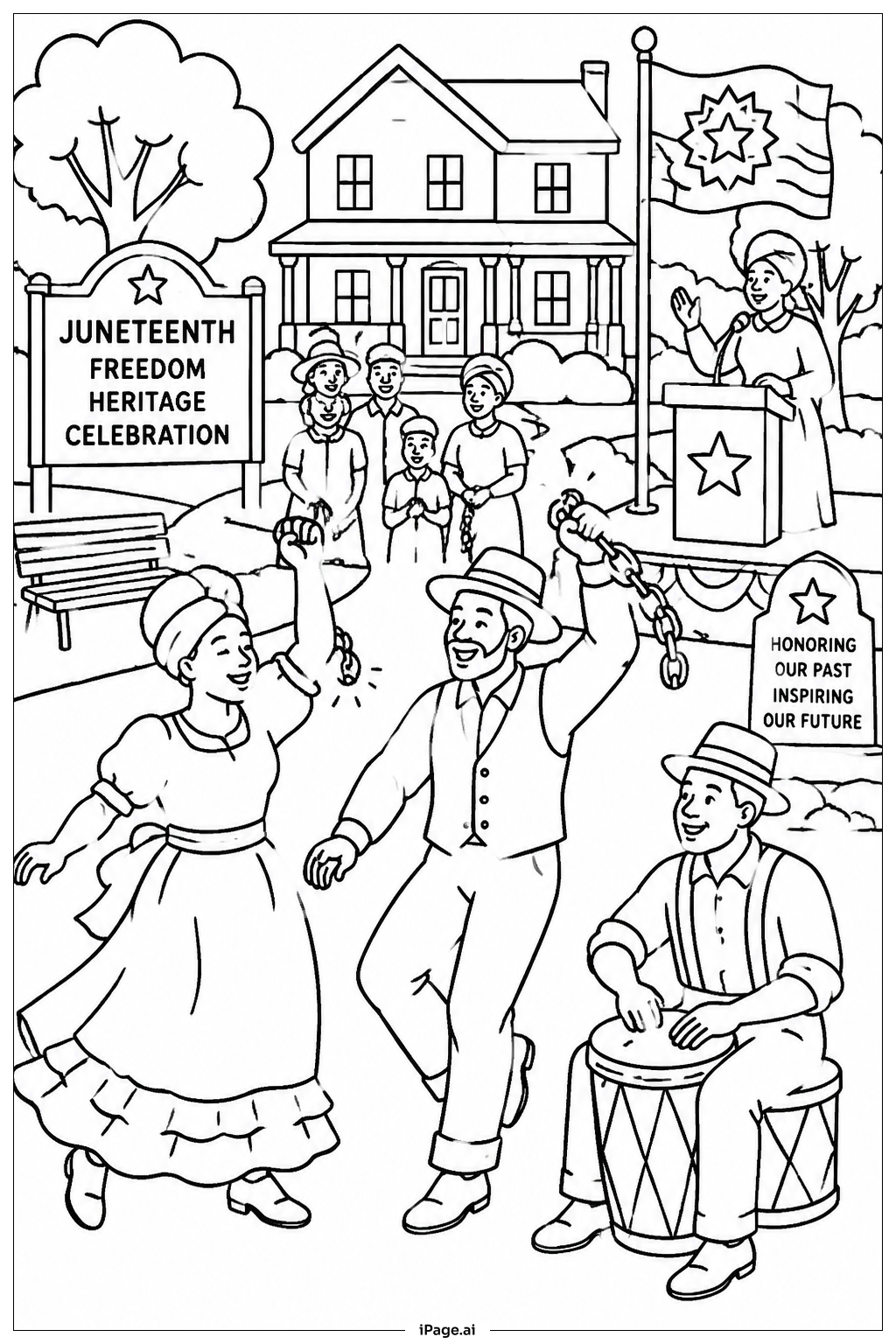
Start with the drumhead at the top. Use a warm tan or light brown to give it the look of stretched animal hide. For the drum body, try deep browns, warm reds, or earthy oranges to reflect natural wood tones. The carved patterns on the sides look great in contrasting colors like gold, cream, or dark burgundy. Color the rope lacing in a bright accent color such as red, green, or black — colors that honor the Pan-African flag tied to Juneteenth. The base can be a darker shade of brown to add depth. Add vibrant background colors like red, green, and black to celebrate the spirit of Juneteenth. Kids can also experiment with patterns inside the geometric shapes to make their drum feel personal and unique.
Coloring challenges: Which parts are difficult to color and need attention for Juneteenth Drum Instrument coloring page?
• Rope and Lacing Details: The zigzag rope pattern wrapping around the drum body is one of the trickiest parts. The lacing creates many small triangular and diamond-shaped spaces that require careful coloring with a fine-tipped tool. Staying inside each small section without going over the lines takes patience and a steady hand.
• Carved Geometric Patterns: The decorative motifs etched into the drum's body include repeated shapes like diamonds, triangles, and lines. Each shape is small and sits close to the next. Coloring each one in a consistent and intentional color scheme without muddling the design can be challenging, especially for younger children.
• Smooth Gradients on the Drum Body: To make the cylindrical drum look three-dimensional, colorists need to apply lighter tones on one side and darker tones on the other. Blending these smoothly without streaks or abrupt color changes requires some practice and the right coloring tools, such as colored pencils or soft-tip markers.
• Drumhead Texture: The top surface of the drum should look like taut, natural hide. Achieving a realistic skin texture with subtle color variation — slightly darker at the edges and lighter in the center — is a nuanced task that challenges more advanced colorists.
• Small Decorative Accents: Any small festive elements surrounding the drum, such as stars, leaves, or border details, are densely packed and require precision. Using a very fine tip or sharpened pencil helps keep these areas clean and visually crisp.
Benefits of coloring books: Advantages of drawing Juneteenth Drum Instrument coloring page
Coloring this Juneteenth drum page offers a wonderful blend of creative fun and cultural learning. As kids and Adults fill in the drum's patterns and shapes, they connect with the rich heritage of African music and the history of Juneteenth — a celebration of freedom and resilience.
For younger children, staying within the lines of the rope lacing and geometric shapes helps build fine motor skills and hand-eye coordination. It also encourages focus and patience, which are important skills for school and everyday life.
Older kids and Adults benefit from the creative decision-making involved in choosing color schemes. Thinking about which colors best represent African heritage or the Juneteenth spirit — like the red, black, and green of the Pan-African flag — adds a meaningful layer to the activity.
Coloring is also a calming, screen-free experience. It gives children a chance to slow down, express themselves, and feel a sense of accomplishment when the page is complete. Displaying the finished artwork can spark conversations about Juneteenth, African traditions, and the importance of music in cultural celebrations.
For families and classrooms, this coloring page is a gentle and engaging way to honor history while making something beautiful together.