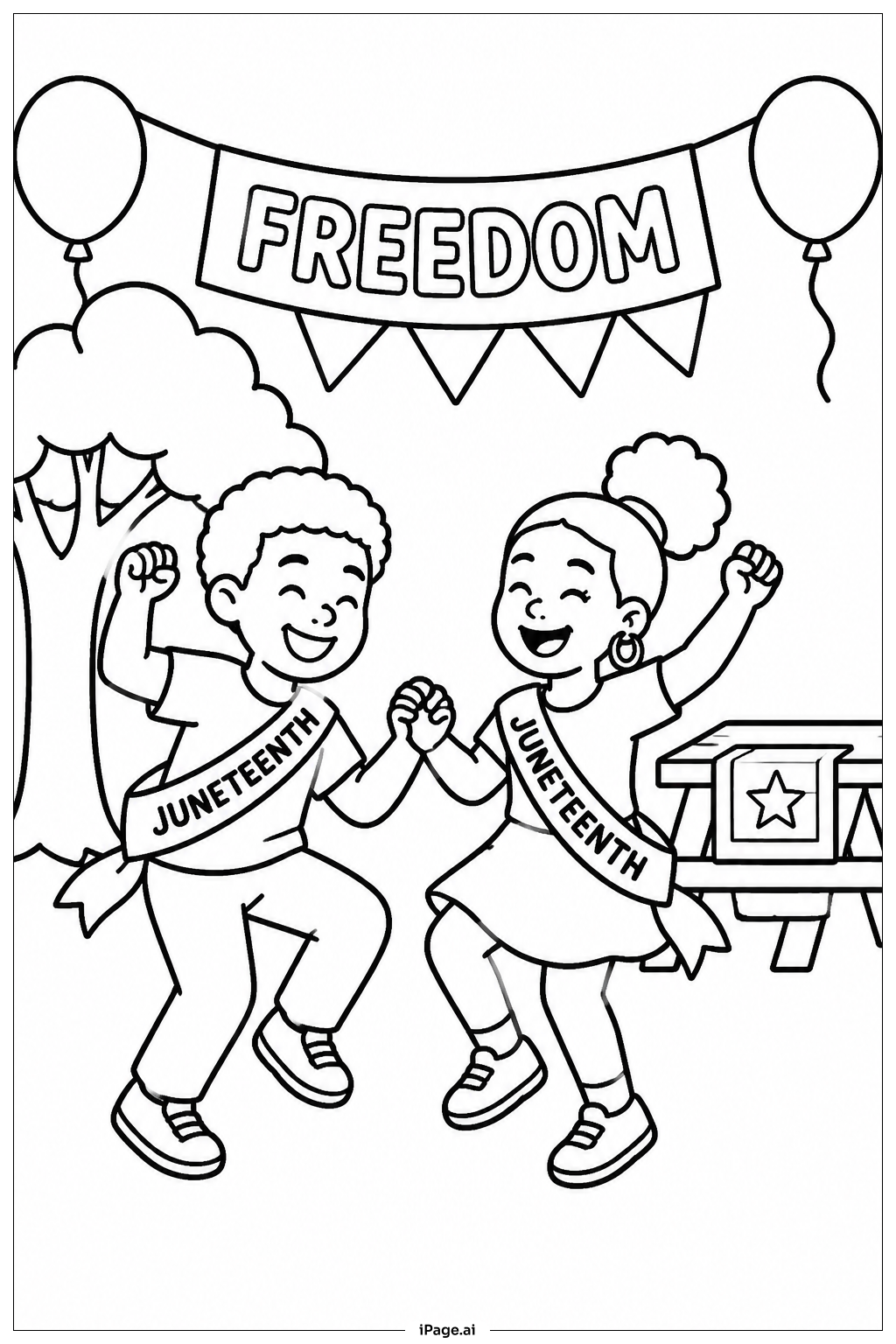
Coloring tips: How to color Juneteenth Children Dancing coloring page well?
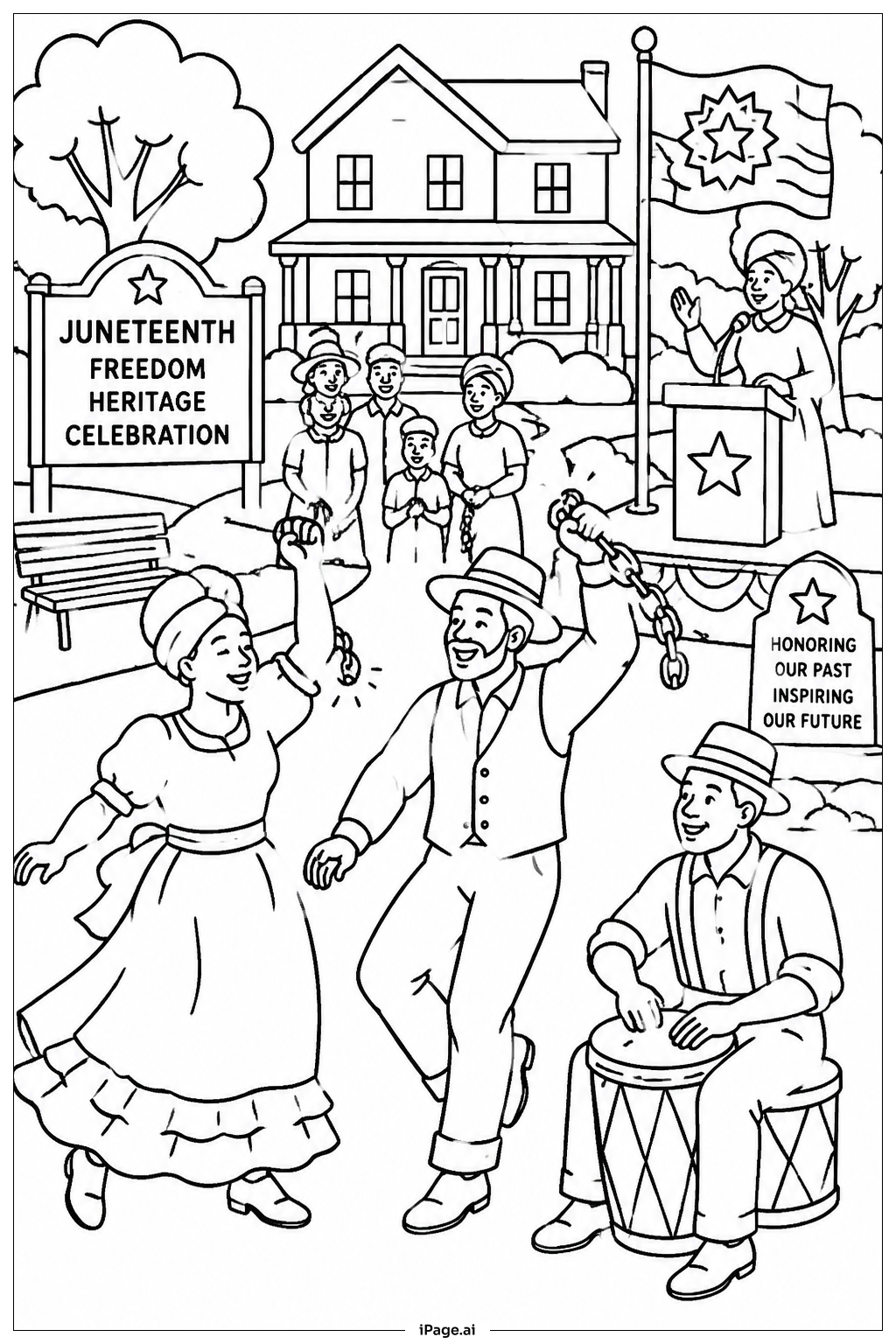
Start with the children's skin tones using warm browns, tans, and golden hues to reflect the diversity of the community. For their clothing, use rich, vibrant colors like red, green, gold, and black — colors often associated with Juneteenth and African heritage. Try deep reds and bright yellows for the flowing fabrics and patterned garments. Color the ribbons and banners in red, white, and blue to honor the American freedom theme, or add personal creative choices. Use bright oranges and yellows for sunburst shapes in the background. The balloons can be a rainbow of colors. Keep the sky a warm golden or blue tone to suggest a sunny summer celebration. Encourage creativity — there are no wrong color choices here. Let the image feel as joyful and colorful as the celebration itself.
Coloring challenges: Which parts are difficult to color and need attention for Juneteenth Children Dancing coloring page?
• Overlapping Figures: The dancing children are positioned close together, with arms and bodies overlapping. Keeping each child's outfit and skin tone visually separate requires careful attention. Use light pencil outlines or color boundaries before filling in to avoid colors bleeding into neighboring areas.
• Intricate Clothing Patterns: Traditional and festive garments often feature detailed patterns, stripes, and decorative trim. These small, repeating design elements are tricky to color neatly, especially for younger children. Fine-tipped colored pencils or thin markers work best for these detailed areas.
• Dynamic Movement Lines: The flowing fabric, hair, and ribbon details that show movement can be confusing to color because they curve and wrap around the figures. Take time to trace where each element begins and ends before applying color, so the sense of motion is preserved rather than flattened.
• Background Elements: The background includes multiple layered elements such as banners, balloons, stars, and sunbursts. With so many shapes competing for attention, it can be hard to decide which colors to use without making the scene feel too busy. Try using softer, lighter shades for background items and bolder colors for the children in the foreground.
• Facial Details: The children's expressive faces — smiles, eyes, and small features — are tiny and require a steady hand and fine tools. Rushing this area can smudge or overpower the delicate lines. Use sharp pencils and color gently to bring out each face's joy without losing the detail.
Benefits of coloring books: Advantages of drawing Juneteenth Children Dancing coloring page
Coloring this Juneteenth Children Dancing page offers a wonderful mix of creative and educational benefits for children of all ages. As kids fill in the scene with color, they naturally develop fine motor skills and hand-eye coordination, especially when working on the detailed clothing patterns and small facial features. Choosing colors for skin tones, garments, and backgrounds also encourages color awareness and artistic decision-making. Beyond the artistic growth, this image is a gentle and engaging way to introduce children to the history and meaning of Juneteenth — a celebration of freedom, community, and cultural pride. Seeing joyful children dancing together can inspire conversations about heritage, diversity, and why this holiday matters. The act of coloring itself is calming and meditative, helping children focus and reduce stress. It also builds patience and attention to detail. For older children, the complexity of the overlapping figures and intricate patterns provides a satisfying challenge. For younger children, the bold outlines and expressive characters make the image approachable and fun. Overall, this page turns a simple creative activity into a meaningful cultural experience that celebrates both freedom and joy.