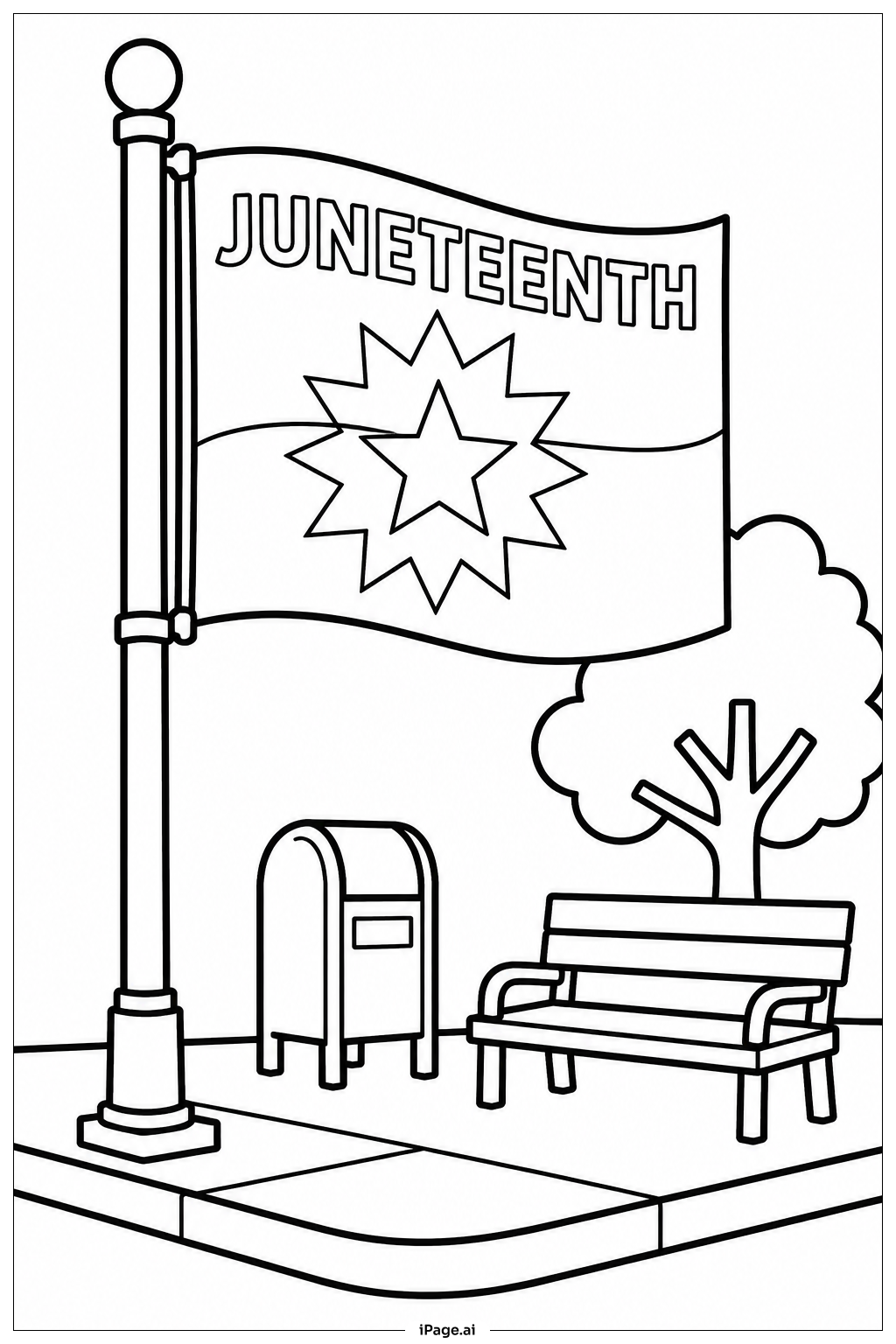
Coloring tips: How to color Juneteenth Flag Street Corner coloring page well?
Start with the flag itself. Use a bright, vivid red for the top half and a deep royal blue for the bottom half. The central arc or horizon line should be colored white or a soft cream to make it stand out. The star at the center can be filled with white or a bright yellow to make it shine. For the pole, use a medium gray or silver. The street sign and signpost can be colored green and white, just like real street signs. The sidewalk and background can use light gray, tan, or soft earth tones to keep the flag as the main focus. Feel free to add a blue sky, green grass, or even colorful buildings in the background to celebrate the joyful spirit of Juneteenth. Use bold, confident strokes for the flag to make it look powerful and full of pride.
Coloring challenges: Which parts are difficult to color and need attention for Juneteenth Flag Street Corner coloring page?
• Flag Color Accuracy: The Juneteenth Flag has very specific colors — red on top and blue on the bottom, divided by a white arc. Getting these colors right while keeping clean, sharp edges between the sections can be tricky. Young colorists may find it hard to stay inside the lines where the arc meets the two color fields, so using a fine-tip marker or colored pencil first to outline the border before filling in is a good idea.
• The Central Star and Arc Design: The star and the burst or arc shape at the center of the flag are detailed and require careful coloring. The star needs to be filled neatly without bleeding into the surrounding color. The arc shape curves gracefully and demands steady hand control to follow its outline smoothly. Take your time and work slowly in these areas.
• Shading the Flag Fabric: Flags naturally have folds and ripples in the fabric. If the image shows any fabric movement, adding light and shadow to suggest depth can be challenging. Use slightly darker shades of red and blue along the folds, and leave lighter areas where the fabric catches light, to give the flag a realistic, flowing look.
• Street Corner Details: The signpost, street signs, and sidewalk include small text and geometric shapes that require patience and precision. Coloring small letters or numbers on signs without smudging takes a careful hand. Using fine-tipped tools for these small details will give a much cleaner result.
• Background Balance: The background elements like buildings, sky, or pavement should support the flag without overpowering it. Choosing colors that are slightly muted or lighter than the flag helps keep the viewer's eye focused on the main subject — the Juneteenth Flag itself.
Benefits of coloring books: Advantages of drawing Juneteenth Flag Street Corner coloring page
Coloring this Juneteenth Flag street corner scene offers many wonderful benefits for kids and families. First, it is a great way to learn about an important part of American history. As you color the flag, you can talk about what Juneteenth means — it celebrates the end of slavery in the United States, and the flag's colors and symbols tell that story. This makes coloring both fun and educational.
Second, working on the flag's details — like the arc, the star, and the two color sections — helps build fine motor skills and hand-eye coordination. Staying inside the lines and blending colors carefully strengthens focus and patience.
Third, choosing colors and deciding how to shade the flag sparks creativity. Kids can experiment with different shades of red, blue, and white to make their version unique and personal.
Fourth, this coloring page can open up conversations between children and adults about freedom, equality, and why it is important to celebrate the achievements of all people. It encourages empathy and cultural awareness in a calm, creative setting.
Finally, completing a coloring page gives a sense of accomplishment. When kids finish their Juneteenth Flag, they can feel proud — just like the flag itself represents pride, freedom, and hope for the future.