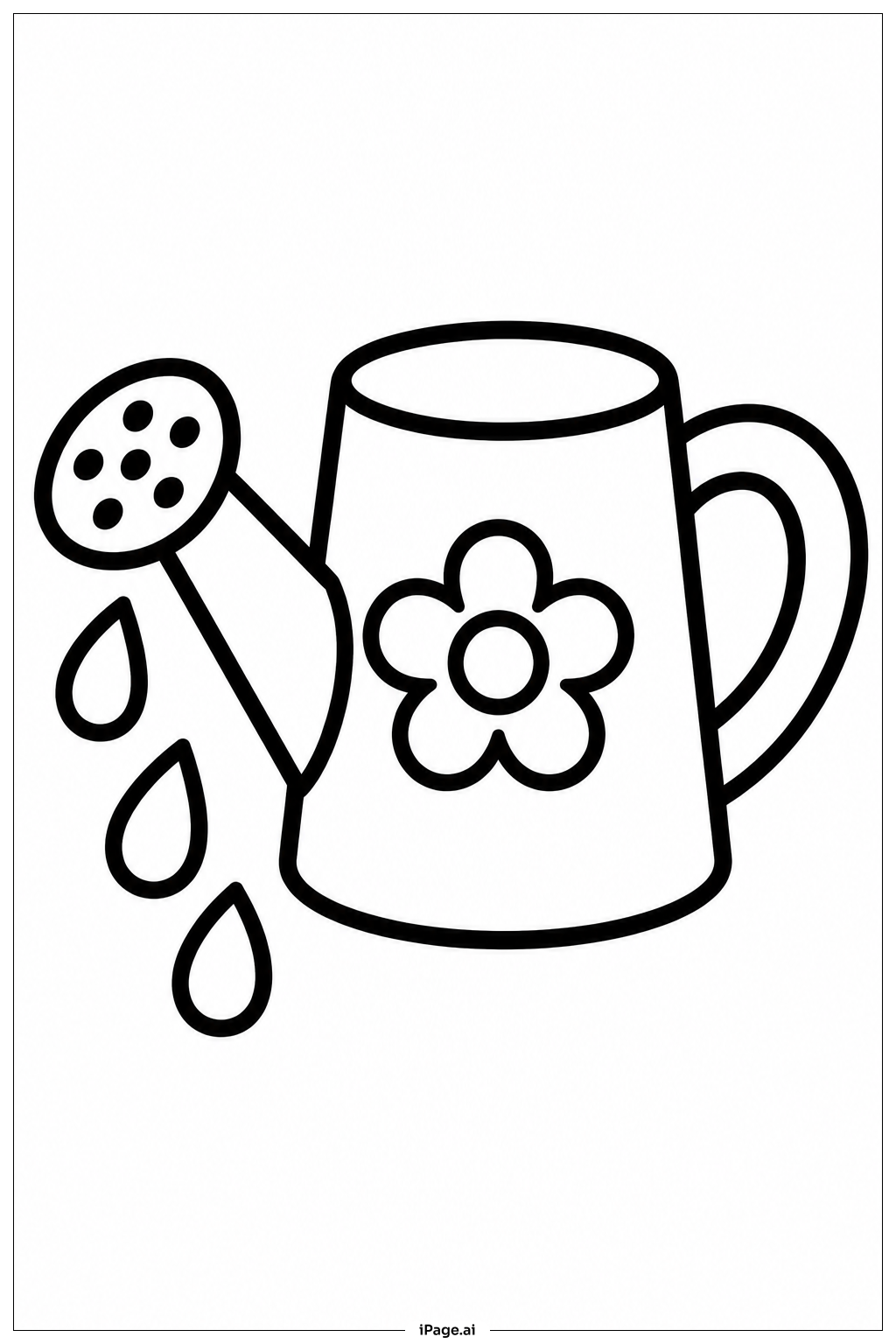
Coloring tips: How to color June Watering Can coloring page well?
Start by choosing a bright, cheerful color for the main body of the watering can. Light blue, mint green, or sunny yellow all work beautifully and give it a fresh summer feel. Use a darker shade of the same color along the edges to add depth. For the flowers, try warm pinks, oranges, and purples to make them pop. Color the leaves in different shades of green — lime green for younger leaves and deeper forest green for fuller ones. The spout and handle can be colored in a complementary tone, like teal or golden brown. Fill the background patterns with soft pastel colors to keep the focus on the watering can. Take your time with the small petal details — thin markers or colored pencils work great for staying inside the lines. Have fun mixing colors and making this garden scene your own!
Coloring challenges: Which parts are difficult to color and need attention for June Watering Can coloring page?
• Intricate Floral Patterns: The watering can is covered with detailed flowers, petals, and leaf designs. Coloring each petal individually without smudging neighboring areas requires patience and a steady hand. Thin-tipped colored pencils or fine markers are strongly recommended for these sections.
• Curved Surface Shading: The round, curved body of the watering can is tricky to shade realistically. To show its three-dimensional shape, you need to apply lighter tones in the center and gradually deepen the color toward the edges. This technique can be challenging for younger colorists who are still learning to blend.
• Small Background Details: The tiny dots, swirls, and filler patterns surrounding the main design are very small and closely packed together. Keeping colors neat and consistent across these tiny spaces demands careful control of your coloring tool, making it easy to go outside the lines.
• Spout and Handle Proportions: The long, narrow spout and curved handle have thin outlines that are easy to color over accidentally. Staying precisely within these narrow shapes without bleeding into the floral decorations nearby takes focused effort and fine-tipped tools.
• Color Harmony Across the Whole Image: With so many different elements — flowers, leaves, the can body, the handle, and background details — choosing colors that all look good together can be challenging. Planning your color palette before you begin, and testing colors on a separate sheet, will help the final result look balanced and visually pleasing.
Benefits of coloring books: Advantages of drawing June Watering Can coloring page
Coloring this June Watering Can page offers a wonderful range of benefits for kids and adults alike. For younger children, it helps develop fine motor skills and hand-eye coordination as they carefully fill in the petals, vines, and tiny background patterns. Staying within the lines builds focus and concentration, skills that carry over into reading and writing. Choosing which colors to use encourages creative thinking and personal expression — there is no wrong answer, just fun decisions. For older kids and adults, this page offers a calming, meditative activity that helps reduce stress and quiet a busy mind. The repetitive motion of coloring small patterns is soothing and can bring a real sense of relaxation after a long day. Completing the full image also gives a satisfying sense of accomplishment, boosting confidence and self-esteem. The garden theme connects colorists to the beauty of nature and the cheerful energy of June, sparking curiosity about plants, flowers, and the outdoors. Whether you color it quickly for fun or take your time to make it a masterpiece, this page is a joyful creative experience for everyone.