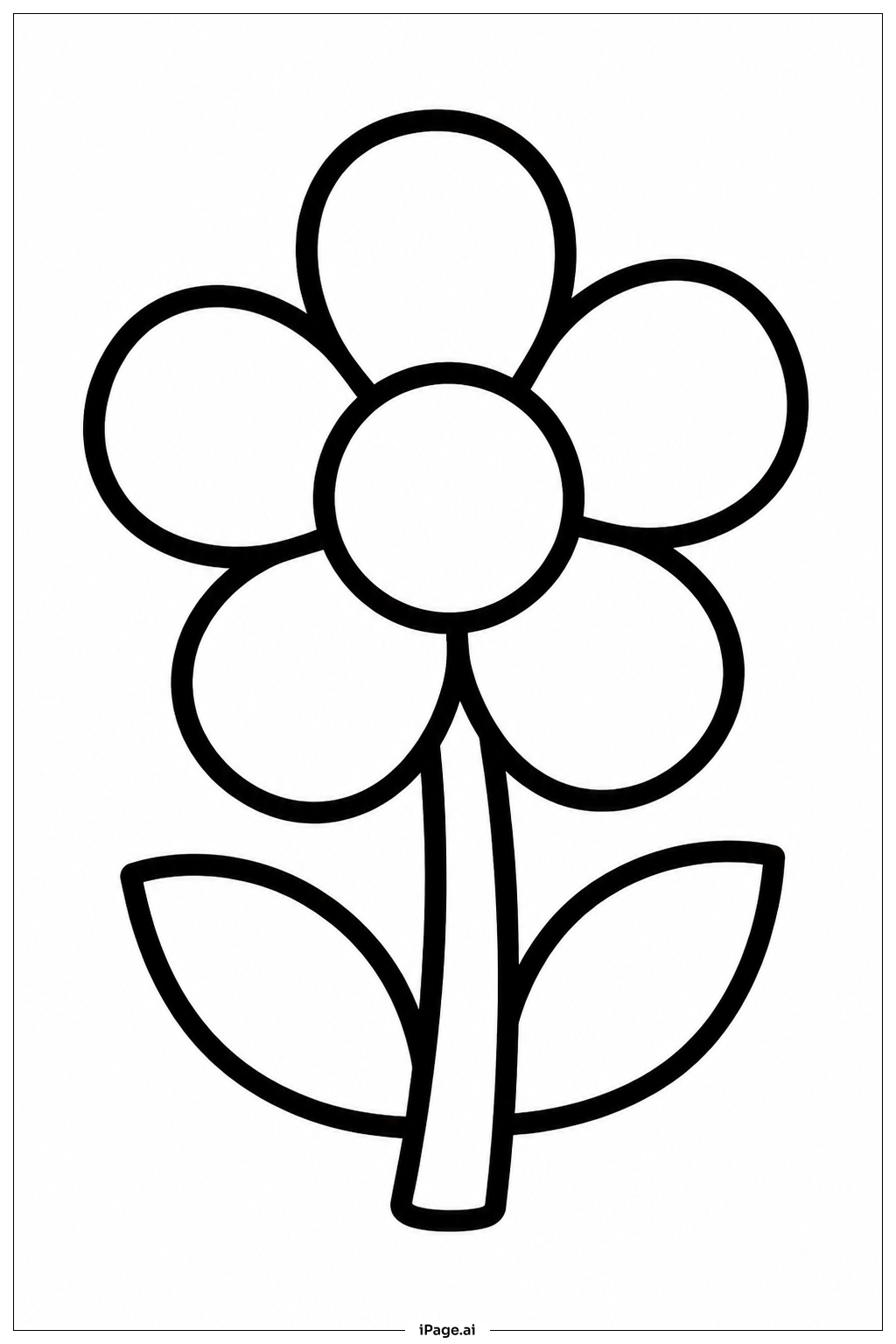
Coloring tips: How to color June Single Flower coloring page well?
Try using bright and warm tones like yellows and oranges to reflect the sunny feeling of June. You can color the petals with shades of pink, red, or lavender for variety. Use different greens for the stem and leaves to show depth and light. For the small dots and patterns on the petals, you might pick contrasting colors like white or a light pastel to create interesting highlights. Don’t be afraid to mix colors gently where the petals overlap to give a more natural look. Adding soft blue or sky tones in the background will make your flower stand out beautifully.
Coloring challenges: Which parts are difficult to color and need attention for June Single Flower coloring page?
- The thin lines and small patterns on the petals require careful coloring to stay inside the edges, which can challenge younger artists.
- Blending colors smoothly on the gently curved petals might be hard without smudging or going over the lines.
- Coloring the delicate leaf details evenly without making the stem look too dark or flat takes patience.
- Keeping consistent color saturation across all petals while varying the tones for realistic shading can be tricky.
- Maintaining neatness in tight sections near the flower center and stem connection demands fine motor control and attention.
Benefits of coloring books: Advantages of drawing June Single Flower coloring page
Coloring this single flower helps improve hand-eye coordination through careful coloring inside small areas. It encourages creativity by allowing choices of colors and shading styles to make the flower unique. Working on the delicate patterns builds patience and focus, which are great skills for young artists. This image also supports learning about nature and the beauty of simple forms, inspiring appreciation for flowers and the outdoors. Lastly, completing this page boosts confidence and provides a relaxing, satisfying activity suited for kids and grown-ups alike.