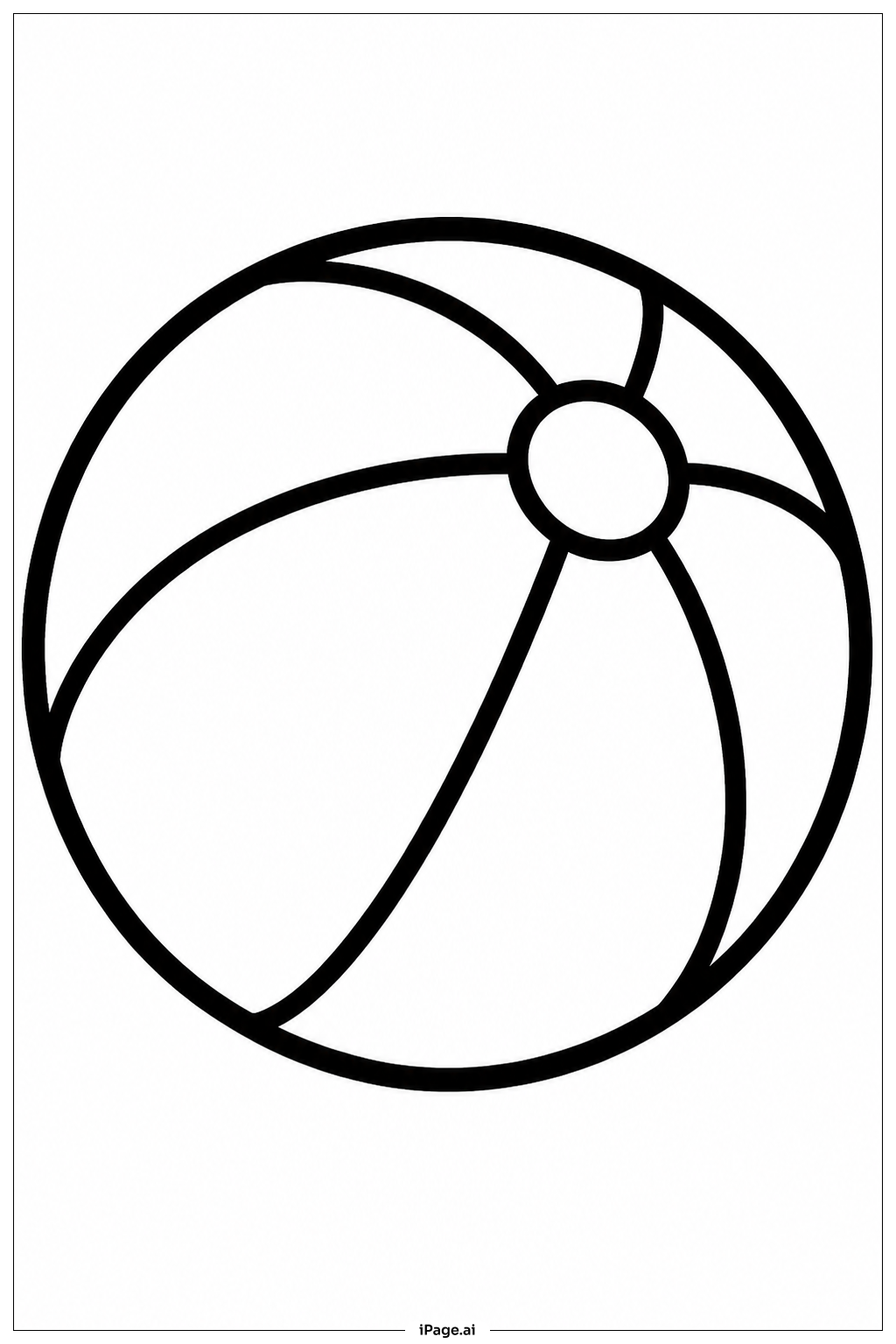
Coloring tips: How to color June Beach Ball coloring page well?
Start by choosing bright, bold colors for the beach ball sections — think red, yellow, blue, orange, green, and pink. Alternate the colors so no two touching sections are the same shade. Use a light sky blue for the background sky and a deeper blue or turquoise for the water and waves. Color the sun yellow or golden orange and add a soft pale yellow around it for a warm glow. For the sand, use tan, beige, or sandy yellow. Shells can be cream, peach, or light pink. To make the beach ball pop, press harder with your colored pencils or use markers for vivid, saturated sections. Add white highlights on the ball to give it a shiny, inflated look. Keep the wave lines light blue or white to show movement and sparkle. This image works beautifully with crayons, colored pencils, or markers — all tools are welcome!
Coloring challenges: Which parts are difficult to color and need attention for June Beach Ball coloring page?
• Beach Ball Section Boundaries: The beach ball is made up of several curved sections that meet at a central point at the top and bottom. Staying neatly within each curved boundary can be tricky, especially near the narrow tips where the sections converge. Take your time with these areas and use a fine-tipped tool for better control.
• Color Alternation Planning: To make the beach ball look realistic and vibrant, you need to alternate colors so that no two adjacent sections share the same hue. Planning your color sequence before you start helps avoid mistakes. With six or more sections, counting and previewing your palette in advance is a smart move.
• Adding Dimension to a Round Object: A beach ball is a three-dimensional sphere, but the outline is flat. Creating the illusion of roundness requires shading — adding slightly darker tones toward the edges of each section and leaving a lighter area near the center. This technique can be challenging for younger colorists but adds a great sense of depth.
• Water and Wave Details: The wave lines around the ball are delicate and close together. Coloring these small, curved shapes without muddying the colors or going outside the lines takes a steady hand. Using short, light strokes that follow the curve of each wave works best.
• Balancing the Overall Composition: With a bright beach ball as the focal point, the background elements like the sky, sun, sand, and water should support rather than compete. Choosing softer, lighter tones for the background while keeping the beach ball vivid helps create a balanced and eye-catching final result.
Benefits of coloring books: Advantages of drawing June Beach Ball coloring page
Coloring this June Beach Ball page brings a wonderful mix of fun and learning. For younger children, tracing and filling the bold, curved sections of the beach ball builds fine motor skills and hand-eye coordination. Choosing and alternating colors sharpens decision-making and early pattern recognition.
The bright, summery theme naturally lifts mood and sparks creativity. Kids get to imagine their own perfect beach day while deciding which colors make the ball most exciting. This kind of open-ended creative choice builds confidence and self-expression.
For older children and teens, the challenge of shading a round object and creating depth through color introduces basic art concepts like form, value, and composition. These are foundational skills that carry over into drawing, painting, and design.
The calming, repetitive motion of coloring also helps reduce stress and improve focus — especially helpful during the busy end of the school year in June. It encourages patience and attention to detail in a low-pressure, enjoyable way.
Whether done solo or as a group activity at a summer gathering, this page is a simple, screen-free way to celebrate the joy of June and the start of summer. It is a great activity for Boys, Girls, and Adults alike, making it a perfect pick for all ages.