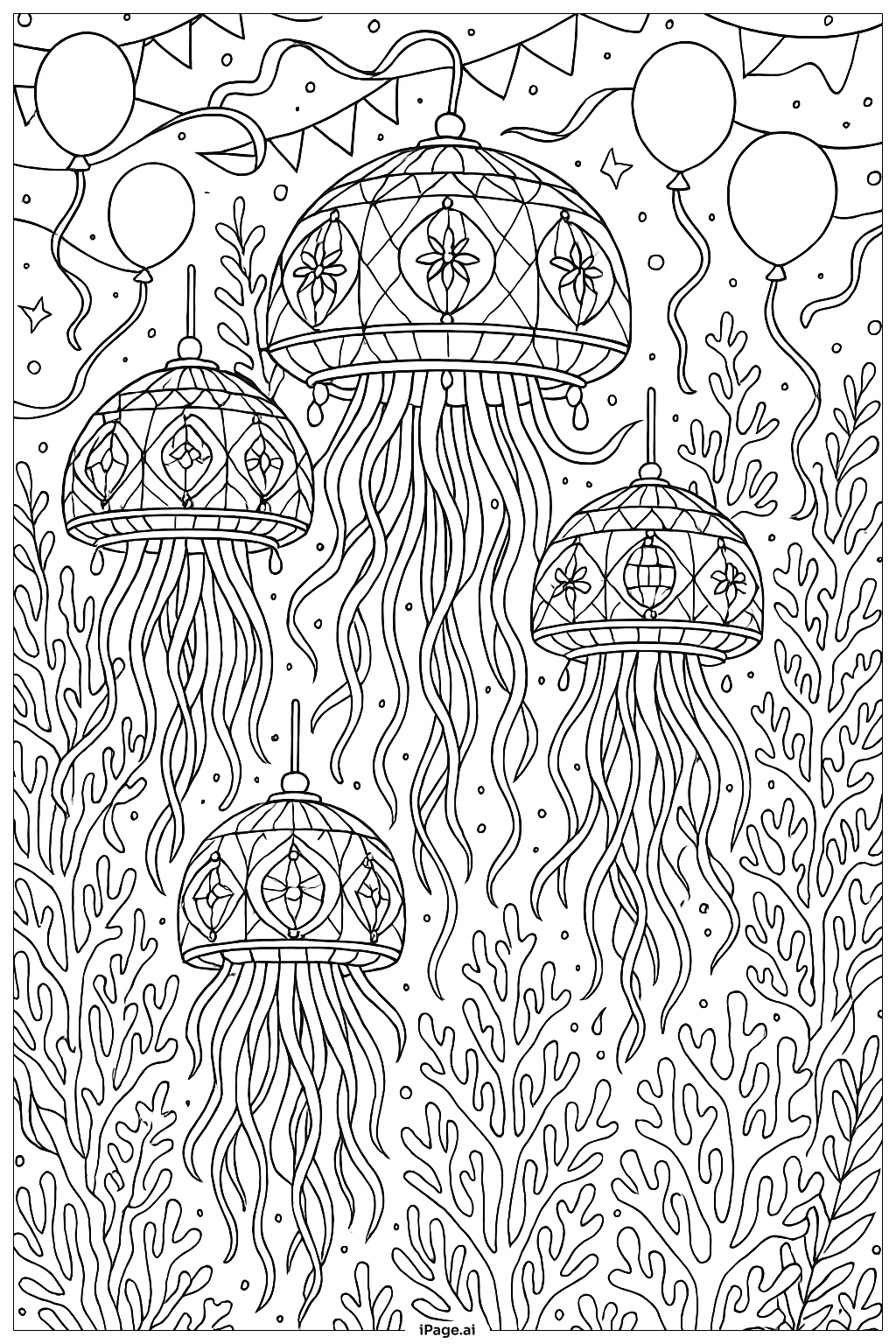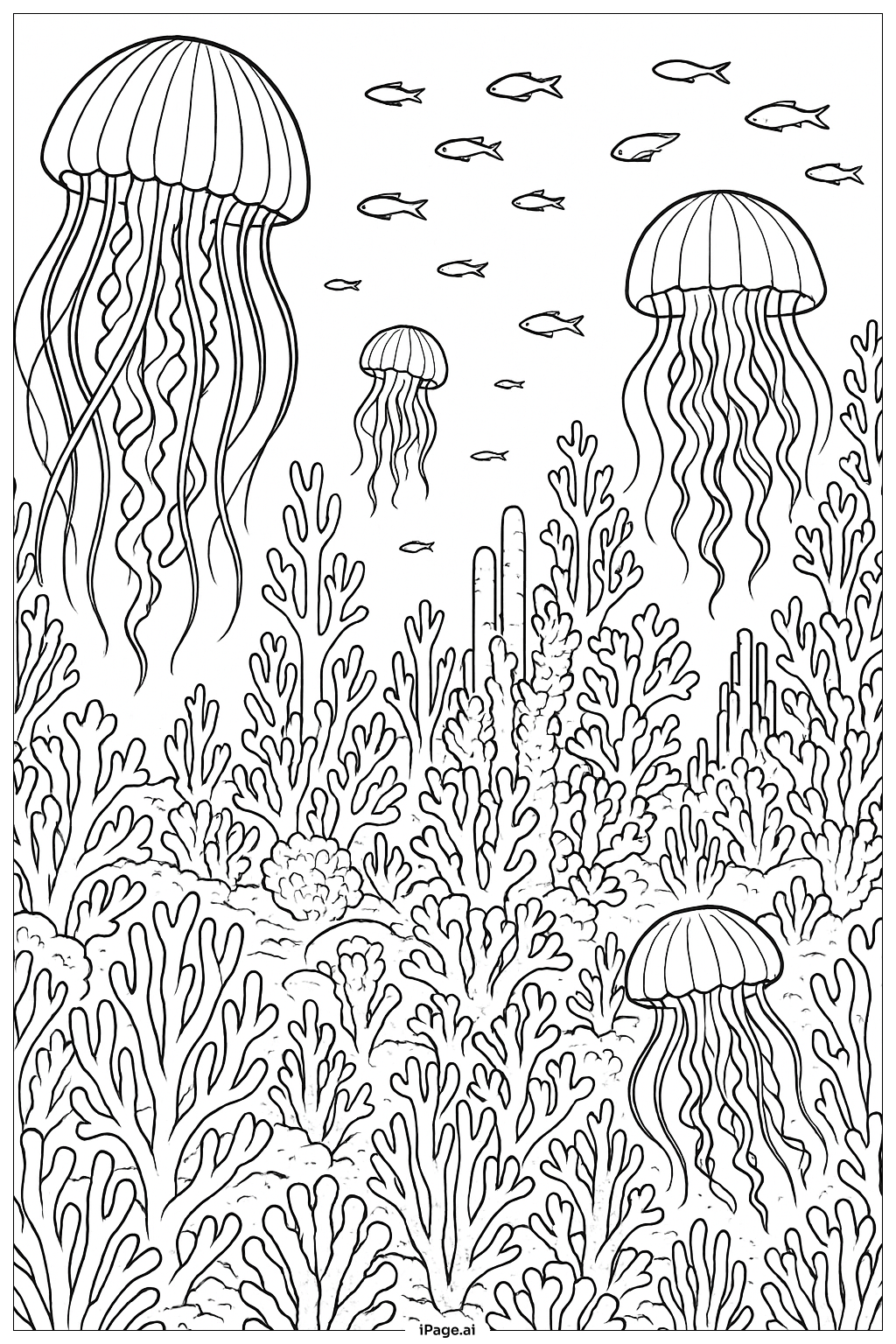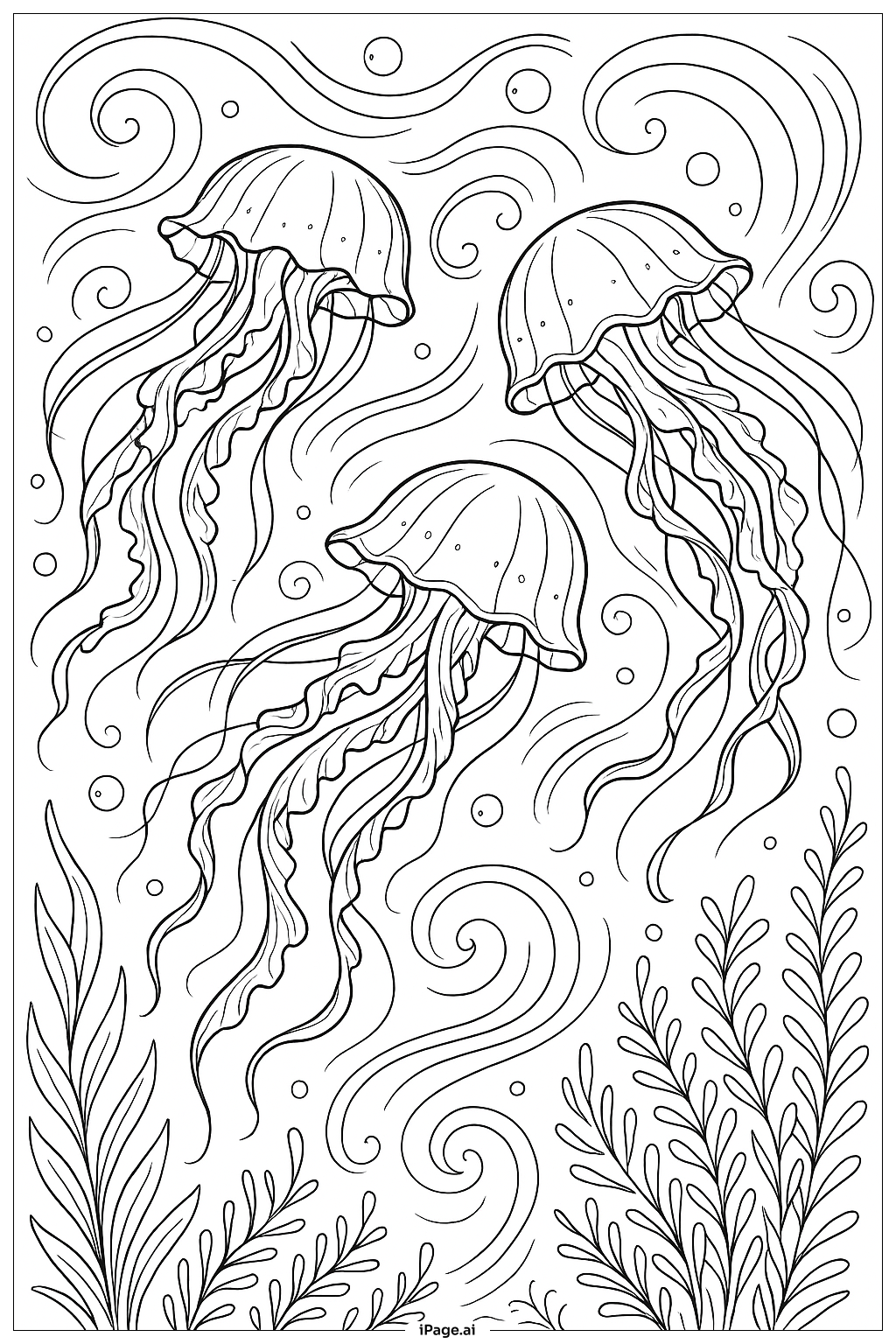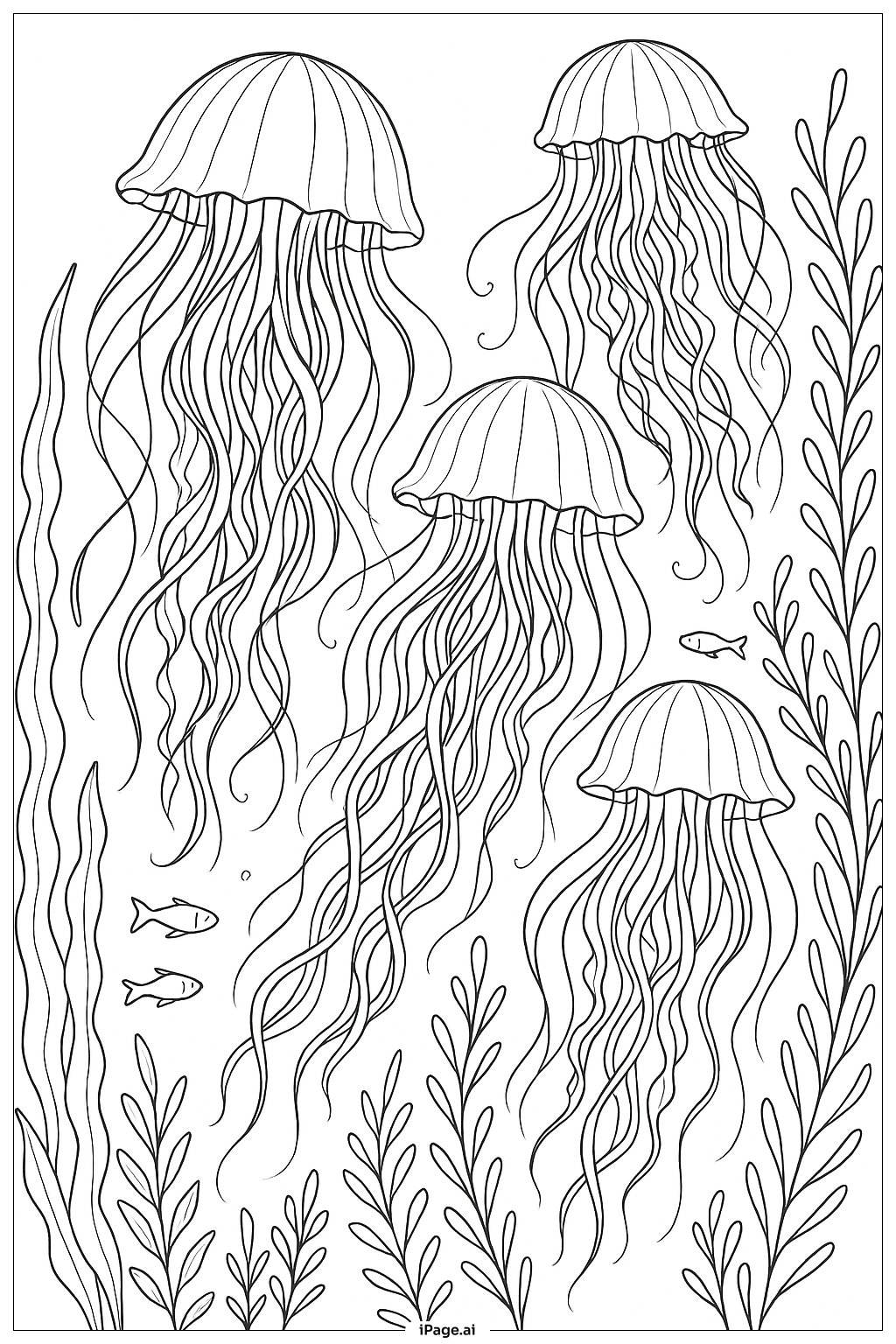
Coloring tips: How to color Jellyfish Simple Lines coloring page well?
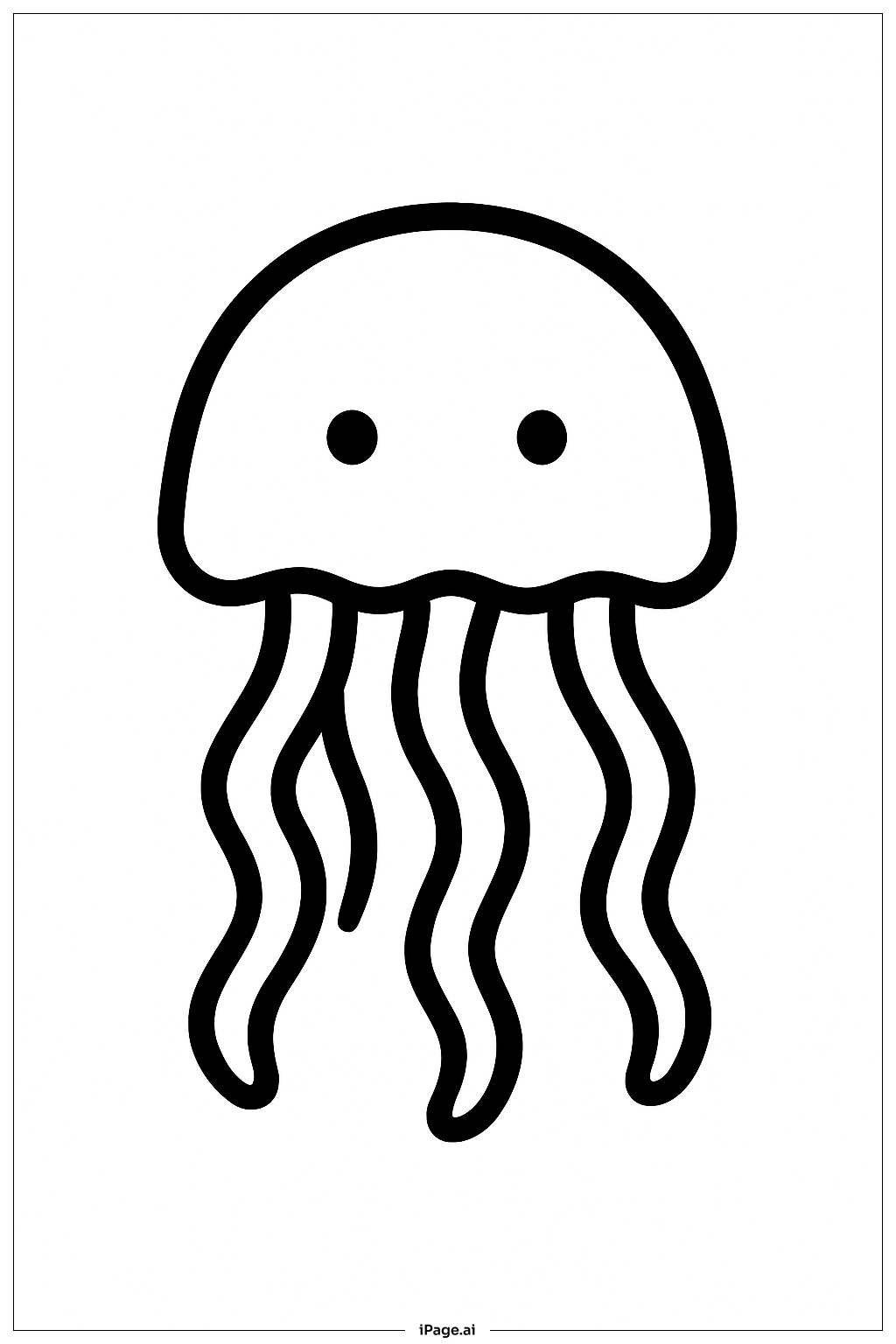
For the jellyfish bell, try soft pastel shades like light pink, lavender, or pale blue to create a translucent, glowing effect. You can add darker shades of the same color along the edges to give dimension. The tentacles offer wonderful opportunities for gradient coloring—start with a deeper color at the top near the bell and gradually lighten toward the tips. Consider using purple fading to pink, or turquoise blending into pale yellow. For a magical underwater look, add hints of iridescent colors like silver or pearl. The background could be colored in ocean blues ranging from deep navy to light aqua, or left white to emphasize the jellyfish itself. Don't forget to add small dots or sparkles around the jellyfish using white gel pens or leaving tiny spots uncolored to simulate bioluminescence or water bubbles.
Coloring challenges: Which parts are difficult to color and need attention for Jellyfish Simple Lines coloring page?
• Tentacle Management: The numerous flowing tentacles present the main challenge, as they overlap and interweave throughout the lower portion of the image. Young colorists must carefully track which tentacle is which to maintain consistent coloring for each strand. This requires patience and attention to detail, especially where tentacles cross over one another. Using different shades for adjacent tentacles can help distinguish them and prevent confusion.
• Maintaining Flow and Movement: Capturing the graceful, flowing nature of the jellyfish requires thoughtful color application. Children should consider how to use color direction and pressure to emphasize the downward, wavy movement of the tentacles. Coloring in the direction of the lines helps reinforce the sense of motion, while harsh, inconsistent strokes can disrupt the fluid appearance.
• Creating Translucency Effects: Jellyfish have a naturally transparent, glowing quality that can be challenging to replicate with coloring materials. Achieving this effect requires light pressure, layering techniques, or leaving some areas less saturated. Younger children may press too hard, resulting in solid, opaque colors that don't capture the delicate, see-through nature of these creatures.
• Bell Shading and Dimension: The dome-shaped bell needs subtle shading to appear three-dimensional rather than flat. This involves understanding where light would naturally hit the curved surface and where shadows would form, typically darker at the bottom edges and lighter at the top center.
Benefits of coloring books: Advantages of drawing Jellyfish Simple Lines coloring page
Coloring this jellyfish design offers wonderful developmental benefits for children. The flowing tentacles provide excellent practice for hand-eye coordination and fine motor control, as young artists must carefully navigate narrow spaces and follow curved lines. The repetitive nature of coloring multiple tentacles helps build patience and sustained attention, important skills for academic success. This image also encourages creative color experimentation, as jellyfish come in many natural colors, and fantastical interpretations are equally valid. Children can explore blending techniques and color gradients in a forgiving context. The symmetrical yet organic design introduces basic concepts of marine biology and ocean ecosystems, potentially sparking curiosity about sea life. Additionally, the calming, meditative quality of coloring the gentle, flowing forms can reduce stress and anxiety, providing a peaceful creative outlet. Completing this detailed image builds confidence and a sense of accomplishment.