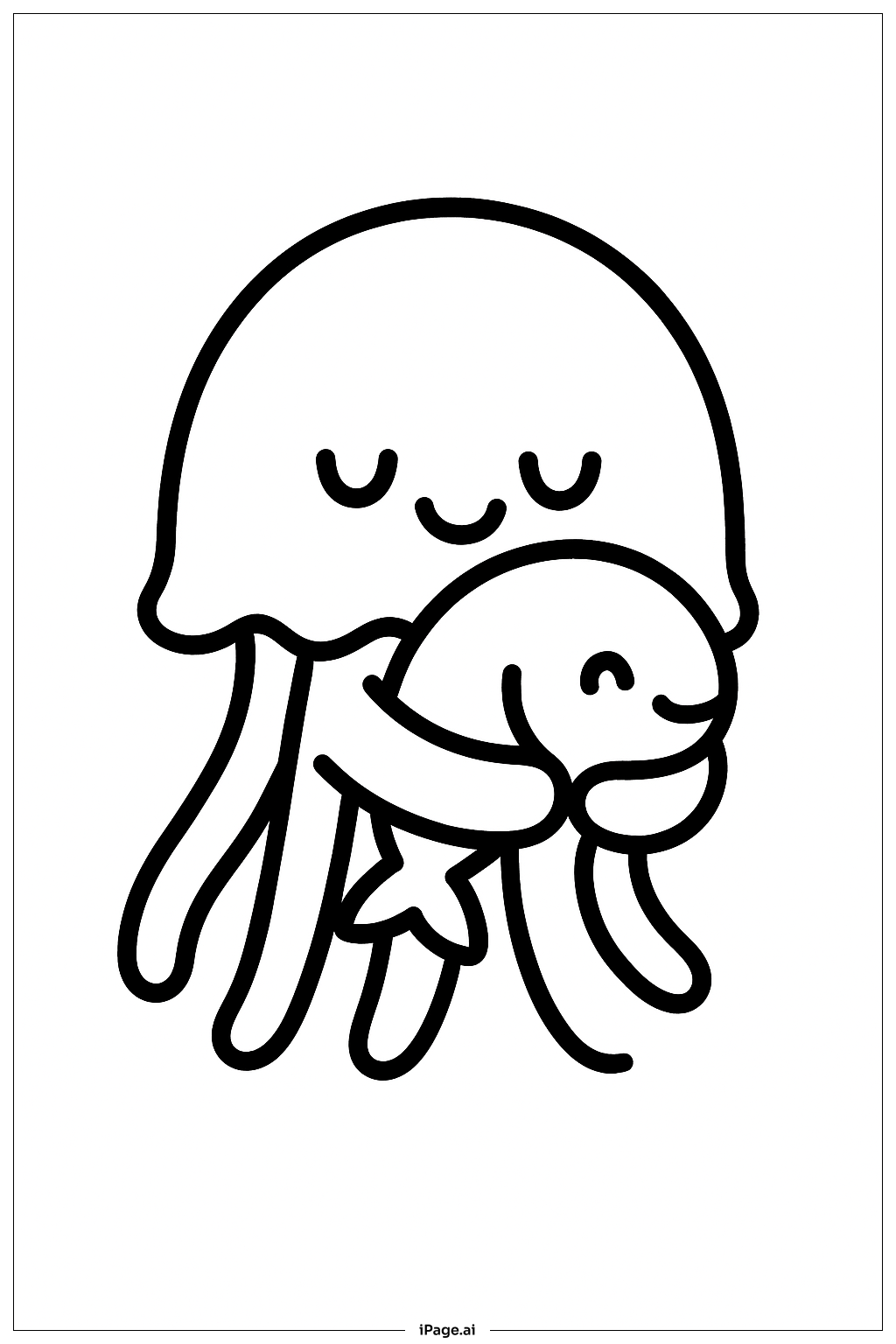
Coloring tips: How to color Jellyfish Hugging Friend coloring page well?
For this delightful jellyfish scene, consider using soft, translucent colors to capture the gentle underwater mood. The jellyfish bell could be colored in light purples, pinks, or blues with slightly darker shades around the edges to create dimension. The tentacles offer wonderful opportunities for gradient coloring, starting lighter at the top and gradually darkening toward the tips. Try using peachy orange or coral tones for the smaller friend to create a nice contrast. The bubbles can remain white or be filled with very light blues and greens to suggest water reflection. For the background, use pale aqua or seafoam green to establish the underwater setting. Adding subtle shading beneath the jellyfish and friend will help them appear to float naturally in their ocean home.
Coloring challenges: Which parts are difficult to color and need attention for Jellyfish Hugging Friend coloring page?
• Tentacle Complexity: The jellyfish features numerous flowing tentacles that overlap and interweave throughout the image, creating intricate spaces that require careful attention. Young colorists may find it challenging to stay within the curved, narrow boundaries of each individual tentacle, especially where they twist and cross over one another. Maintaining consistent color and avoiding accidental marks in adjacent areas demands patience and fine motor control.
• Creating Translucency Effects: Jellyfish are naturally translucent creatures, and capturing this quality through coloring requires understanding of shading and light effects. Children must learn to use lighter pressure with their coloring tools and potentially blend multiple colors to achieve a see-through appearance. This technique is more advanced than solid coloring and may frustrate younger artists who are still developing their shading skills.
• Bubble Detailing: The scene contains multiple bubbles of varying sizes scattered throughout the composition. Each bubble requires careful circular coloring or strategic highlighting to create the illusion of transparency and reflection. Deciding whether to leave bubbles white, add subtle color, or create shine effects with highlights challenges spatial awareness and artistic decision-making.
• Maintaining Character Expression: The friendly faces on both the jellyfish and its companion contain small details like eyes and mouths that need precise coloring to preserve their warm, welcoming expressions. Coloring outside these tiny lines or choosing inappropriate colors could unintentionally change the emotional tone of the image from friendly to less appealing.
Benefits of coloring books: Advantages of drawing Jellyfish Hugging Friend coloring page
Coloring this jellyfish friendship scene offers wonderful developmental benefits for children. The intricate tentacles provide excellent practice for fine motor skills and hand-eye coordination, as young artists must carefully navigate the flowing, curved lines. This detailed work strengthens pencil grip and control, skills essential for writing development. The emotional theme of friendship and hugging encourages children to think about kindness, empathy, and positive social connections while they color. The underwater setting sparks curiosity about marine life and ocean ecosystems, potentially inspiring further learning about jellyfish and sea creatures. The variety of elements, from large areas like the jellyfish bell to tiny bubbles, allows children to practice different coloring techniques and build confidence through completing sections of varying difficulty. The calming underwater theme can also provide a relaxing, meditative experience that helps reduce stress and improve focus and concentration.