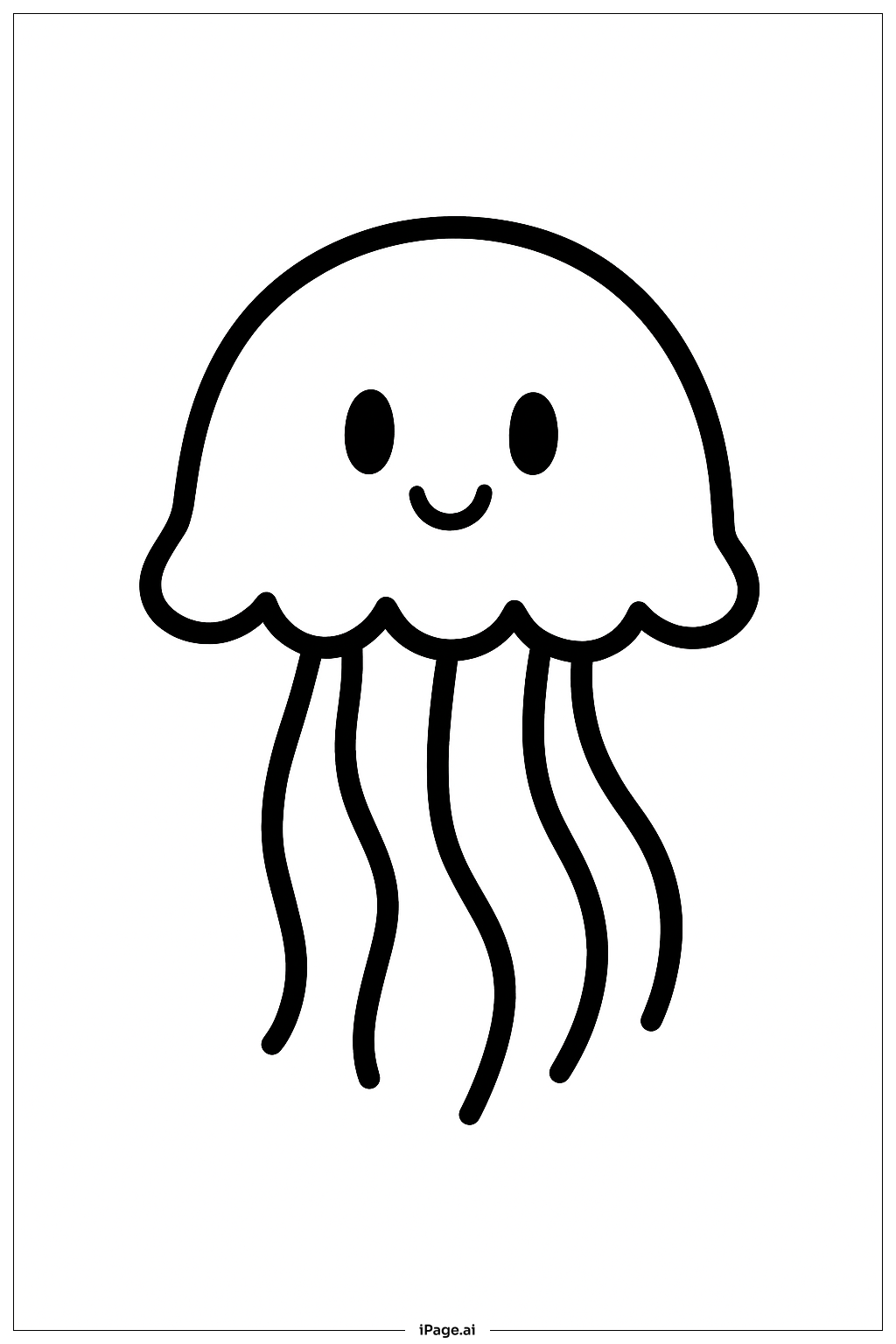
Coloring tips: How to color Jellyfish Floating coloring page well?
Try using soft and bright colors for the jellyfish. You can color the body in light shades like pink, purple, or blue. For the tentacles, choose colors that match or contrast lightly with the body, such as light blue, lavender, or even yellow. You can also add some gentle shading to the dome to give it a 3D look. Keep the face parts black or dark to make them stand out. Add some light blue or green to the background to show the ocean water.
Coloring challenges: Which parts are difficult to color and need attention for Jellyfish Floating coloring page?
1. Coloring the wavy tentacles evenly can be tricky because they have thin, curved shapes that need careful coloring to avoid going outside the lines.
2. Adding shading on the dome-shaped body to make it look round requires gentle color blending, which might be difficult for younger children.
3. Keeping the colors bright but not mixing too many different shades can be a challenge to maintain a clean look.
4. Coloring inside the small facial features, like the eyes and mouth, needs precision due to their small sizes.
5. Coloring the background without making it look too busy while still showing the ocean can be hard to balance.
Benefits of coloring books: Advantages of drawing Jellyfish Floating coloring page
Coloring this jellyfish picture helps improve hand-eye coordination and fine motor skills. It encourages creativity by allowing kids to choose favorite colors and imagine ocean scenes. The simple shapes make it easy to stay within the lines, boosting confidence. Adding shading and blending helps develop attention to detail and color sense. Overall, it’s a fun way for children to relax and express themselves through art.