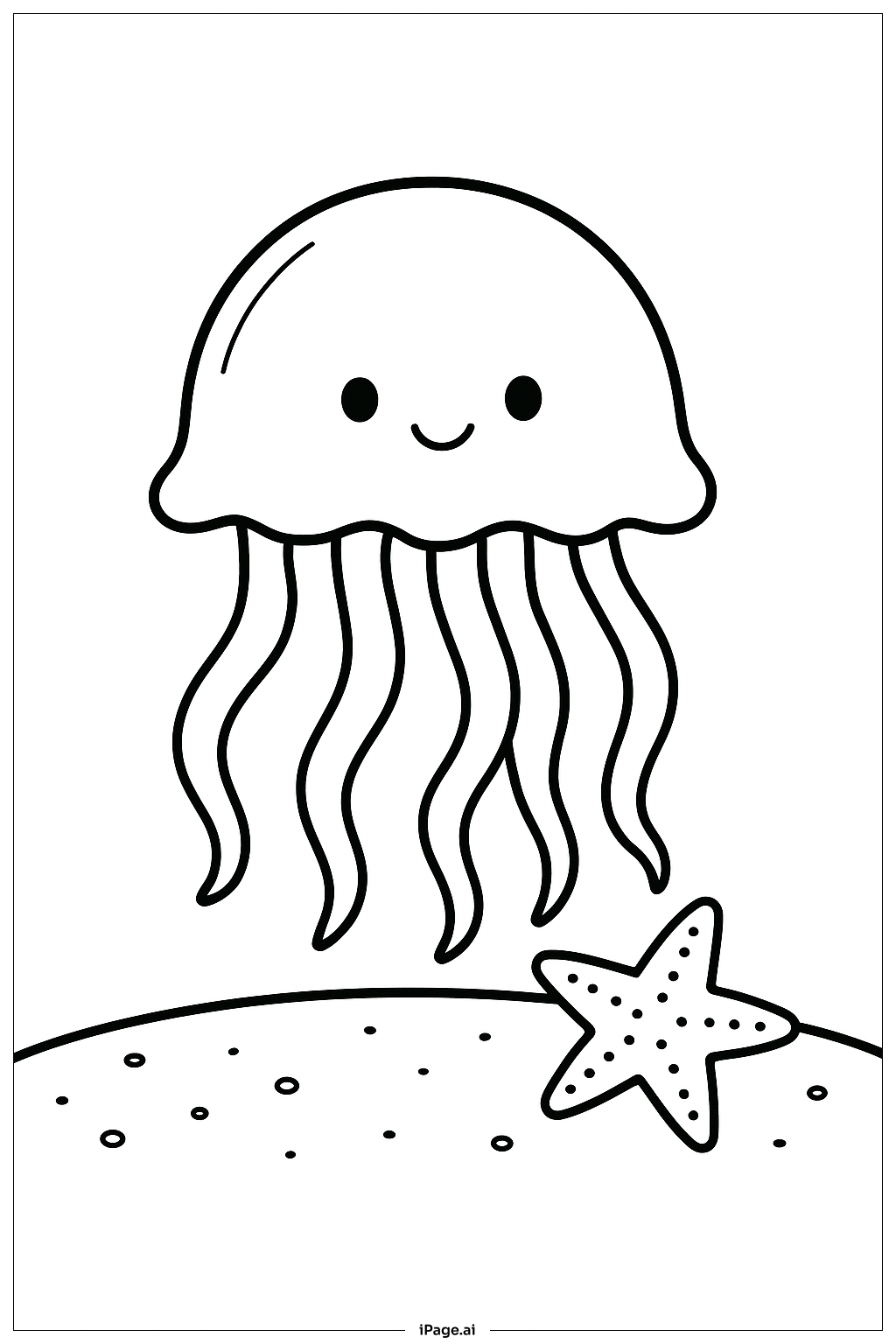
Coloring tips: How to color Jellyfish And Starfish coloring page well?
For coloring the jellyfish, you can use soft, translucent colors like light blue, purple, or pink to show its delicate and gentle nature. Try using gradients or blending to make the body look shiny and smooth. The tentacles can be colored with slightly different shades to show movement. The starfish can be a bright orange, red, or yellow to make it stand out on the sandy sea floor. Use light brown or beige for the sand, and add some light green or blue dots to represent sea plants or bubbles for extra fun.
Coloring challenges: Which parts are difficult to color and need attention for Jellyfish And Starfish coloring page?
1. Blending Colors: Coloring the jellyfish's body smoothly can be tricky because you want to show its soft and translucent texture. Using light shades and blending them evenly is challenging.
2. Tentacle Details: The wavy tentacles are thin and long, so coloring inside the lines needs careful attention to keep them neat.
3. Small Dots on the Sand and Starfish: The little dots need precise coloring without going outside the edges, which requires fine motor control.
4. Avoiding Color Overlap: Since the jellyfish and starfish are close together, it can be difficult not to color outside their lines.
5. Consistency in Colors: Keeping the tentacles and body colors consistent to make the jellyfish look natural might need planning and patience.
Benefits of coloring books: Advantages of drawing Jellyfish And Starfish coloring page
Coloring this jellyfish and starfish scene helps children develop hand-eye coordination and fine motor skills. It encourages creativity by choosing different colors and blending techniques. The simple shapes and friendly faces make coloring fun and relaxing, which can reduce stress. It also teaches kids about sea animals and the underwater world. Working on the smaller details like tentacles and dots improves focus and patience, which are important skills for learning.