Coloring tips: How to color Jellyfish And Small Fish coloring page well?
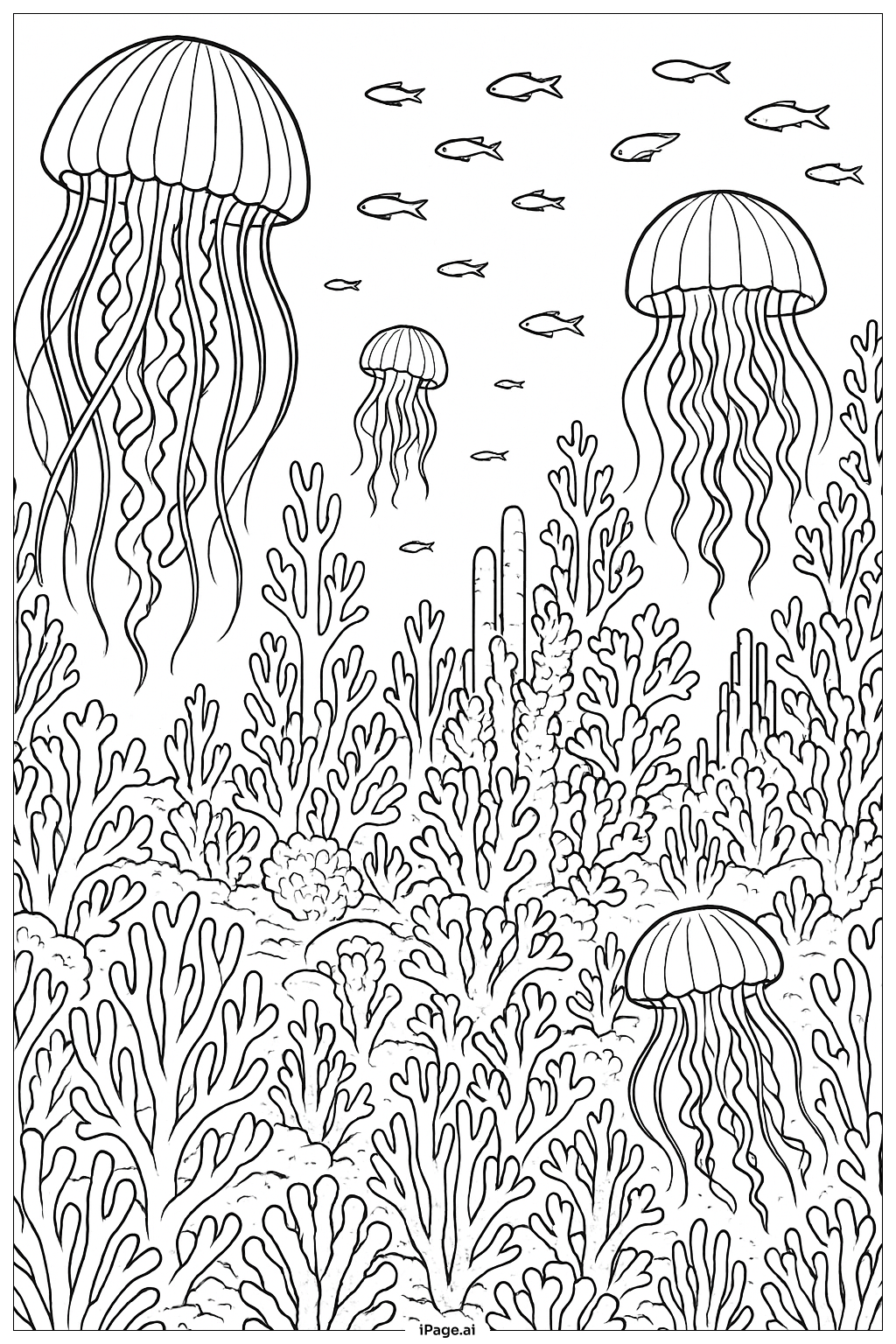
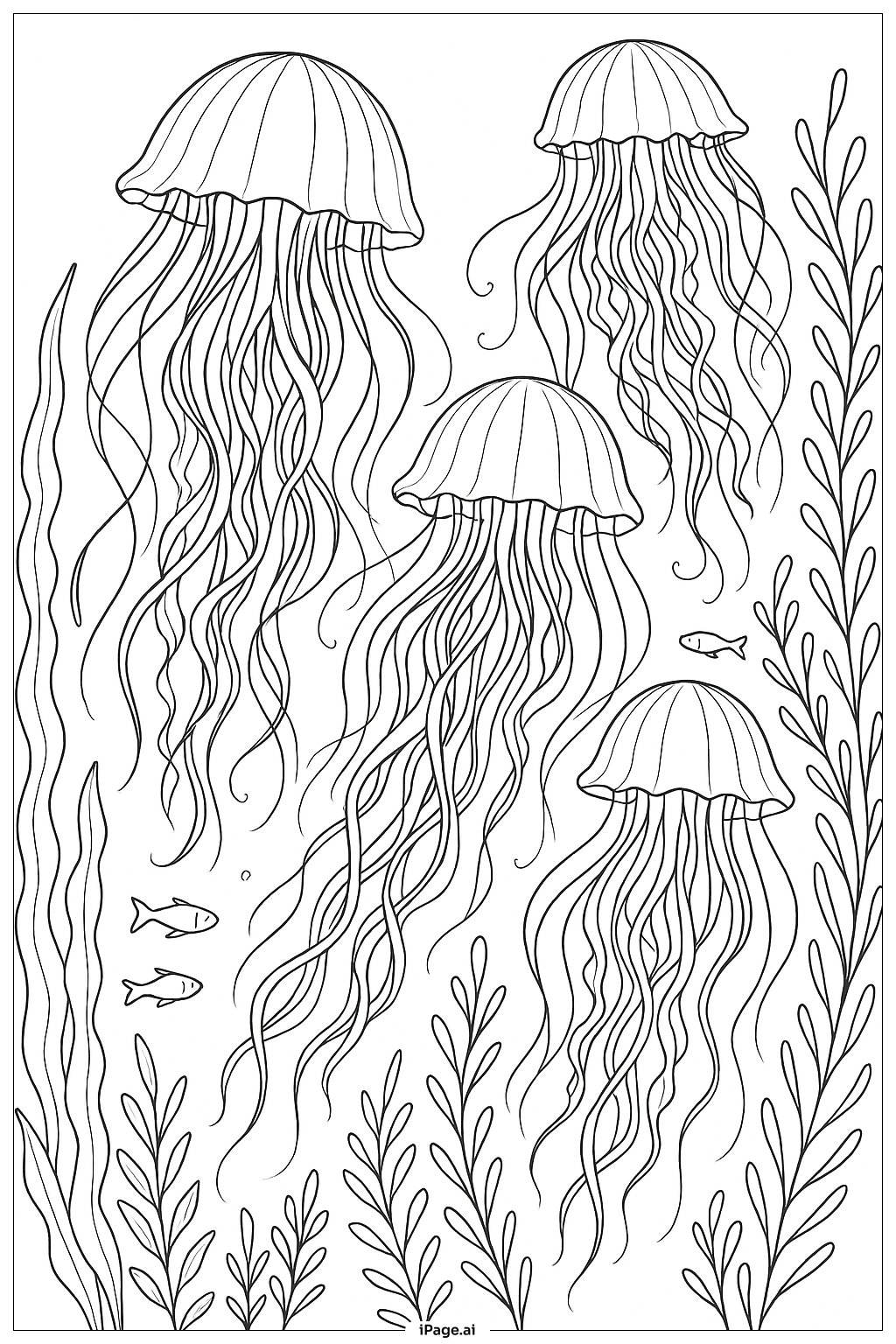
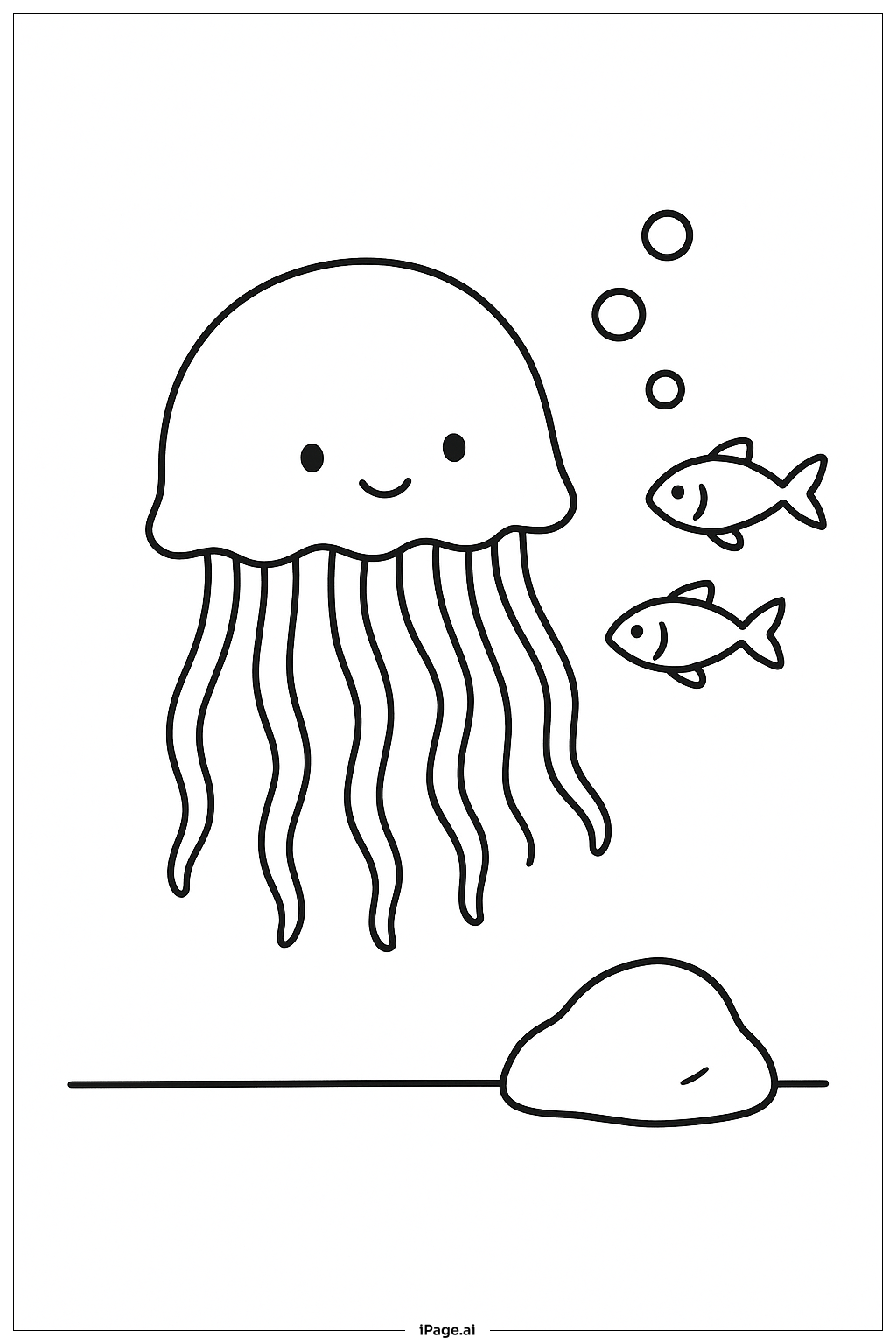
Use bright and cheerful colors to bring this underwater scene to life. The jellyfish can be colored in soft pastel shades like light pink, purple, or blue to show its gentle nature. The tentacles can be a little darker or a mix of colors to add depth. The small fish can be colored in bright orange, yellow, or green to make them stand out. The bubbles can be left white or shaded lightly with blue for a transparent look. The rock can be colored in gray or brown. Don't forget to color the background with shades of blue to represent water, and you can add some light gradients to show sunlight underwater.
Coloring challenges: Which parts are difficult to color and need attention for Jellyfish And Small Fish coloring page?
1. Coloring the jellyfish tentacles evenly can be tricky because they are long and wavy, requiring careful attention to stay within the lines.
2. The small fish have tiny parts like fins and tails that need careful coloring to avoid going outside the lines.
3. Creating a smooth gradient effect for the water background may be challenging for beginners because it requires gentle blending of colors.
4. Making the jellyfish look translucent or glowing is difficult without advanced coloring techniques.
5. Coloring the bubbles to look like real underwater bubbles can be hard since they need a light, airy touch without heavy coloring.
Benefits of coloring books: Advantages of drawing Jellyfish And Small Fish coloring page
Coloring this page helps improve hand-eye coordination and fine motor skills, especially when filling in the jellyfish’s curved tentacles and small fish details. It encourages creativity as kids choose colors for the sea creatures and underwater scene. This activity also teaches focus and patience, as the parts require careful coloring within the lines. Plus, the happy and friendly design of the jellyfish and fish can make coloring fun and relaxing, boosting confidence and a sense of achievement.