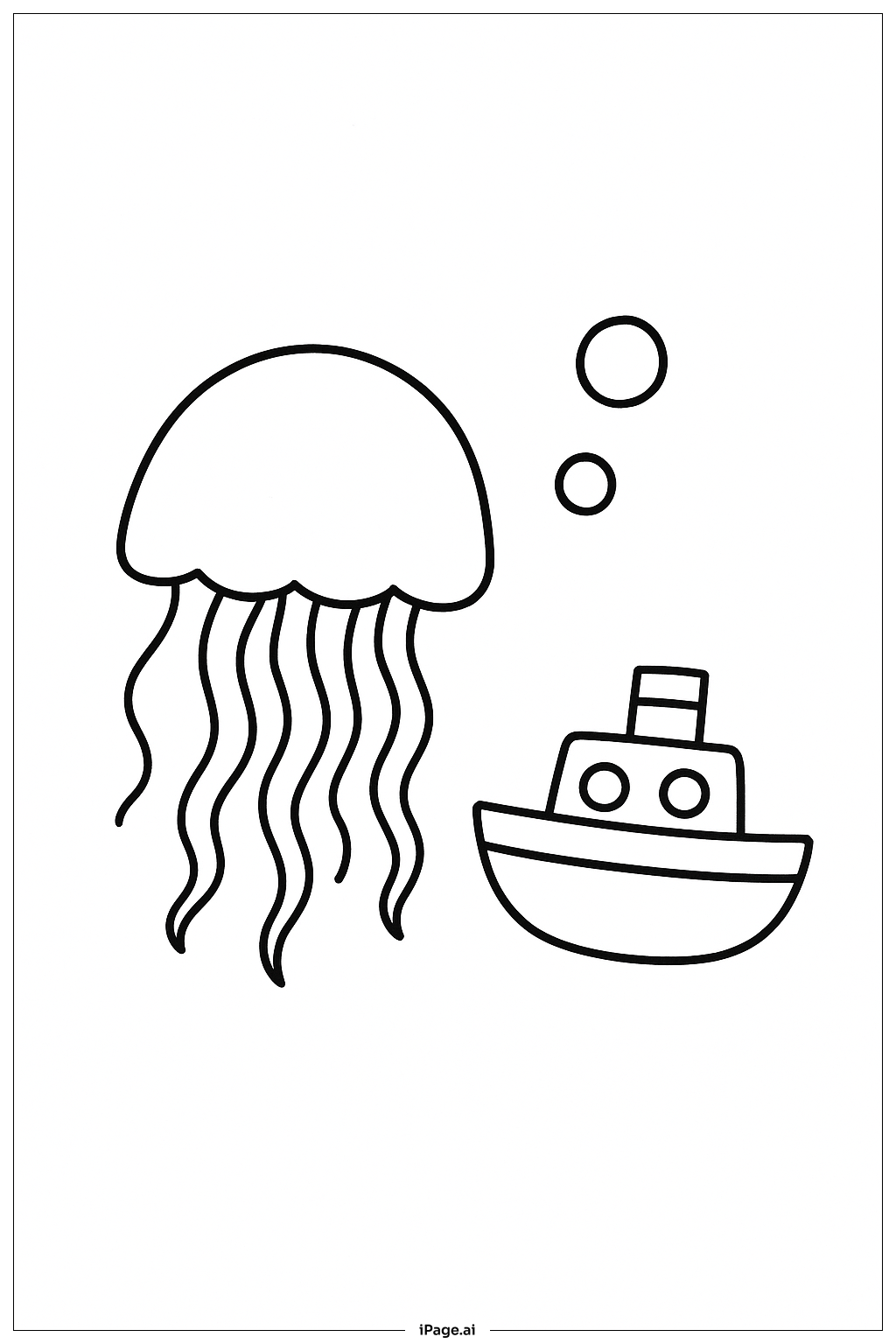
Coloring tips: How to color Jellyfish And Small Boat coloring page well?
For the jellyfish, consider using soft translucent colors like light pink, pale purple, or gentle blue to capture its delicate nature. The bell can be shaded with gradient effects, darker at the top and lighter toward the edges. The tentacles look beautiful in flowing ribbons of color, perhaps alternating between two complementary shades. For the small boat, try warm wooden browns, sandy yellows, or classic nautical colors like navy blue or white. The water can be colored in layers of blue and green, with lighter turquoise near the surface and deeper blues below. Add highlights with white or light yellow to show sunlight filtering through the water. Consider leaving some areas lighter to create a glowing, bioluminescent effect around the jellyfish for extra magic.
Coloring challenges: Which parts are difficult to color and need attention for Jellyfish And Small Boat coloring page?
• Tentacle Details: The jellyfish tentacles feature many thin, flowing lines that require careful coloring to avoid crossing between adjacent strands. Young children may find it challenging to stay within these narrow spaces. Using fine-tipped markers or colored pencils helps maintain precision. Taking time to color each tentacle separately prevents mistakes and creates a cleaner finished appearance.
• Gradient Shading: Creating realistic translucent effects on the jellyfish bell requires blending multiple colors smoothly. This technique demands practice with light pressure and layering. Beginners might struggle with making smooth transitions from light to dark. Starting with lighter colors and gradually adding darker shades helps achieve a natural glowing appearance.
• Water Movement: Depicting the flowing water around both the jellyfish and boat involves coloring curved wave lines consistently. Maintaining uniform direction and color intensity across these patterns takes concentration. Children must decide whether to color the waves themselves or the spaces between them, which requires planning ahead.
• Small Boat Details: The wooden planks on the boat contain fine lines and small segments that need individual attention. Coloring each plank in slightly different shades creates realistic wood grain texture, but this detailed work requires patience and steady hand control, especially for younger artists working on smaller printed versions.
Benefits of coloring books: Advantages of drawing Jellyfish And Small Boat coloring page
Coloring this jellyfish and boat scene helps children develop fine motor skills through the detailed tentacle work and small boat planks. The combination of organic flowing shapes and geometric boat structure teaches young artists to handle different coloring techniques in one image. This page encourages creativity in color selection, especially when imagining underwater environments and translucent creatures. Children learn about marine life and ocean ecosystems while expressing themselves artistically. The calming nature of the gentle floating jellyfish promotes relaxation and mindfulness during the coloring process. Working with the flowing water patterns helps develop hand-eye coordination and spatial awareness. This image offers a perfect balance of challenge and enjoyment, building confidence as children complete each detailed section successfully.



