Coloring tips: How to color Jellyfish And Schooling Fish coloring page well?
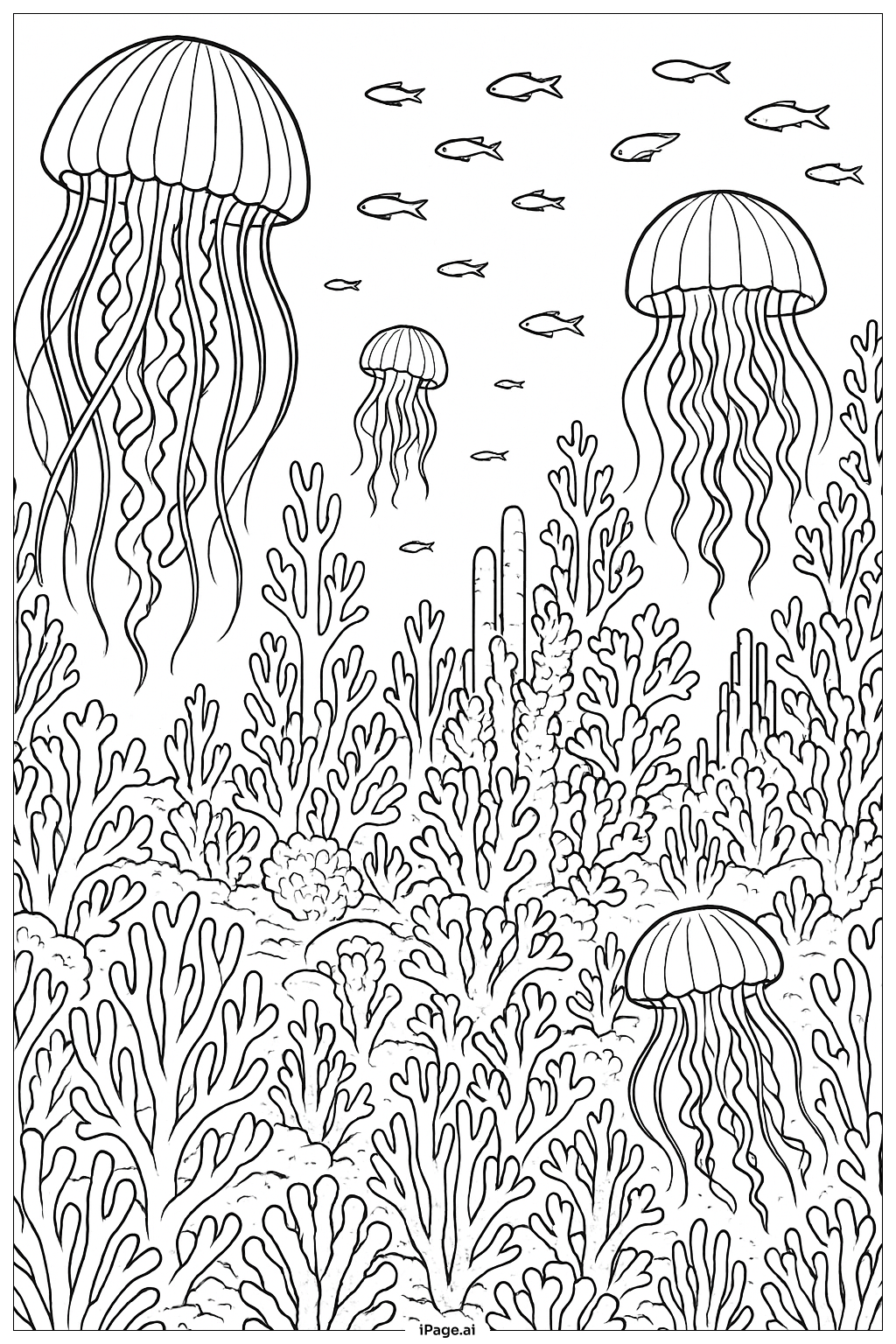
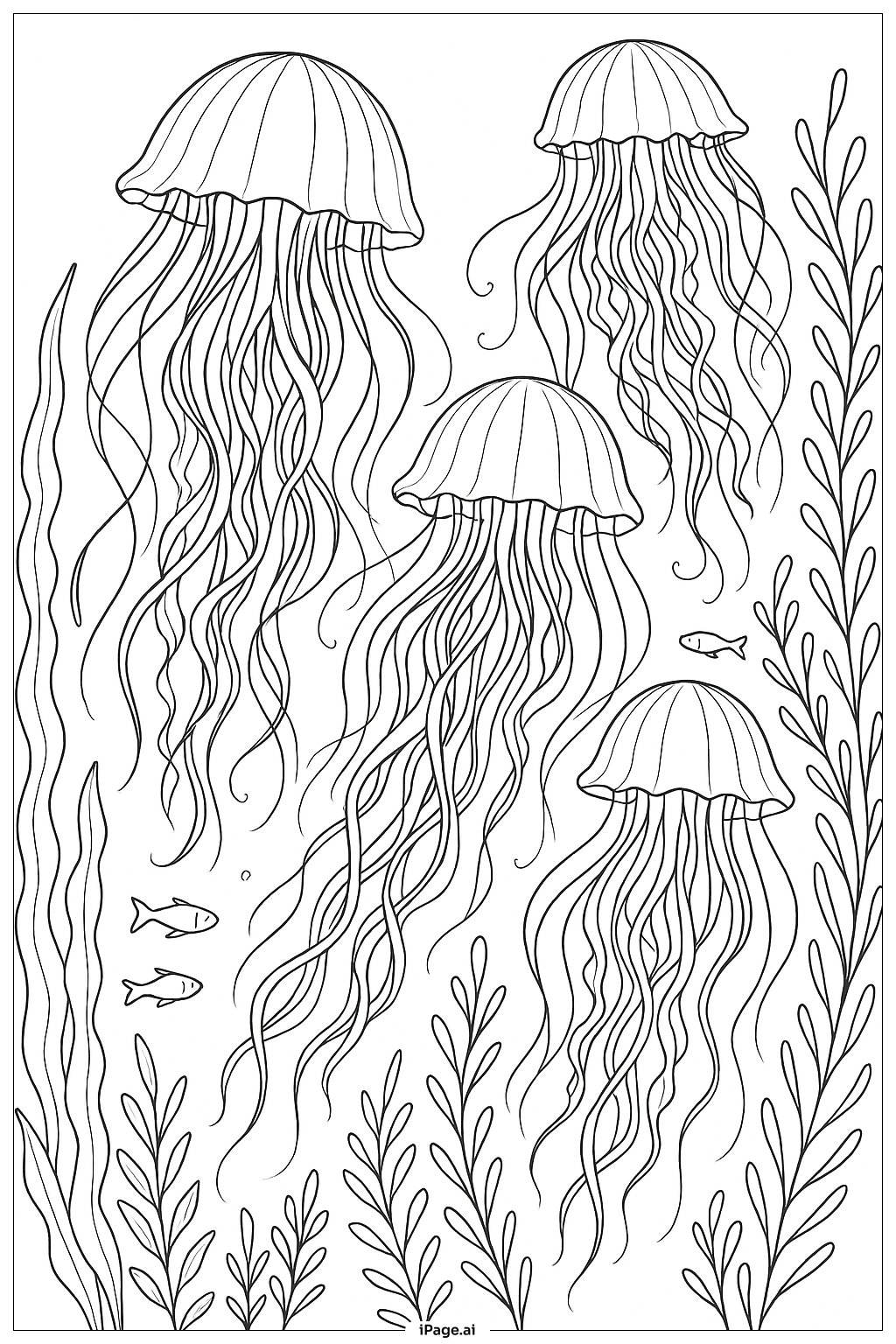
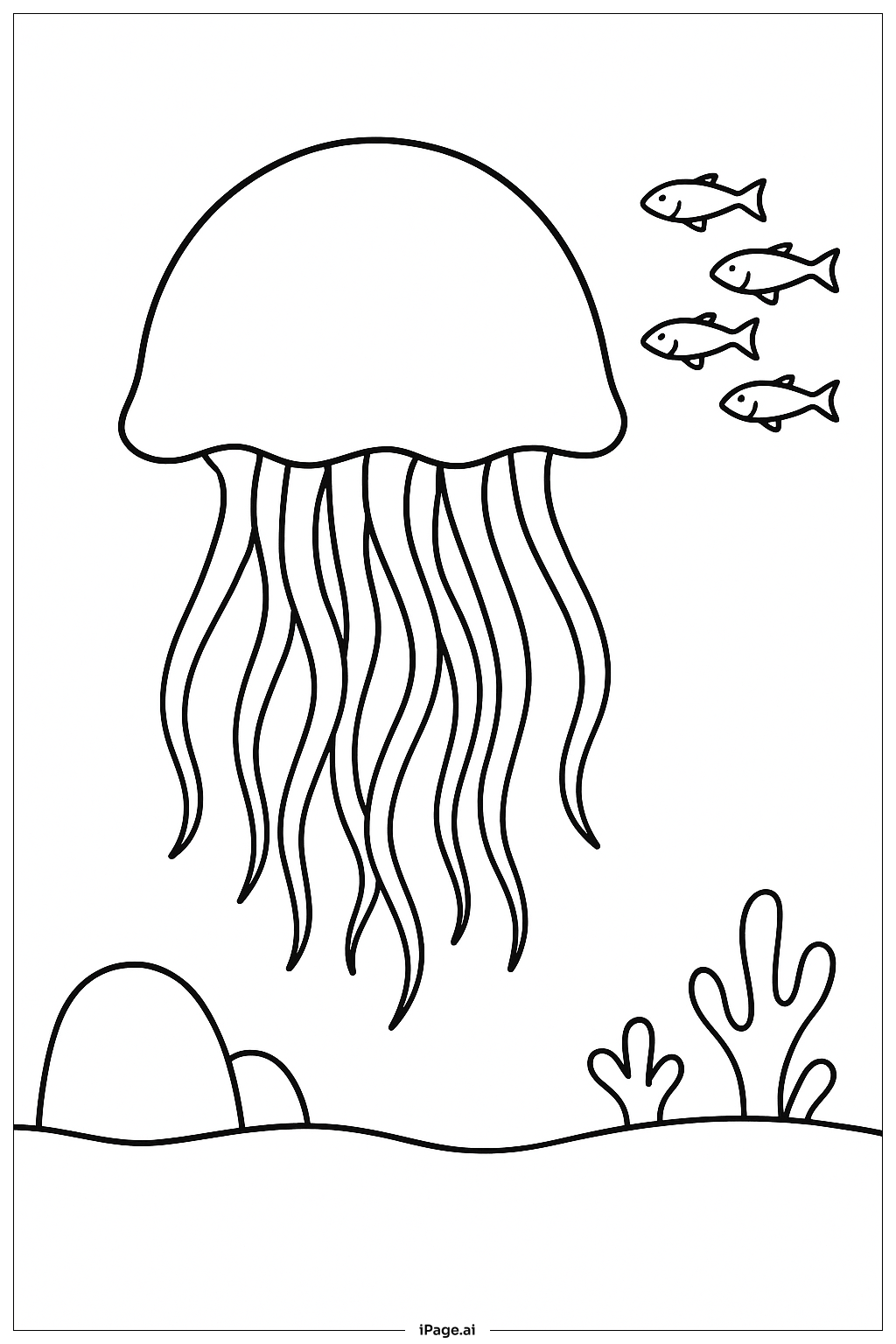
For the jellyfish, consider using soft translucent colors like light pink, lavender, or pale blue for the bell to capture its delicate nature. The tentacles can be colored in gradients, starting darker at the base and fading lighter toward the tips. Add hints of purple or orange to create luminescent effects. For the schooling fish, use a variety of colors to show diversity—try bright yellows, oranges, silvers, and blues. You can color some fish in similar tones to show they belong to the same school, while making a few stand out with different colors. Consider adding darker shades along the fish bodies to create dimension. The background water can be colored in soft aqua, turquoise, or deep ocean blue, leaving some areas lighter to suggest sunlight filtering through the water.
Coloring challenges: Which parts are difficult to color and need attention for Jellyfish And Schooling Fish coloring page?
• Jellyfish Tentacle Details: The flowing tentacles require careful attention as they feature thin, delicate lines that curve and overlap. Coloring within these narrow spaces without crossing boundaries can be challenging, especially where tentacles intertwine. Maintaining consistent color gradients along each tentacle's length demands patience and a steady hand. Younger children may find these intricate details difficult to navigate with thicker coloring tools.
• Small Fish Precision: The numerous small fish scattered throughout the scene present a challenge due to their tiny size and abundance. Each fish contains small details like fins, tails, and body shapes that require precision coloring. Keeping colors within the boundaries of these miniature figures tests fine motor control. Deciding on a color scheme that creates visual harmony among dozens of individual fish while maintaining variety requires planning and artistic decision-making.
• Overlapping Elements: Where the jellyfish tentacles overlap with fish or where fish swim behind other fish creates layered complexity. These intersecting areas require careful color choices to maintain depth and prevent visual confusion. Distinguishing between foreground and background elements through color selection and shading adds an advanced dimension to the coloring process.
• Creating Water Atmosphere: Suggesting the underwater environment without overwhelming the main subjects requires subtle technique. Coloring the background water while preserving the subjects' visibility demands restraint and thoughtful color selection to create depth without competing with the jellyfish and fish for attention.
Benefits of coloring books: Advantages of drawing Jellyfish And Schooling Fish coloring page
Coloring this underwater scene offers wonderful developmental benefits for children. The intricate jellyfish tentacles help improve fine motor skills and hand-eye coordination as young artists carefully navigate the delicate curved lines. The numerous small fish provide excellent counting practice and pattern recognition opportunities. Children can develop decision-making skills by choosing color schemes and planning how to make their artwork cohesive. This image encourages learning about marine life and ocean ecosystems, sparking curiosity about underwater creatures and their habitats. The meditative quality of coloring the flowing tentacles and repetitive fish patterns promotes relaxation and stress relief. Working with the various sizes and shapes enhances spatial awareness and attention to detail. Completing this detailed scene builds patience, concentration, and a sense of accomplishment, while the creative freedom in color selection boosts confidence and self-expression.