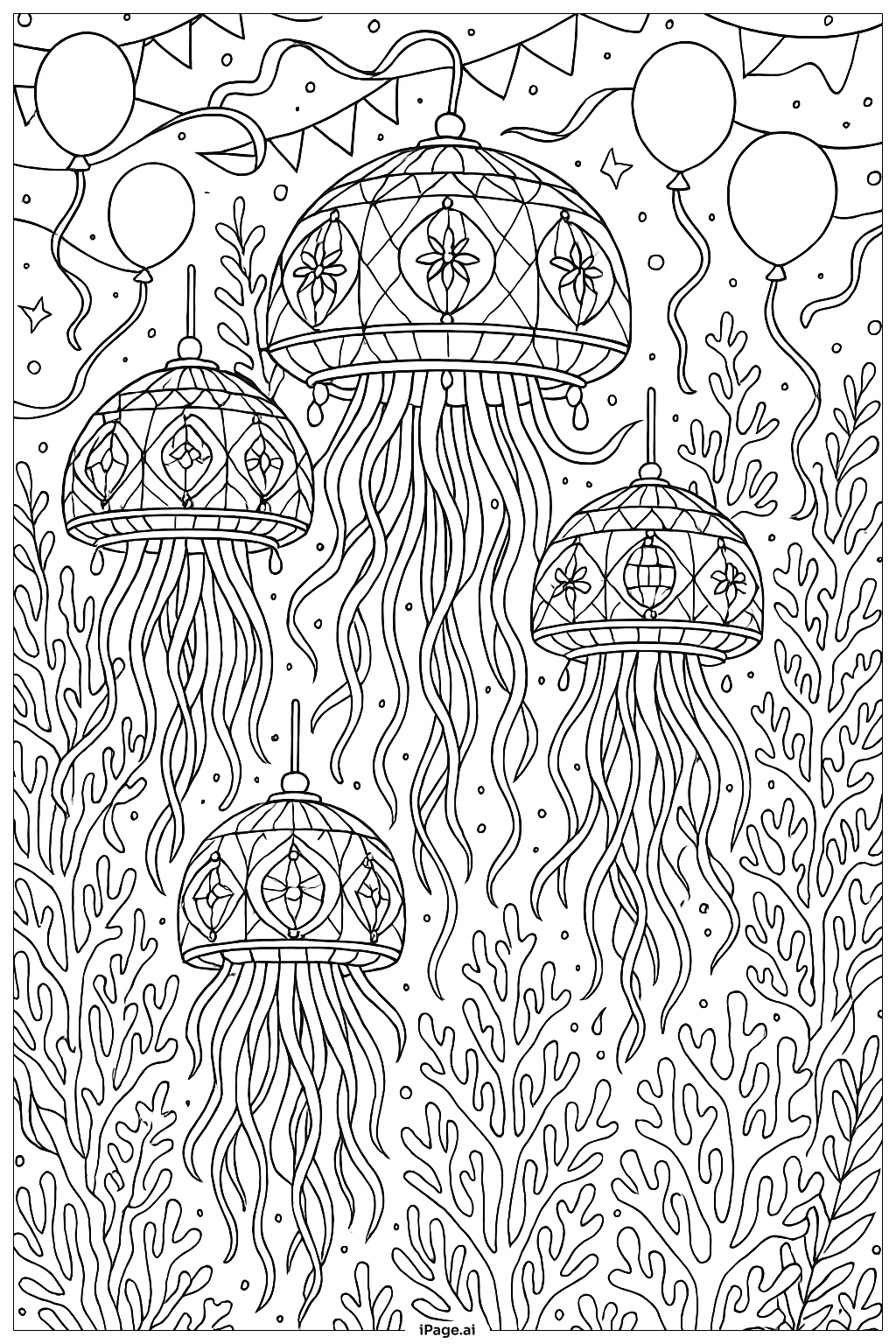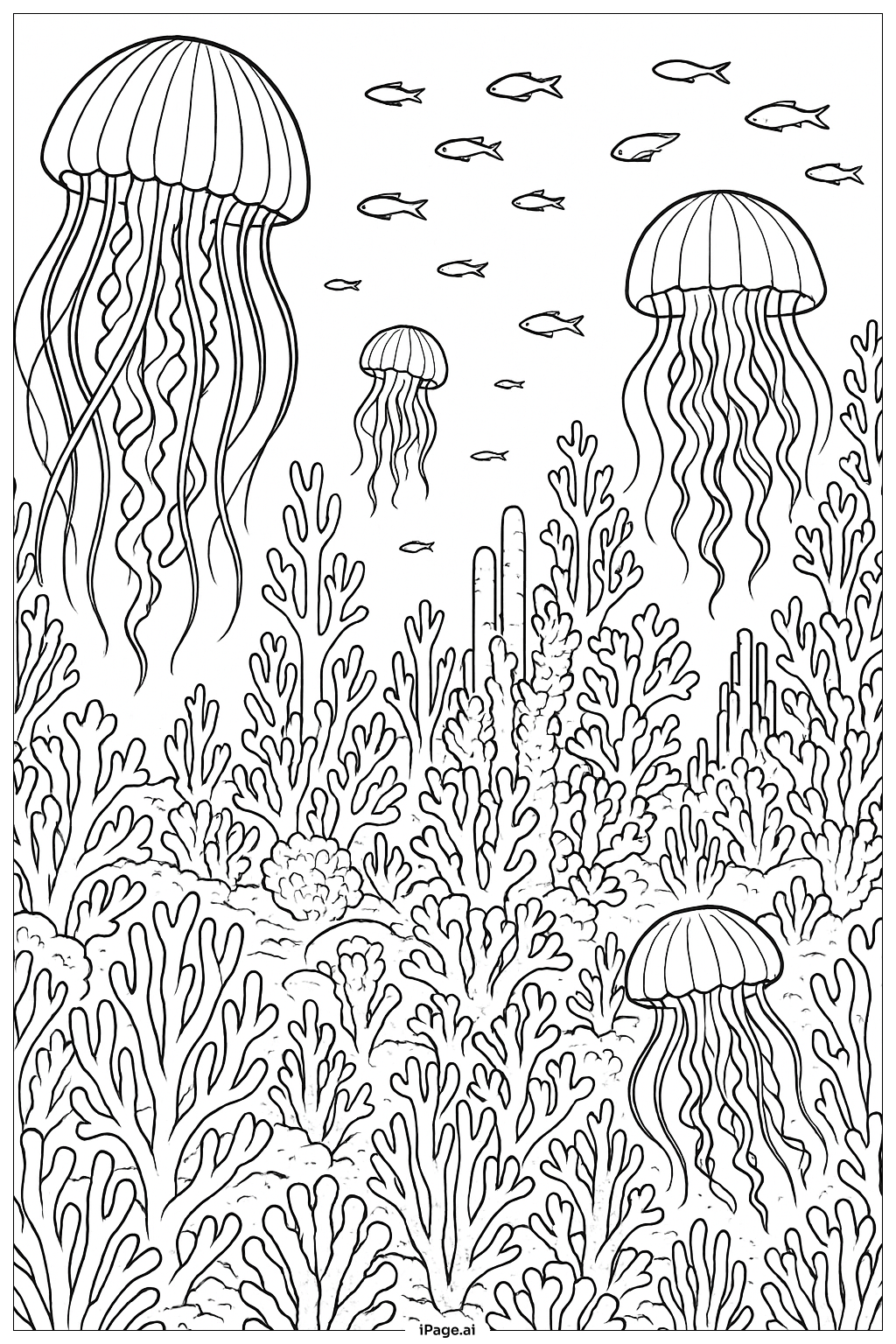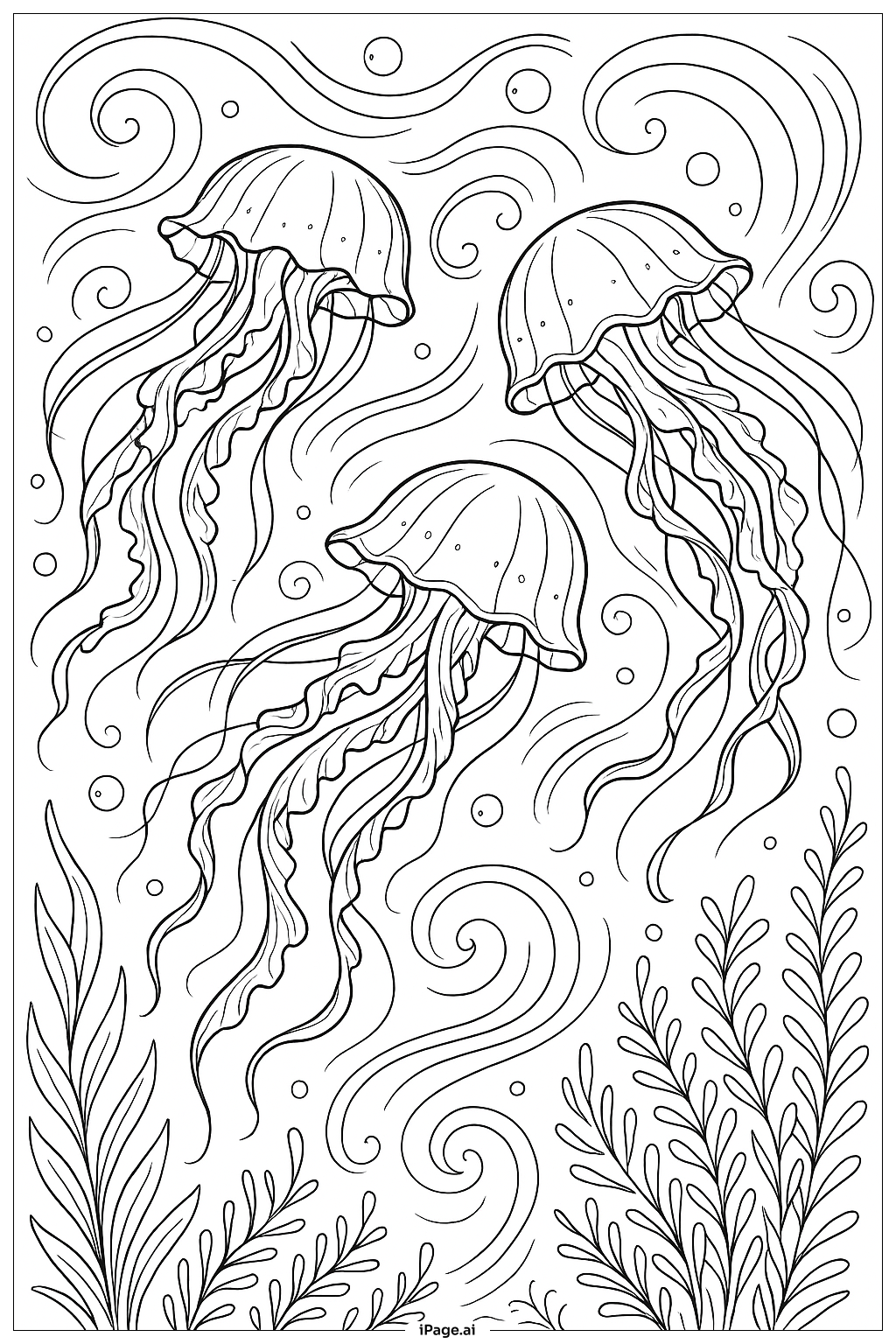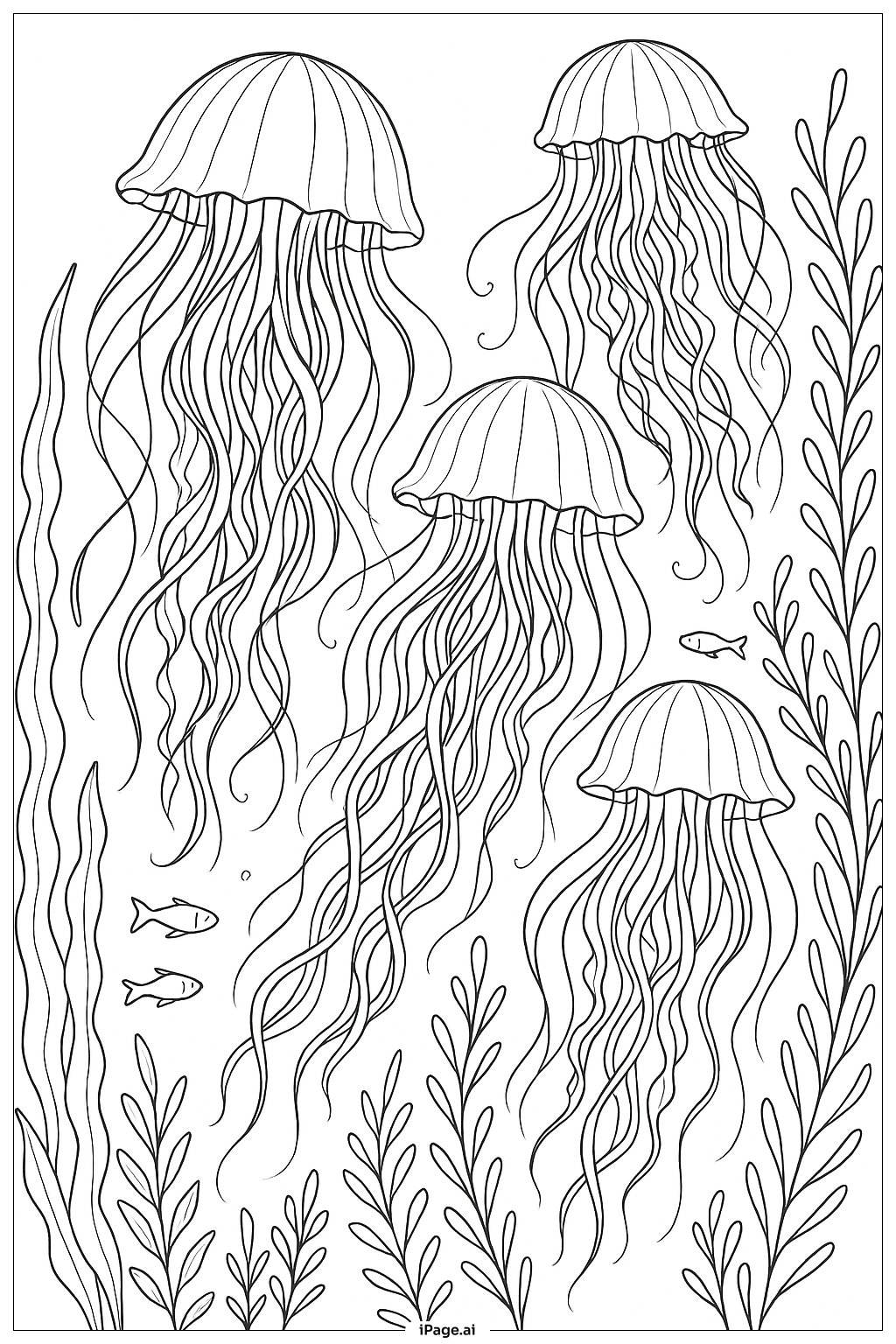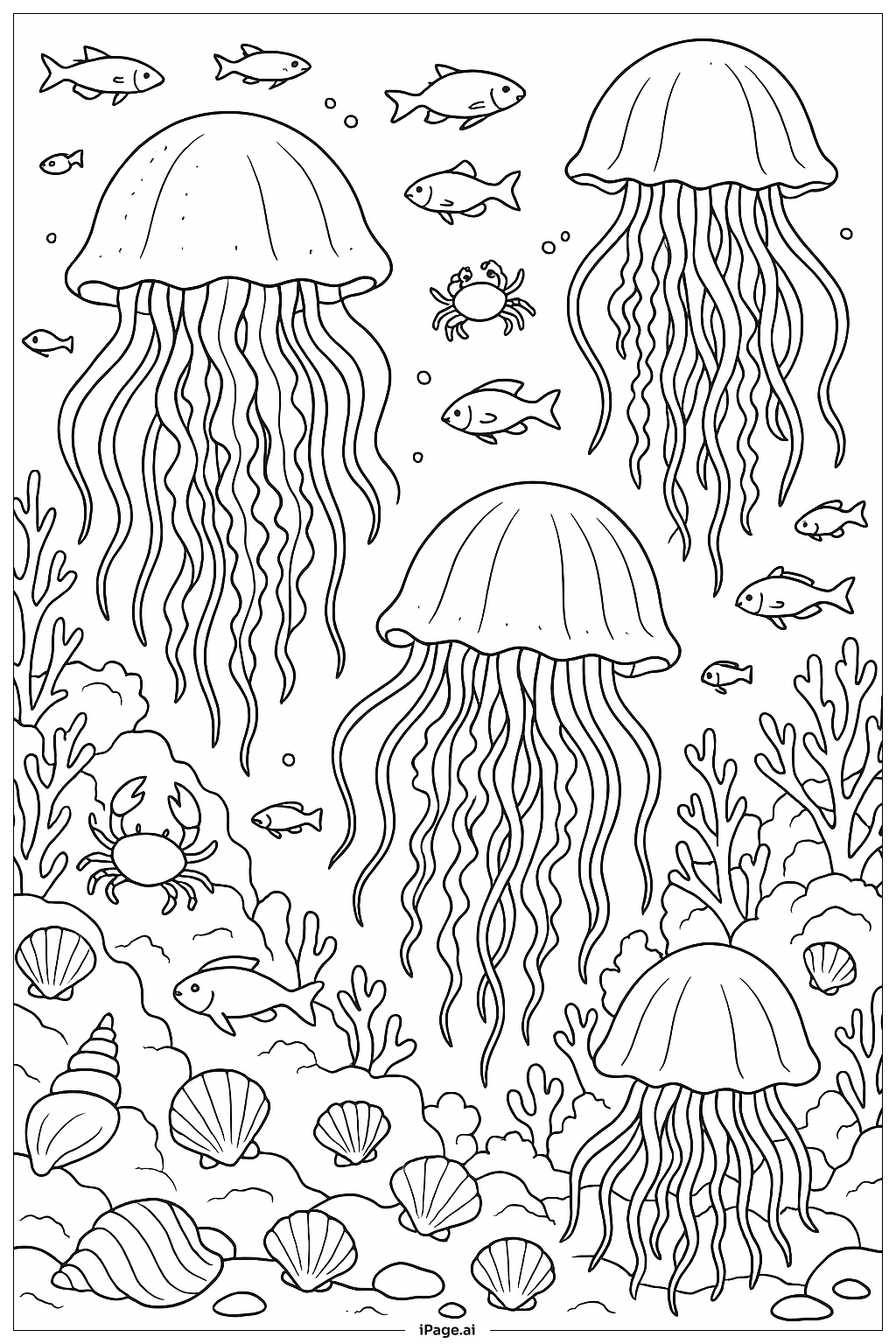
Coloring tips: How to color Jellyfish And Diverse Sea Life coloring page well?
Start with the jellyfish bell using soft, translucent colors like pale pink, lavender, or light blue to give it a glowing, ethereal look. Use deeper purples or teals for the trailing tentacles to add contrast. For the tropical fish, go bold and bright — oranges, yellows, reds, and greens all work beautifully together. Color the sea turtle with earthy greens and browns on its shell, and a lighter tan for the belly. Use warm pinks and oranges for the coral, and deep green or blue-green for the seaweed. Paint the starfish in sunny yellow or coral red. Fill the background ocean with layers of deep blue and teal to make all the sea creatures pop. Bubbles can be left lightly shaded or outlined in white to keep them looking airy and light. Feel free to mix unexpected colors — underwater scenes are perfect for imaginative, fantasy-inspired palettes!
Coloring challenges: Which parts are difficult to color and need attention for Jellyfish And Diverse Sea Life coloring page?
• Jellyfish Tentacle Details: The jellyfish has many long, flowing tentacles with thin, curling lines that can be tricky to color neatly. Use a fine-tipped colored pencil or marker to stay within the delicate lines and avoid smudging across neighboring areas.
• Overlapping Sea Creatures: Several fish, coral pieces, and plants overlap in the composition. Deciding which colors to use for adjacent elements is a challenge — make sure neighboring creatures have contrasting hues so they stand out clearly from one another.
• Coral and Seaweed Textures: The coral formations and seaweed have bumpy, branching, or layered textures with lots of small shapes packed closely together. Coloring each section individually takes patience and a steady hand, especially in tighter areas of the design.
• Translucent Jellyfish Bell: Capturing the see-through, glowing quality of a jellyfish bell is a real artistic challenge. Layering light colors or blending from a pale center outward to a slightly deeper edge can help create that soft, luminous effect without making it look flat or solid.
• Background Ocean Depth: Filling in the water background evenly while leaving bubbles uncolored or lightly shaded requires careful control. Blending blue and teal tones smoothly across a large area without streaks or uneven patches can be difficult, especially with crayons or markers.
Benefits of coloring books: Advantages of drawing Jellyfish And Diverse Sea Life coloring page
Coloring this jellyfish and ocean scene offers a wonderful range of benefits for kids and adults alike. Working through the detailed lines and shapes of each sea creature builds fine motor skills and strengthens hand-eye coordination — especially important for younger children still developing pencil control.
The wide variety of creatures in the scene encourages creative thinking. Choosing colors for a jellyfish, turtle, tropical fish, and coral all at once gives colorists the chance to make their own artistic decisions and express their unique style.
Spending time on a detailed coloring page like this also promotes focus and patience. Completing each small section of the design teaches kids to slow down and work carefully toward a finished goal — a great confidence booster when the page is done.
For older kids and adults, the intricate textures and overlapping shapes provide a satisfying challenge that encourages mindfulness and relaxation. Coloring has been shown to reduce stress and quiet a busy mind, making it a calming activity after a long day.
Finally, this scene is a fun, gentle introduction to ocean biology. As colorists work through each creature, they naturally become more curious about real jellyfish, sea turtles, and coral reefs — sparking a love of nature and the underwater world.