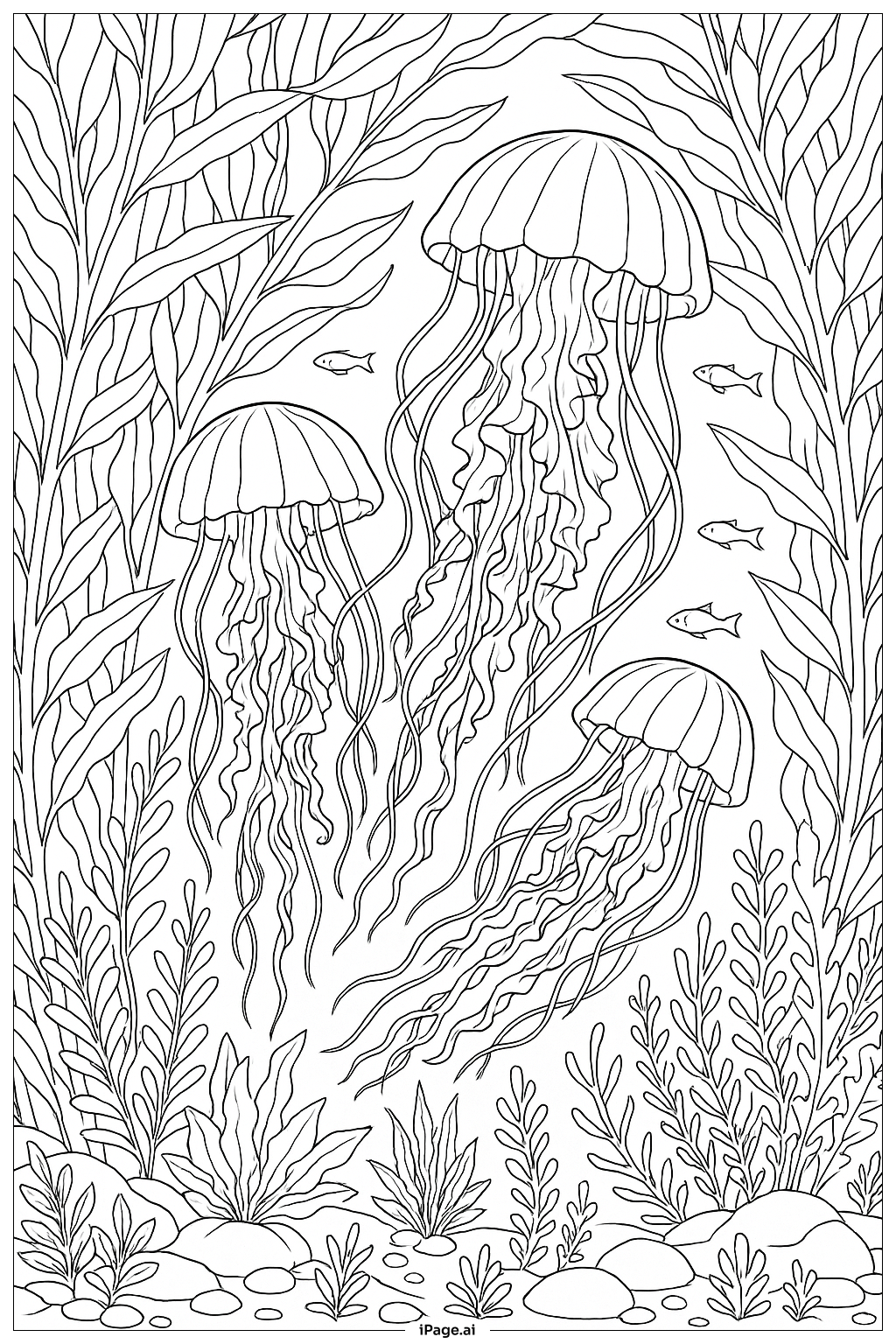
Coloring tips: How to color Jellyfish Among Kelp Forest coloring page well?
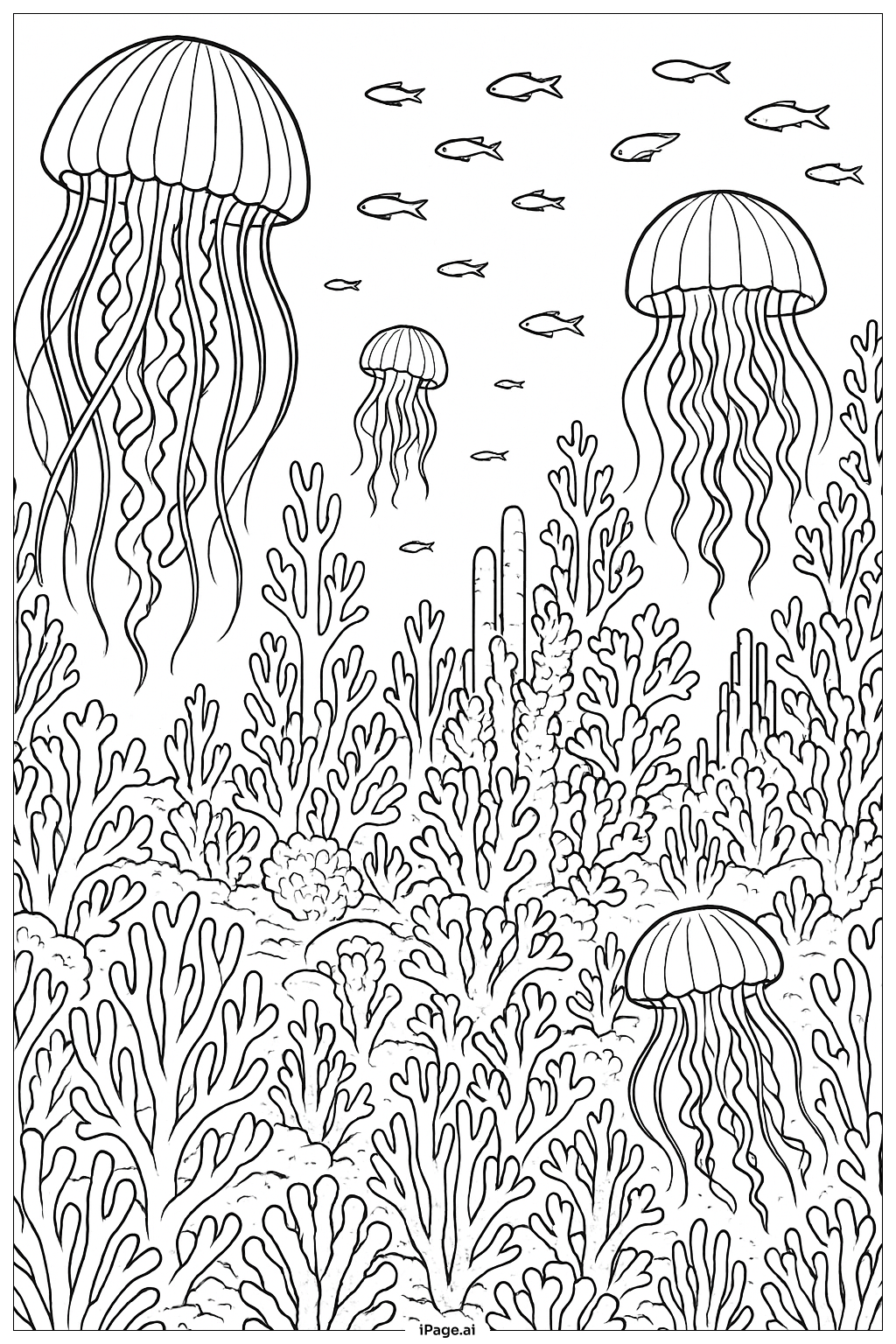
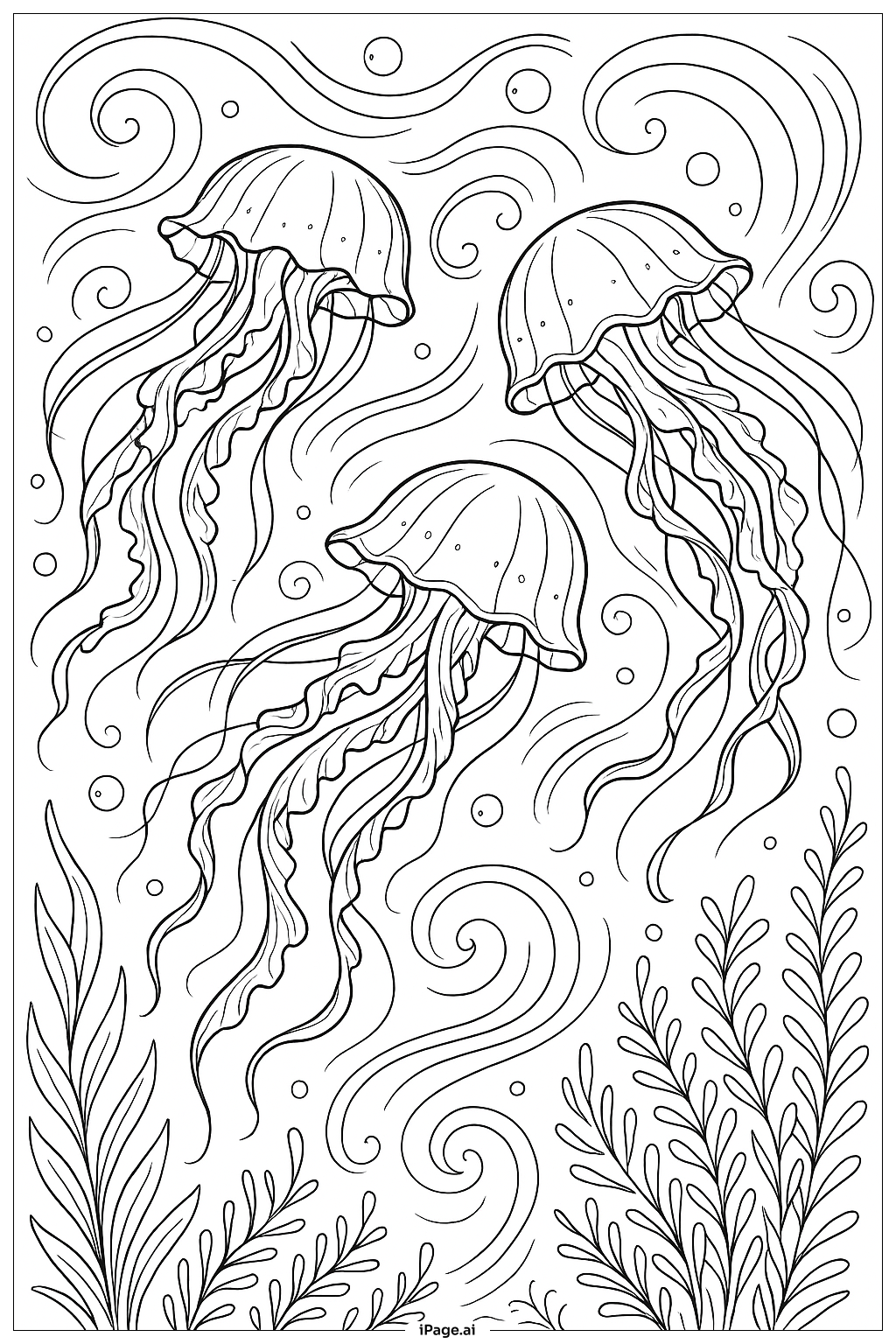
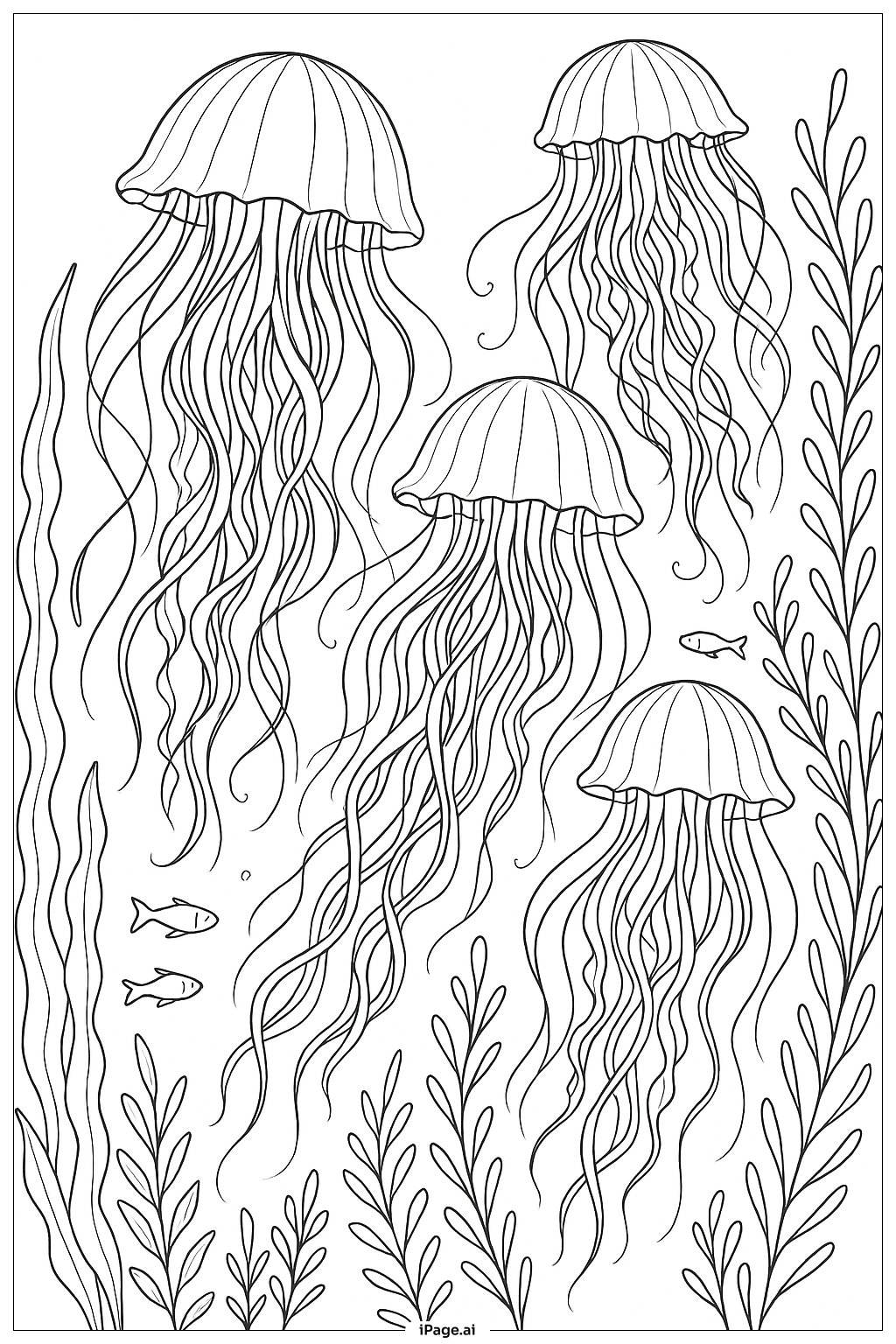
For the jellyfish, consider using soft translucent colors like pale pink, light purple, or gentle blue for the bell, with slightly darker shades along the edges to create dimension. The tentacles can be colored in gradient patterns, transitioning from the bell color to lighter tips. For the kelp forest, use various shades of green and brown—deep forest green for the main strands, olive or yellow-green for highlights, and brown tones near the base where kelp attaches to rocks. Add blues and teals for the water background, using lighter shades near the surface and deeper blues in shadowed areas. Small accent colors like orange or yellow can highlight any small sea creatures or particles in the water. Experiment with layering colors to create a sense of depth and underwater atmosphere.
Coloring challenges: Which parts are difficult to color and need attention for Jellyfish Among Kelp Forest coloring page?
• Translucent Jellyfish Effect: Creating the see-through quality of the jellyfish bell requires careful color layering and blending techniques. Children may find it challenging to achieve the delicate, transparent appearance that makes jellyfish look realistic. Using light pressure with colored pencils or diluted watercolors can help, but controlling the intensity takes practice and patience.
• Flowing Tentacle Details: The jellyfish tentacles feature numerous thin, delicate lines that curve and overlap in natural flowing patterns. Coloring these narrow spaces without accidentally crossing lines or leaving white gaps requires excellent fine motor control and sustained attention. Younger children may struggle with the precision needed to follow each individual tentacle strand from top to bottom.
• Kelp Forest Depth and Layering: The overlapping kelp fronds create a complex layered composition where some strands appear closer and others farther away. Distinguishing these layers through color variation and shading is essential for creating depth, but it requires understanding of perspective and spatial relationships. Children must decide which kelp strands are in the foreground and which recede into the background, then color accordingly.
• Water Background Gradients: Achieving a realistic underwater atmosphere means creating smooth color transitions in the background water, from lighter blues near the top to darker shades in the depths. Blending colors seamlessly without harsh lines or streaks is an advanced skill that requires practice, especially when working around the detailed foreground elements.
Benefits of coloring books: Advantages of drawing Jellyfish Among Kelp Forest coloring page
Coloring this jellyfish and kelp forest scene offers wonderful developmental benefits for children. The intricate tentacles and delicate details strengthen fine motor skills and hand-eye coordination, which are essential for writing and other precise tasks. The complex composition with overlapping elements encourages spatial reasoning and planning skills as children decide which colors to use for different layers. This underwater theme sparks curiosity about marine biology and ocean ecosystems, making it an educational experience. The flowing, organic shapes promote relaxation and mindfulness, helping children practice patience and focus. Experimenting with color blending and transparency effects fosters creative thinking and artistic expression. Completing this detailed image builds confidence and provides a strong sense of accomplishment, especially when children see their finished underwater masterpiece come to life with color.