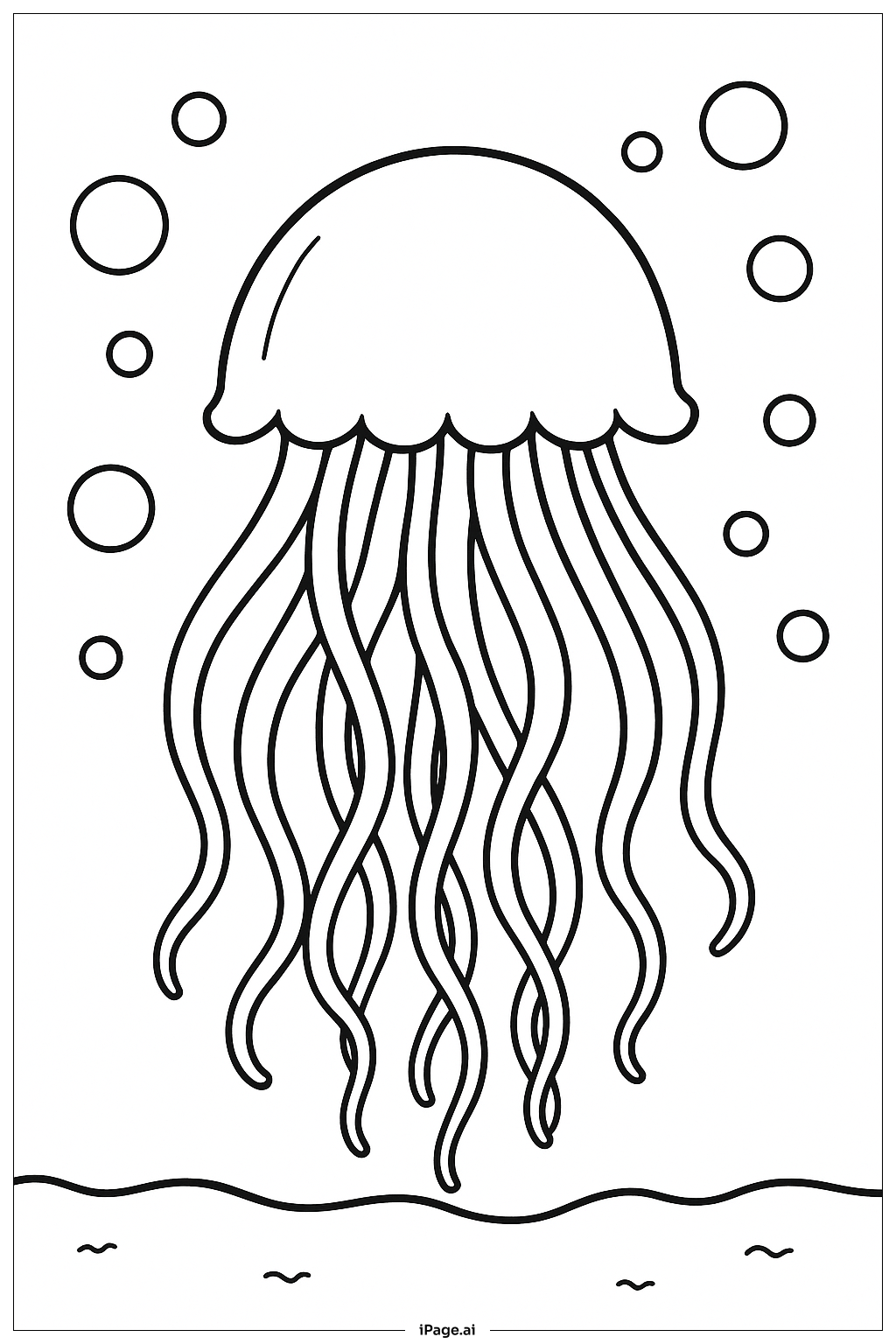
Coloring tips: How to color Jellyfish Among Bubbles coloring page well?
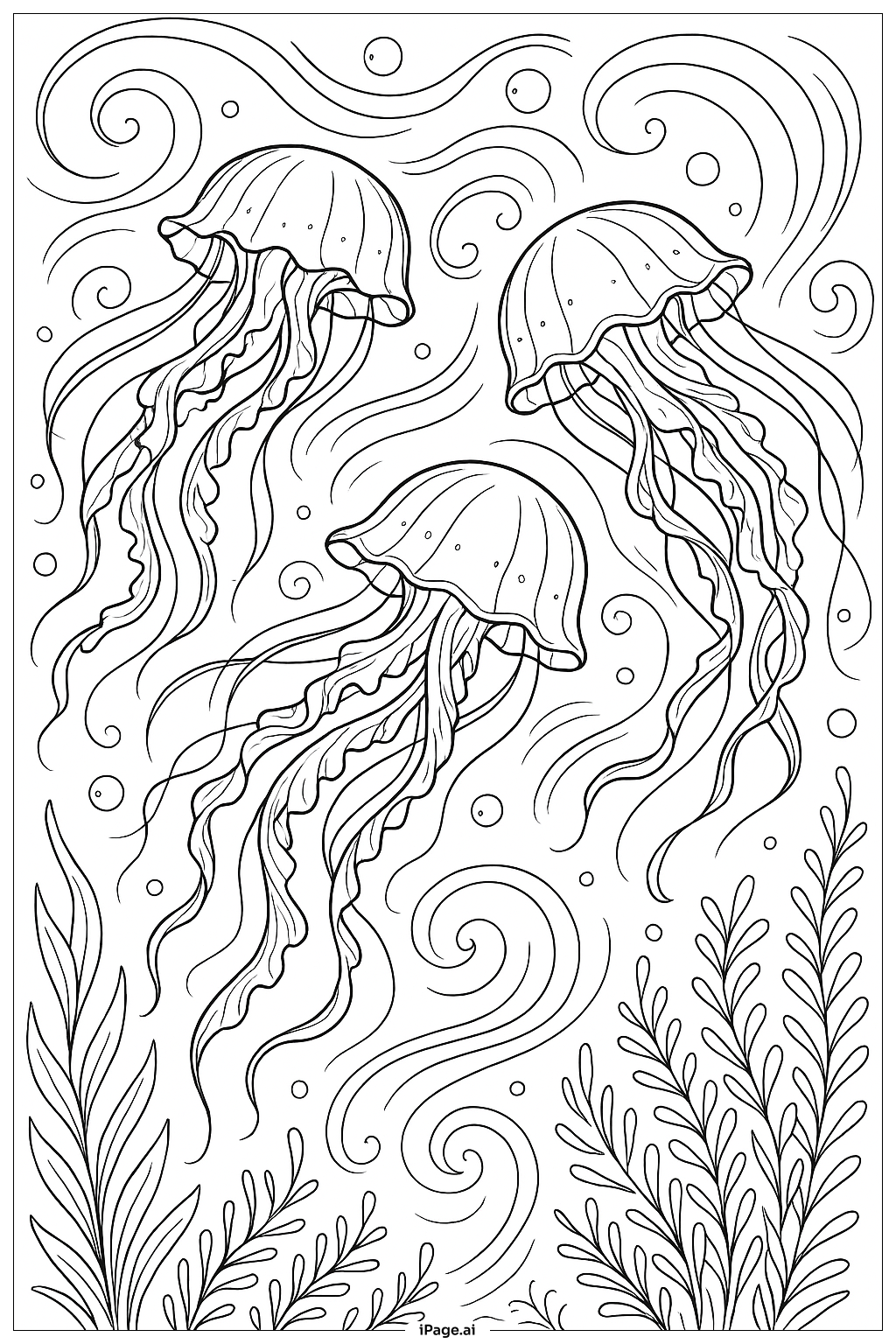
For the jellyfish bell, try soft purples, pinks, or blues to create a translucent glow effect. You can add lighter shades in the center and darker tones along the edges to show dimension. The tentacles look beautiful in gradients, starting darker at the top and fading to lighter shades at the tips. Consider using pink, lavender, or light blue. For the bubbles, leave them mostly white or use very light blues and silvers to show their transparent nature. Add tiny highlights on each bubble to make them sparkle. The background water can be colored in soft aqua, turquoise, or deep ocean blue. Try blending different shades together for a dreamy underwater effect. For a magical look, add touches of iridescent colors like rainbow hues throughout the jellyfish body.
Coloring challenges: Which parts are difficult to color and need attention for Jellyfish Among Bubbles coloring page?
• Bubble Transparency: Creating the illusion of transparent bubbles requires careful color choices and shading techniques. Children must use very light pressure and pale colors to maintain the see-through quality. Adding small white highlights or leaving strategic spots uncolored helps achieve the glassy appearance. Overlapping bubbles present additional challenges, requiring different tones to show which bubble is in front.
• Jellyfish Translucency: Capturing the jellyfish's delicate, see-through nature is tricky. Young artists need to understand how to layer colors lightly and blend shades smoothly to show the translucent bell. The interior patterns visible through the body require planning which colors to apply first and how to show depth without making the jellyfish look solid or opaque.
• Flowing Tentacles: The long, wavy tentacles demand smooth color transitions and consistent shading along their curving lengths. Maintaining color intensity while following the natural flow and avoiding harsh lines takes practice. Children must decide whether to make each tentacle a different shade or keep them uniform while still showing movement.
• Creating Depth: The varying sizes of bubbles and their placement require understanding of perspective. Smaller bubbles in the background should be lighter or less detailed, while foreground elements need stronger colors. This spatial awareness can be challenging for younger children who may color everything with equal intensity.
Benefits of coloring books: Advantages of drawing Jellyfish Among Bubbles coloring page
Coloring this jellyfish scene helps children develop fine motor skills through careful shading and detailed work on the flowing tentacles. The numerous bubbles provide excellent practice for hand-eye coordination and precision. This image encourages creativity as children experiment with color combinations to achieve translucent, glowing effects. Working with the organic, flowing shapes of the jellyfish teaches patience and attention to detail. The peaceful underwater theme promotes relaxation and mindfulness, helping reduce stress and anxiety. Children learn about marine life and ocean ecosystems while coloring, connecting art with science education. The challenge of creating depth and transparency builds problem-solving skills as young artists figure out how to layer colors effectively. This coloring page also boosts confidence as children see their efforts transform the page into a beautiful underwater scene.