Coloring tips: How to color Jax Space Helmet coloring page well?
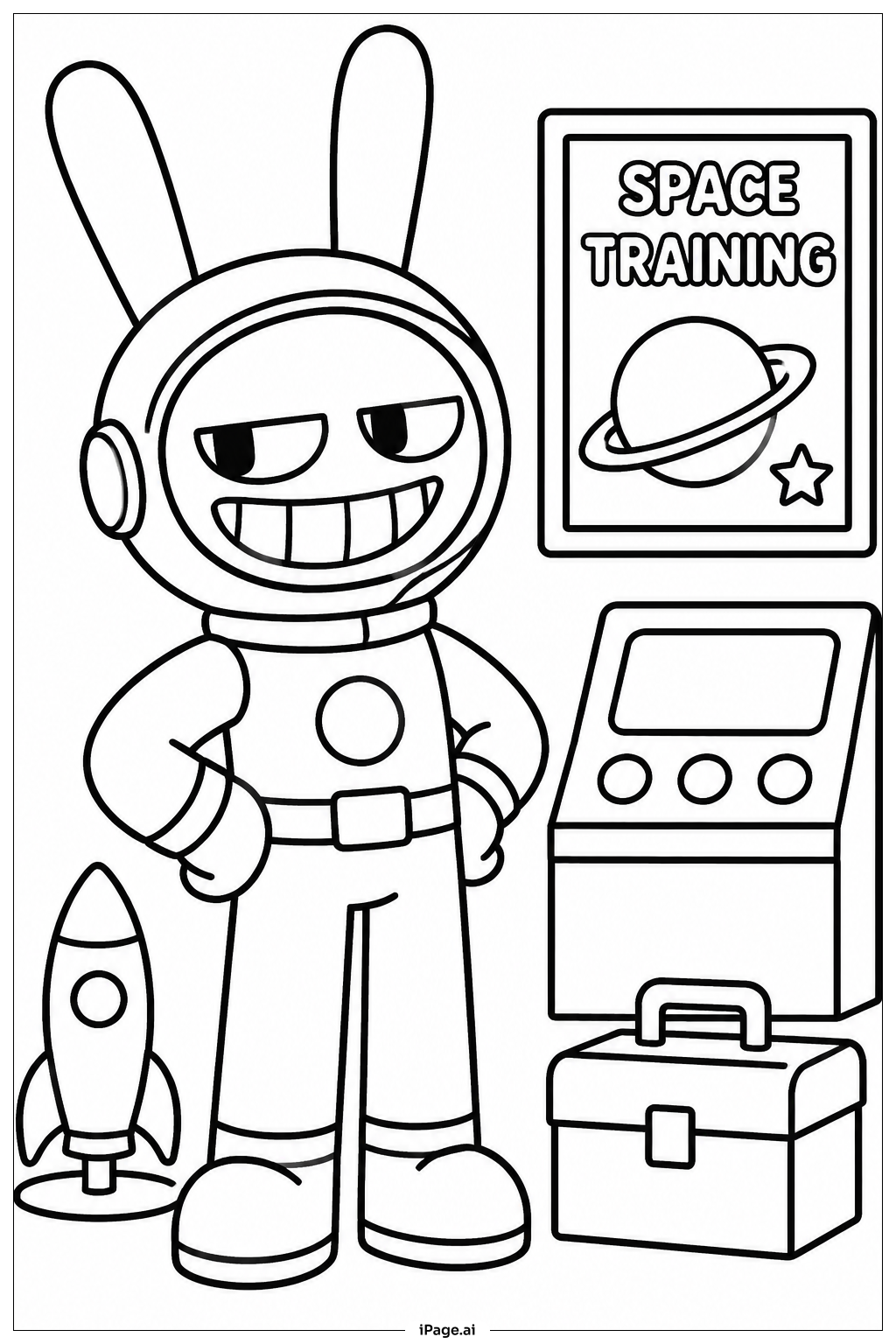
When coloring the Jax Space Helmet, try to use shiny metallic colors like silver, gray, and white for the main body to give it a real space look. You can add bright colors such as blue or green to the buttons and wires to make them stand out. The visor can be colored with light blues or purples to suggest reflections and glass. Don’t forget to leave some areas white or very pale to show highlights and shine. The ventilation grills and padding can be colored in darker shades like black or dark gray for contrast. Feel free to add imaginative touches like stars or planets reflected on the helmet’s visor for more fun.
Coloring challenges: Which parts are difficult to color and need attention for Jax Space Helmet coloring page?
• Reflective Surfaces: The visor and helmet have many shiny and reflective parts. Coloring them realistically requires blending light and dark shades smoothly. • Small Details: Buttons, vents, wires, and padding have many tiny parts that need careful coloring to stay inside the lines. • Color Balance: Keeping the helmet looking metallic means balancing bright highlights with darker shadows without making it look too flat or too busy. • Tube and Wire Complexity: The tubes and cables have twists and overlaps which can be tricky to color neatly to show depth. • Maintaining Contrast: Ensuring the spaces between different sections of the helmet are clearly defined can be challenging, especially where colors blend close together.
Benefits of coloring books: Advantages of drawing Jax Space Helmet coloring page
Coloring this Jax Space Helmet image helps develop concentration and fine motor skills as children carefully fill in the detailed sections and small parts. It encourages creativity by allowing kids to experiment with metallic and bright colors to create realistic and imaginative space gear. This image also introduces concepts of light and shadow, improving understanding of how reflections work on curved surfaces. Coloring this helmet can inspire an interest in space exploration and science, fostering curiosity and learning. Overall, it provides a fun and engaging activity that blends art with imagination and skill-building.