Coloring tips: How to color Jax Space Explorer Team coloring page well?
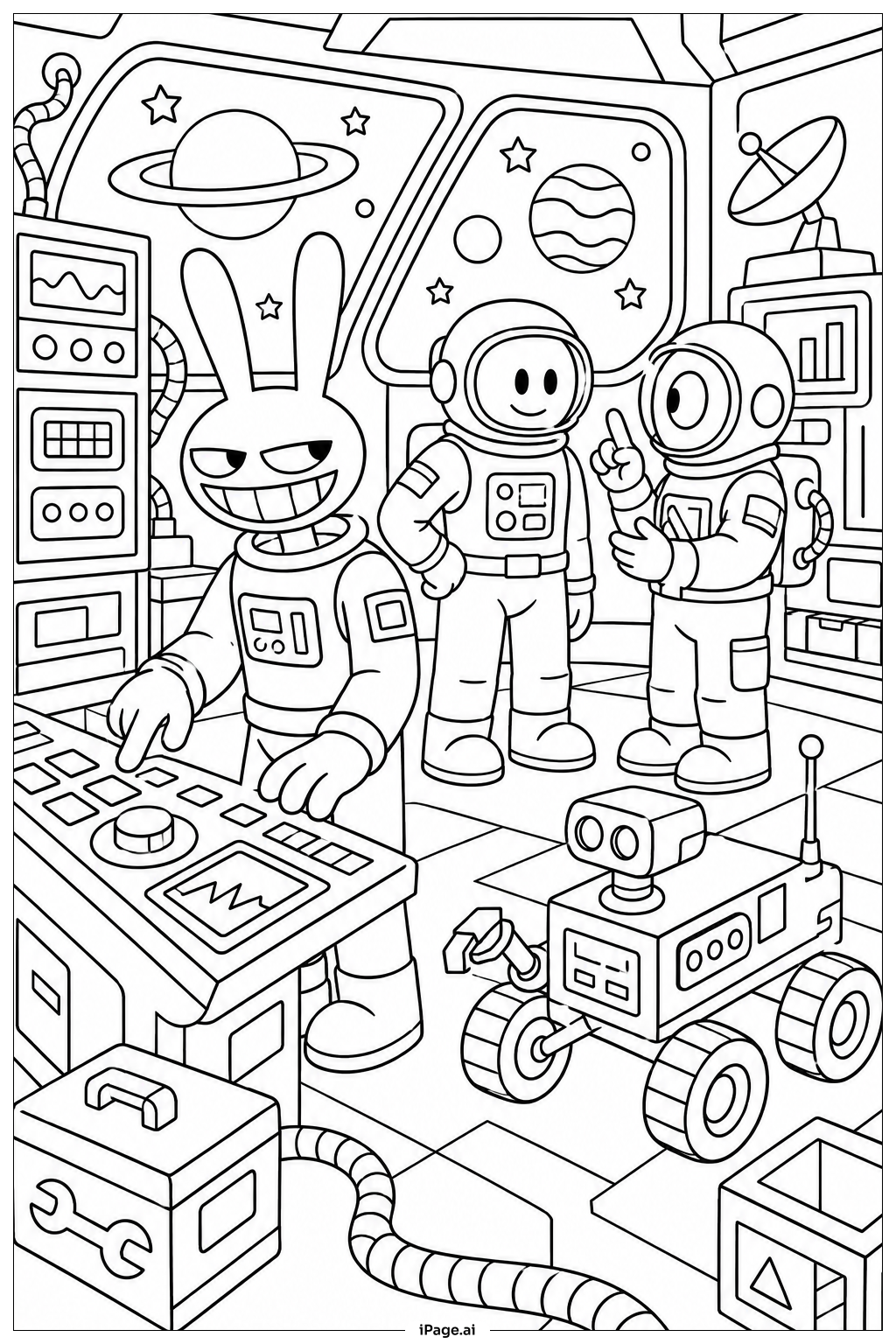
Start with the space suits and give each astronaut a different color to tell them apart. You can use classic white or silver for the suits, or go bold with blue, red, orange, or green. Color Jax in a standout shade so he looks like the team leader. Use deep black or dark navy for the space background, then add bright yellow and white dots for stars. Planets can be any color you like — try purple, teal, orange, or swirling multicolored gradients. Rocket flames look great in red, orange, and yellow blended together. Helmet visors can be tinted gold or light blue to give a reflective look. Have fun mixing colors and making the galaxy your own!
Coloring challenges: Which parts are difficult to color and need attention for Jax Space Explorer Team coloring page?
• Space Suit Details: Each astronaut's suit is covered in small details like buttons, patches, zippers, and air tubes. These tiny elements are close together, making it tricky to stay inside the lines. Using a fine-tipped colored pencil or a thin marker will help you fill these areas neatly without bleeding into neighboring sections.
• Helmet Visors: The visors on the helmets are curved and reflective-looking. Capturing that shiny, transparent effect can be challenging. Try using a light color like pale gold or sky blue and leave small white spots uncolored to suggest a glare or reflection.
• Background Space Scene: The background is filled with stars, galaxies, planets, and asteroids all layered together. Coloring this area without muddying the colors takes patience. Work from the darkest background tones first, then layer lighter stars and planet highlights on top.
• Multiple Characters: With several team members in the scene, keeping each character visually distinct requires planning. If you use similar colors for two astronauts, they can blend together and look confusing. Consider mapping out each character's color scheme before you start so the whole team reads as individuals.
• Rocket and Spacecraft Elements: Rockets and boosters have metallic, mechanical surfaces with panels and rivets. Shading these areas with slightly darker tones of the same color can give them a three-dimensional, realistic feel, but blending smoothly in small spaces is a common challenge for younger colorists.
Benefits of coloring books: Advantages of drawing Jax Space Explorer Team coloring page
Coloring the Jax Space Explorer Team page is a wonderful activity for kids of all ages. It sparks imagination and curiosity about outer space, encouraging children to think about planets, rockets, and the universe beyond our world. Choosing colors for each astronaut helps develop decision-making skills and personal creativity. Staying inside detailed lines, like the suit panels and helmet shapes, builds fine motor control and hand-eye coordination, skills that support handwriting and other everyday tasks. The busy, layered scene also trains focus and patience, as kids work through each section one step at a time. Blending colors for the galaxy background introduces early concepts of color mixing and visual art. For older kids, the challenge of shading metallic surfaces and creating depth can be a satisfying artistic exercise. Most importantly, completing the page gives children a strong sense of accomplishment. It is a screen-free, calming activity that can be shared with friends or family, making it as social as it is creative. Whether you color it quickly for fun or take your time to make it detailed, this page is a great way to explore art while dreaming about the stars.