Coloring tips: How to color Jax Fishing Day coloring page well?
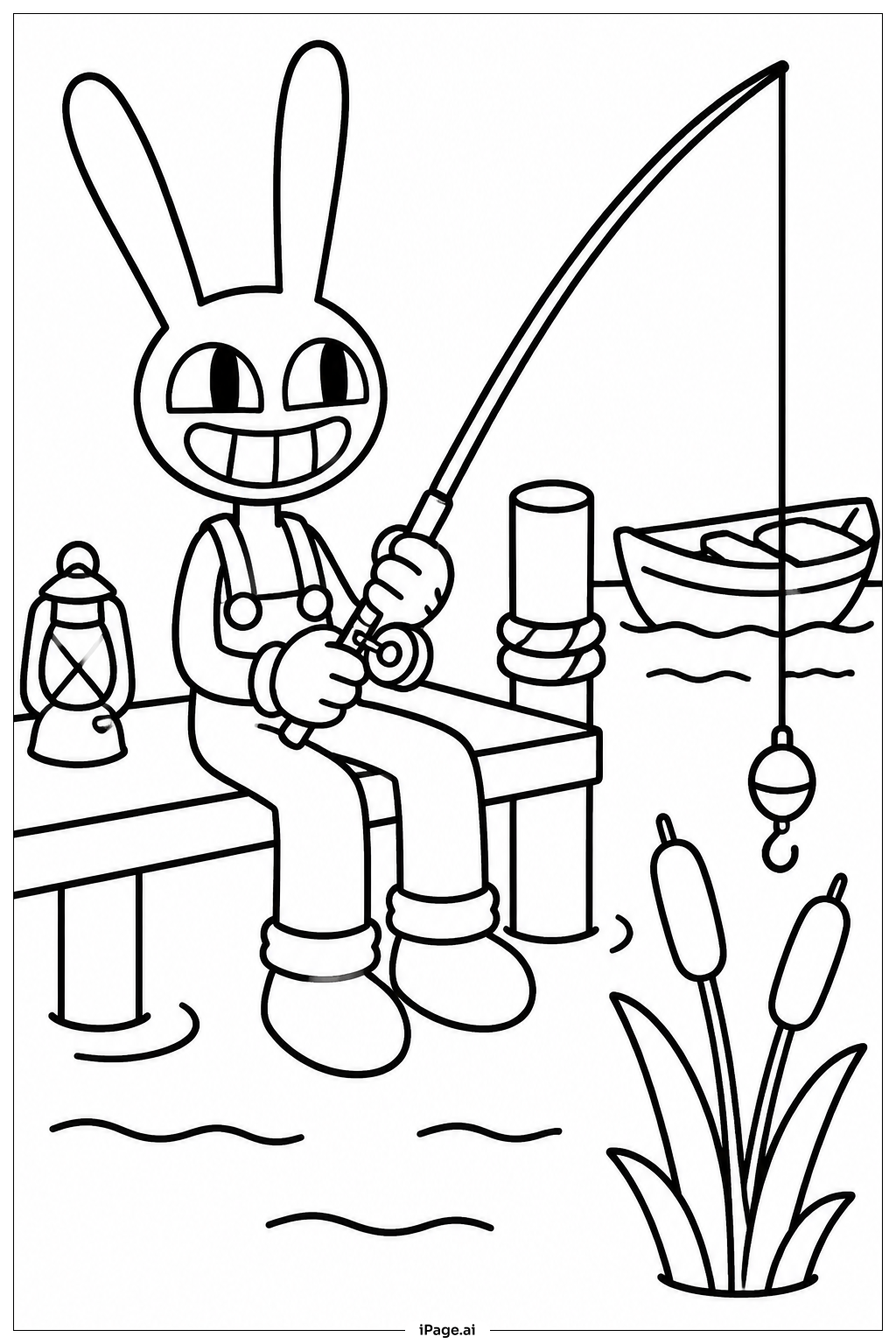
For this image, use bright and cheerful colors to bring the scene to life. You could color Jax's hat in red or blue to make it stand out. The fishing rod can have brown or green tones to reflect wood or nature. The water might be various blue shades, adding darker blues near the dock and lighter shades reflecting the sky. The trees should include different greens, maybe with yellow highlights for sunlight. The bird can be colorful to add visual interest—think blue or yellow feathers. The sky can be colored light blue with soft white clouds. Feel free to use vibrant colors to show the joyful and relaxing feeling of Jax Fishing Day.
Coloring challenges: Which parts are difficult to color and need attention for Jax Fishing Day coloring page?
• Small Details: The fishing tackle box and fishing rod have tiny elements that require precise coloring to capture their shape clearly. Coloring inside these small parts can be challenging for younger children. • Water Texture: The gentle ripples and reflections on the water need shading with different blues to appear natural. It takes practice to blend these shades without making it look flat. • Natural Elements: The bushes, trees, and bird have varied shapes and textures that may require layered coloring and attention to detail to show depth and dimension. • Shadows and Highlights: To make this outdoor scene realistic, adding shadows under the dock, on Jax, and around foliage can be tricky but improves the overall look. New colorists may find it difficult to choose where to darken or lighten areas. • Overlapping Objects: Some parts, like Jax’s arm over the fishing rod, or branches over the sky, overlap. Coloring these with the correct order and avoiding mixing colors takes care and a steady hand.
Benefits of coloring books: Advantages of drawing Jax Fishing Day coloring page
Coloring this image helps develop focus and fine motor skills as children work on delicate details like the rod and tackle box. It encourages creativity by choosing colors that reflect nature and a joyful outdoor setting. The variety of natural elements such as water, trees, and animals introduces kids to different textures and shapes, broadening their observation skills. Engaging with this scene can also promote relaxation and patience, as kids spend time thoughtfully filling in each part. Additionally, it fosters a connection with nature and appreciation of outdoor activities like fishing, inspiring learning and curiosity.