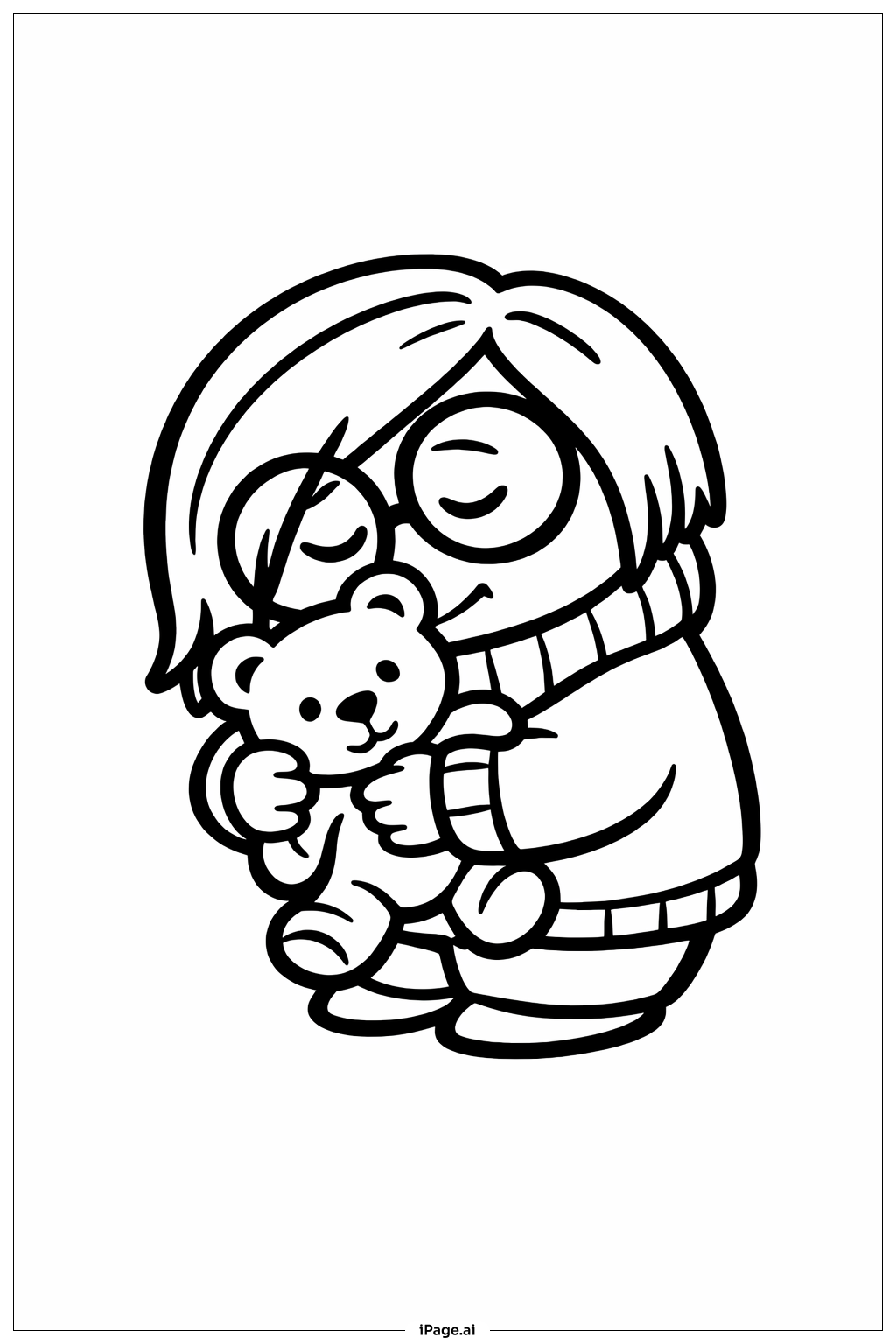
Coloring tips: How to color Inside Out 2 Sadness Holding Teddy coloring page well?
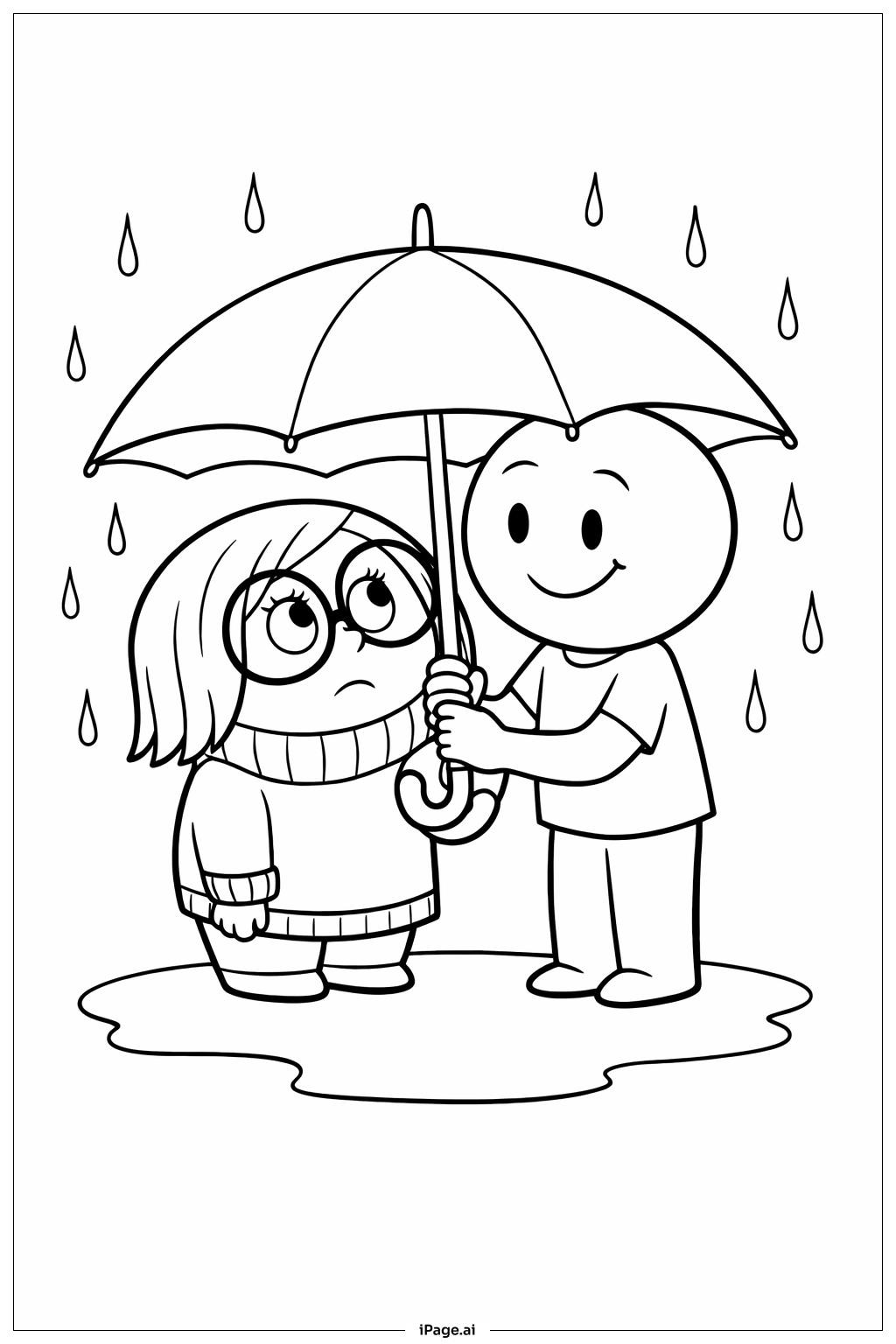
Start with Sadness's skin and body. Use a medium blue for her face, hands, and any exposed areas. Her turtleneck sweater looks great in a slightly darker blue or navy shade. For her hair, use a deep indigo or dark blue-gray. Her glasses frames can be a warm brown or dark gray. Give the lenses a very light blue tint to keep them feeling glassy and soft. For the teddy bear, warm tones work best. Try tan, beige, or light brown for the body, with a slightly darker brown for the ears, nose, and paw details. The button eyes can be black or dark brown. Add a soft cream color to the bear's tummy patch for contrast. Keep the overall palette gentle and cool for Sadness, while using warm, earthy tones for the teddy bear. This contrast makes the two characters feel distinct but connected. Use light pressure first to build up color slowly, then layer for richer tones in shadow areas like under the chin and around the sweater folds.
Coloring challenges: Which parts are difficult to color and need attention for Inside Out 2 Sadness Holding Teddy coloring page?
• Glasses Details: Sadness wears small, round glasses that sit on her face. Coloring the frames neatly without going over the lines onto her skin or eyes takes steady hand control. The lenses need a very light, even color to look transparent rather than solid, which can be tricky for younger colorists.
• Layered Blue Tones on Sadness: Her entire body, skin, hair, and clothing all fall in the blue color family. The challenge is using different shades of blue to separate each area clearly so they do not all blend together. Kids need to choose at least three or four distinct blue tones and apply them carefully to show where the skin ends and the sweater begins.
• Teddy Bear Texture: The teddy bear is meant to look soft and fluffy. Achieving a furry or plush texture with colored pencils or crayons requires short, feathery strokes rather than flat, solid fills. This technique takes patience and some practice, especially around the ears and the edges of the body.
• Small Facial Features: Both Sadness and the teddy bear have small, detailed faces with eyes, noses, and mouths packed into a compact area. Keeping each feature clean and correctly colored without smudging nearby areas is one of the harder parts of this page, particularly for younger children still developing fine motor skills.
• Sweater Folds and Shading: The turtleneck sweater has fabric folds and curves that create natural shadow areas. To make the sweater look three-dimensional and cozy, colorists can use a darker blue in the fold lines and a lighter blue on the raised areas. This shading technique adds depth but requires careful observation and control.
Benefits of coloring books: Advantages of drawing Inside Out 2 Sadness Holding Teddy coloring page
Coloring this page of Sadness hugging her teddy bear offers a wonderful mix of creative and emotional benefits for kids. Sadness is one of the most meaningful characters in Inside Out 2 because she teaches children that it is okay to feel sad and that emotions deserve to be acknowledged. Coloring her in a warm, comforting moment reinforces that message in a gentle, visual way.
Working through the blue tones of Sadness's body and the warm browns of the teddy bear helps children practice color recognition and learn how to use contrast effectively. Choosing which shade of blue goes where builds decision-making skills and color awareness.
The fine details on this page, like the glasses, the bear's small face, and the sweater folds, give children a chance to practice their fine motor skills and improve hand-eye coordination. Staying inside the lines and switching between small and large areas keeps concentration sharp.
Because the scene is calm and cozy, the act of coloring it naturally encourages a relaxed and focused mood. It can be a great quiet-time activity that helps children unwind after a busy day. Sharing the finished page can also spark conversations about feelings, empathy, and why it is important to have comfort objects or trusted friends nearby when emotions feel big.