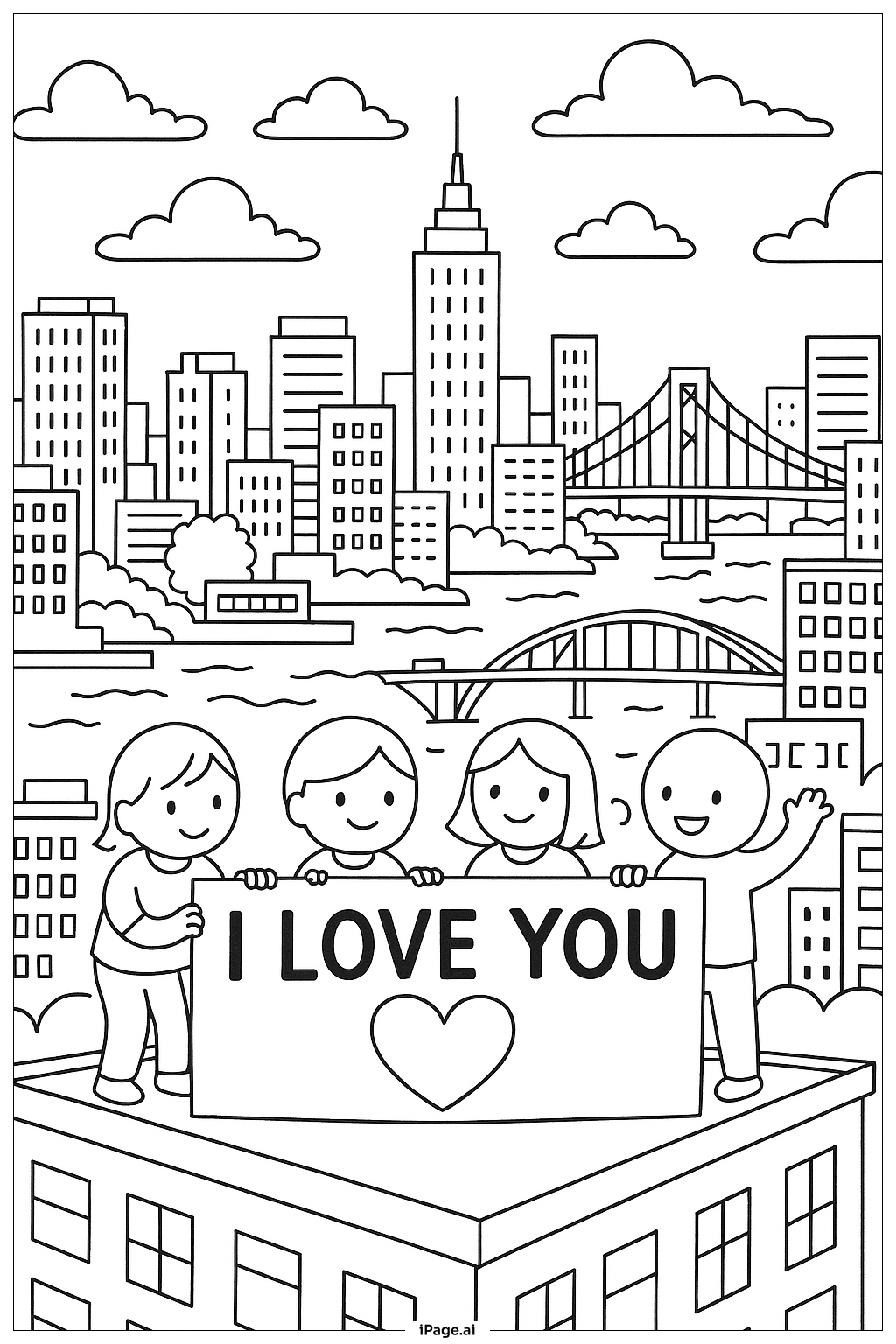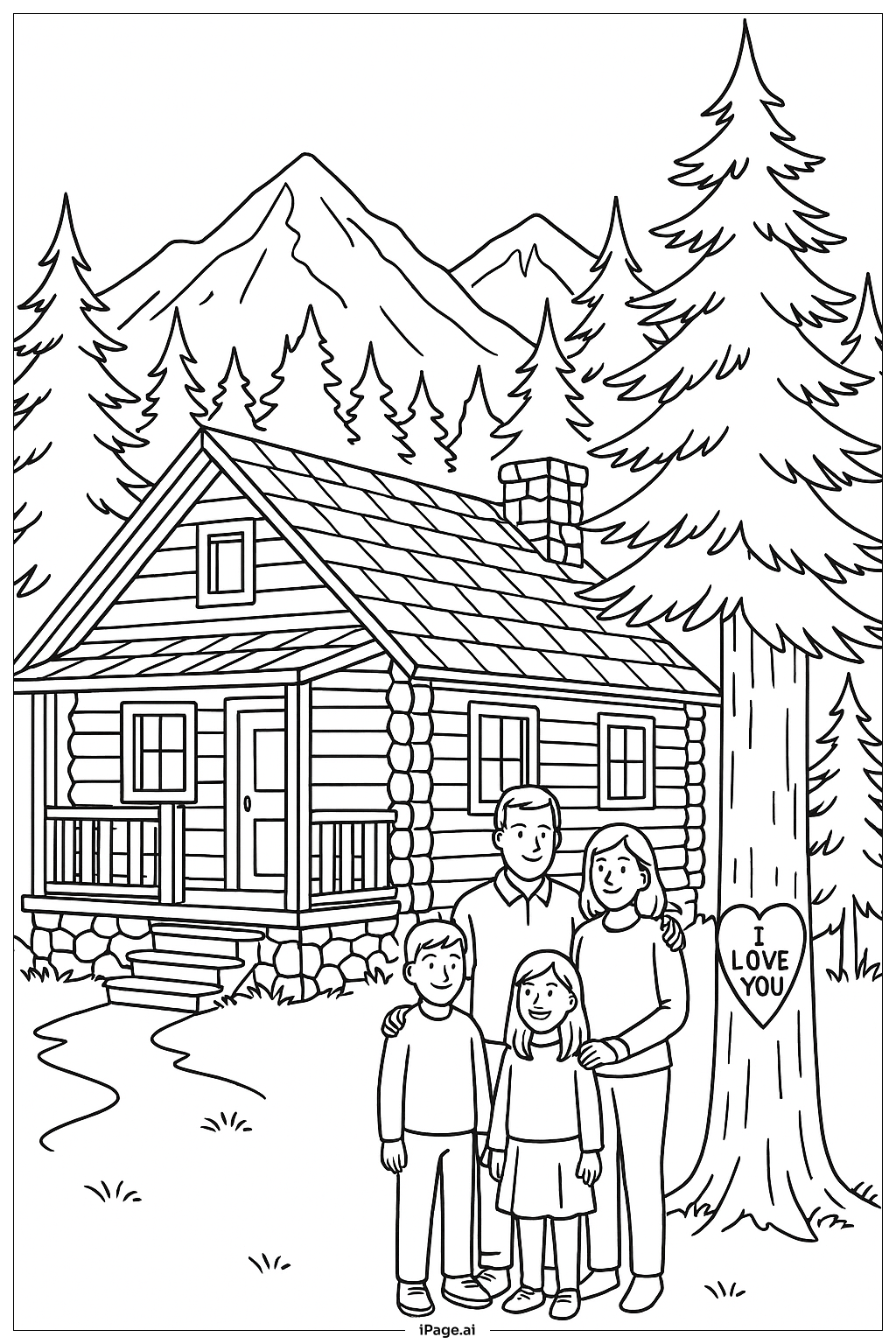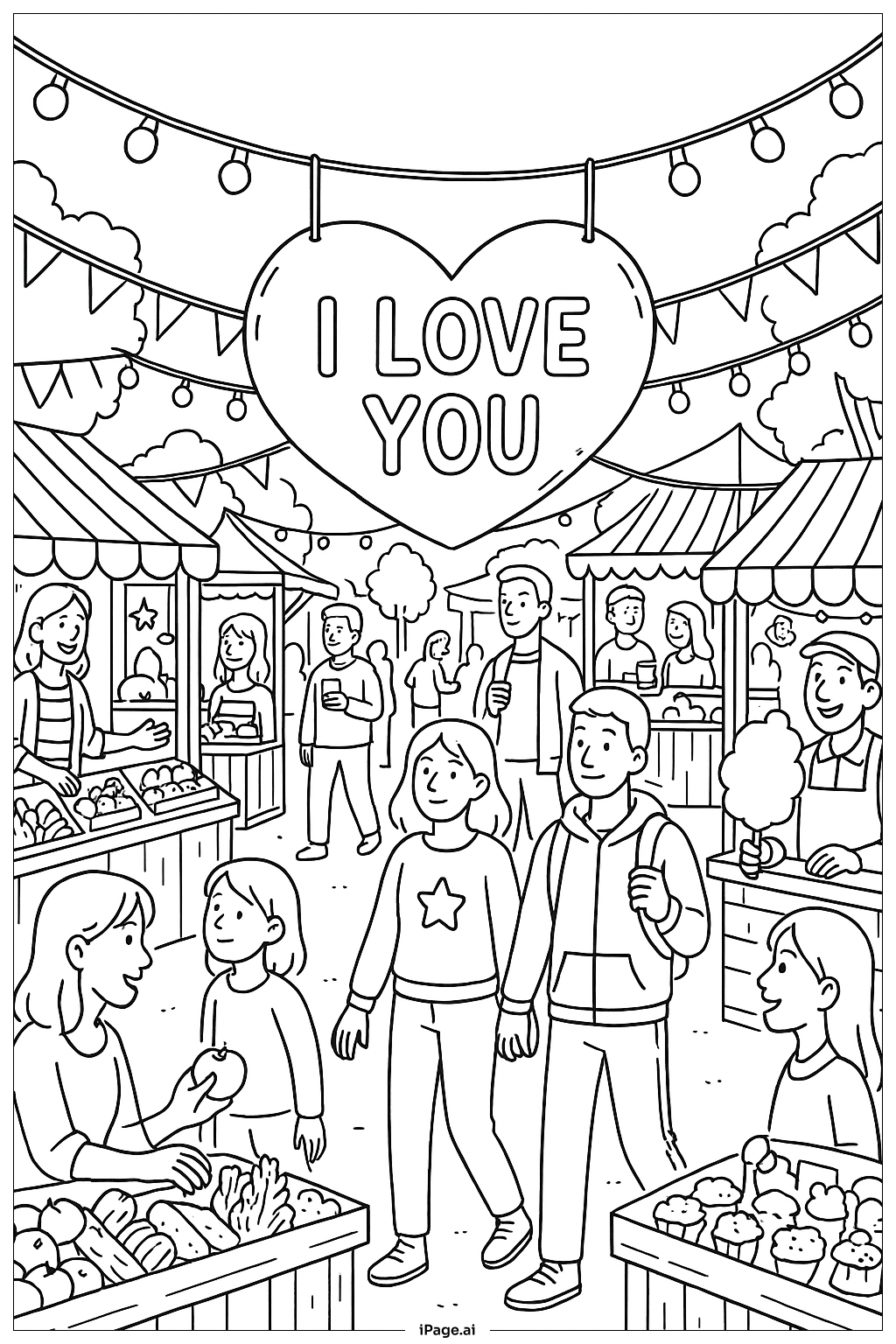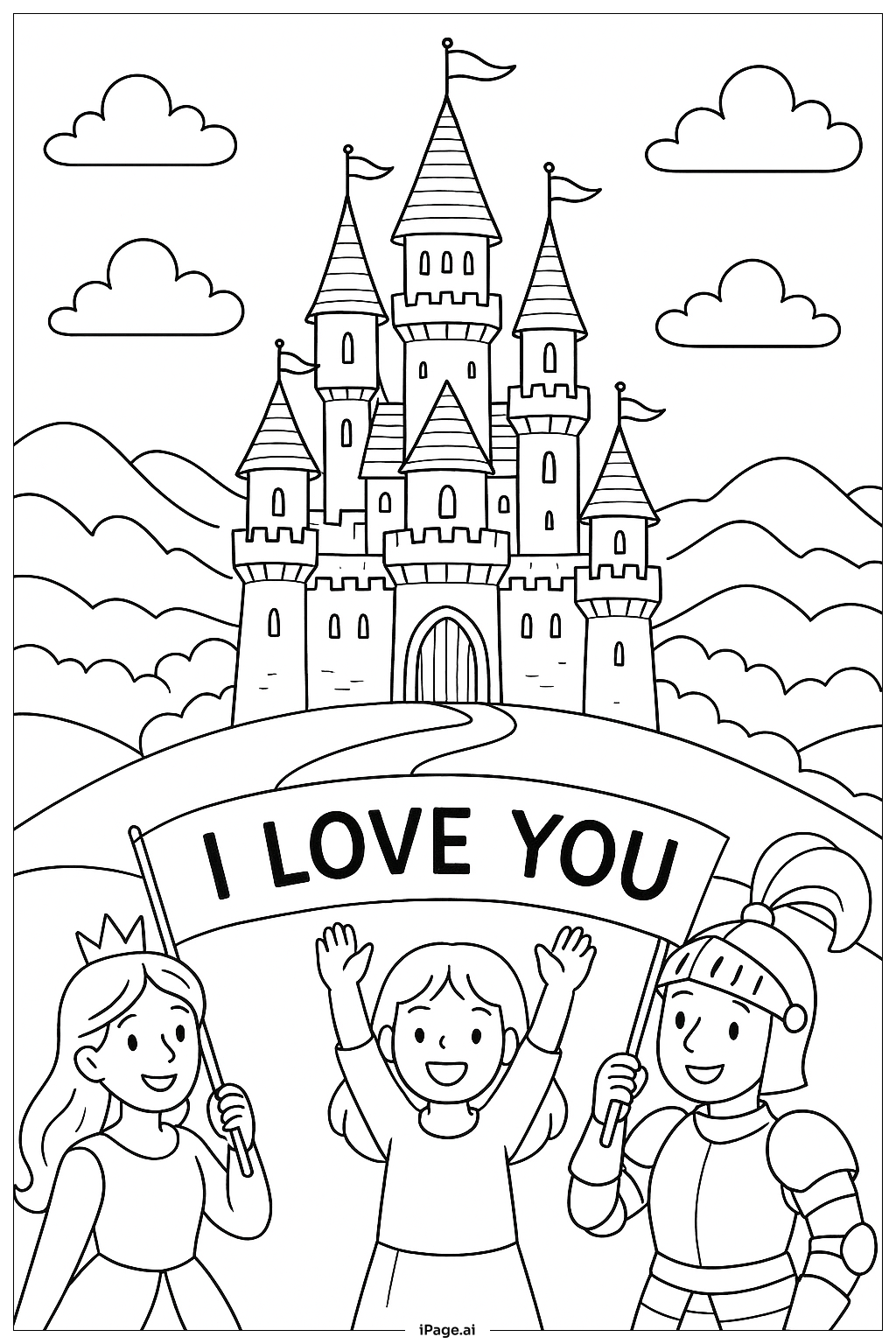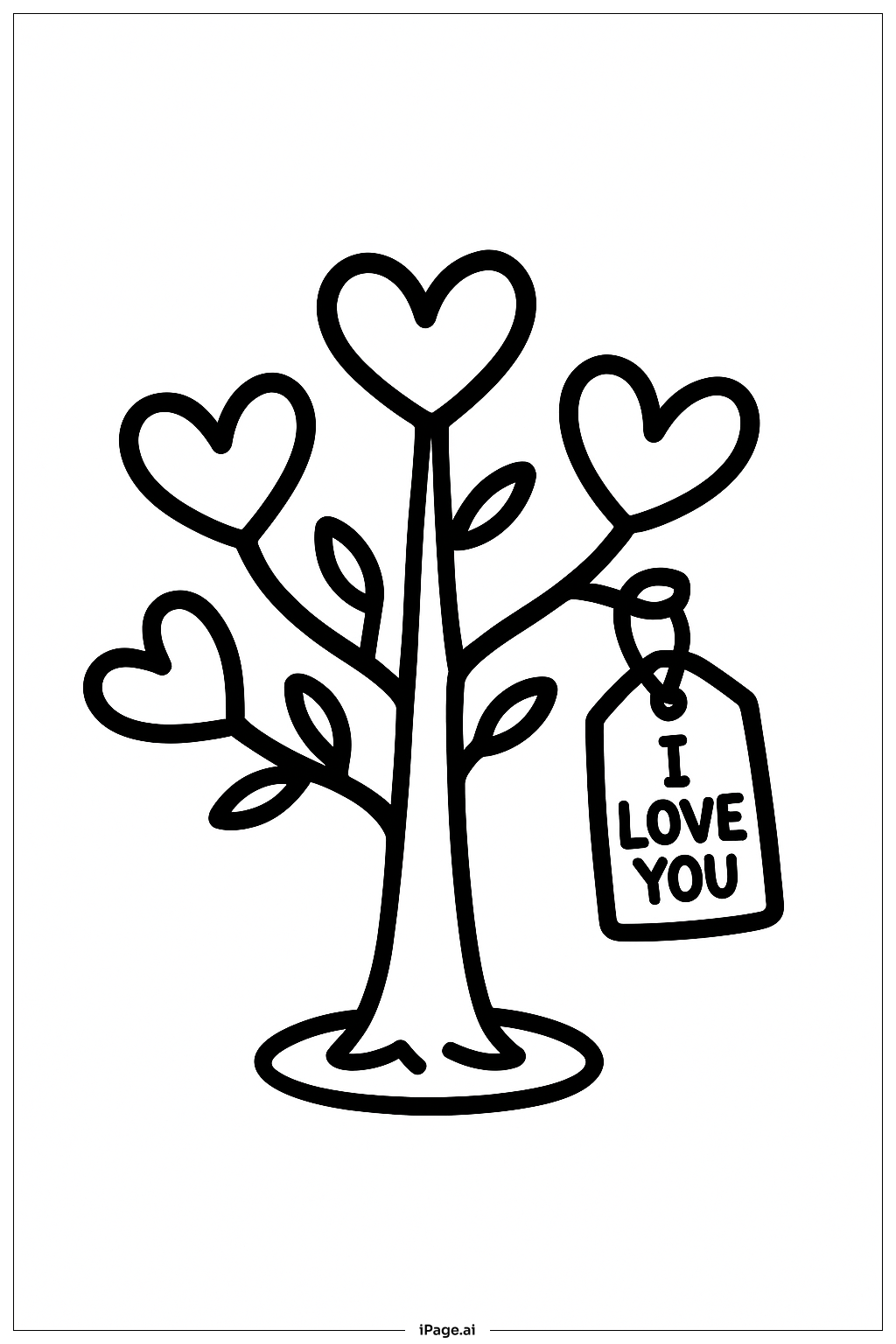
Coloring tips: How to color I Love You Heart Tree coloring page well?
Start with the tree trunk using various shades of brown, adding darker tones in the crevices to create depth and texture. For the heart-shaped canopy, consider using different shades of green for the leaves, mixing light and dark greens to add dimension. The flowers can be colored in vibrant pinks, purples, yellows, or reds to make them pop against the foliage. Color the "I LOVE YOU" text in a bold red or pink to emphasize the loving message. The floating hearts around the tree can be colored in shades of red, pink, or even rainbow colors for a playful touch. Use light green or yellow-green for the grass at the base. Consider adding a soft blue sky background or leaving it white for contrast. Blend colors gently where the leaves overlap to create a natural, flowing appearance.
Coloring challenges: Which parts are difficult to color and need attention for I Love You Heart Tree coloring page?
• Heart-Shaped Canopy Detail: The heart-shaped tree crown contains numerous small leaves and flowers that require patience and precision. Young colorists may find it challenging to color within the tiny spaces between leaves without overlapping into adjacent areas. The dense foliage pattern demands careful attention to keep colors organized and prevent the design from looking muddy or chaotic.
• Tree Bark Texture: The trunk features intricate bark texture lines and grooves that create a realistic wood appearance. Coloring these textured areas effectively requires understanding how to use different shades to create depth. Children may struggle with deciding where to place darker shadows and lighter highlights to make the trunk look three-dimensional rather than flat.
• Letter Coloring Precision: The "I LOVE YOU" text in the center of the heart requires steady hands to stay within the letter boundaries. The bold letters have specific edges that need clean coloring to maintain readability. Younger children might find it difficult to color the letters evenly without streaking or going outside the lines, especially in curved letter sections.
• Flower and Leaf Coordination: Distinguishing between the small flowers and leaves within the canopy can be visually challenging. Deciding on a color scheme that makes the flowers stand out from the surrounding foliage while maintaining overall harmony requires planning. Colorists must carefully identify which shapes are flowers and which are leaves before beginning to color.
Benefits of coloring books: Advantages of drawing I Love You Heart Tree coloring page
Coloring this I Love You Heart Tree helps children develop fine motor skills through the detailed work required for the leaves, flowers, and textured bark. The romantic theme encourages emotional expression and provides an opportunity to create a meaningful gift for parents, grandparents, or friends. The combination of natural elements with a loving message teaches children about expressing affection in creative ways. Working with the heart shape reinforces shape recognition while the text helps with letter recognition and reading skills. The detailed foliage promotes focus and concentration as children work through the intricate patterns. Color selection for the various elements encourages decision-making and artistic planning. This design also offers a calming, meditative coloring experience that can reduce stress and promote mindfulness, making it suitable for both children and adults who want to create something special for someone they love.