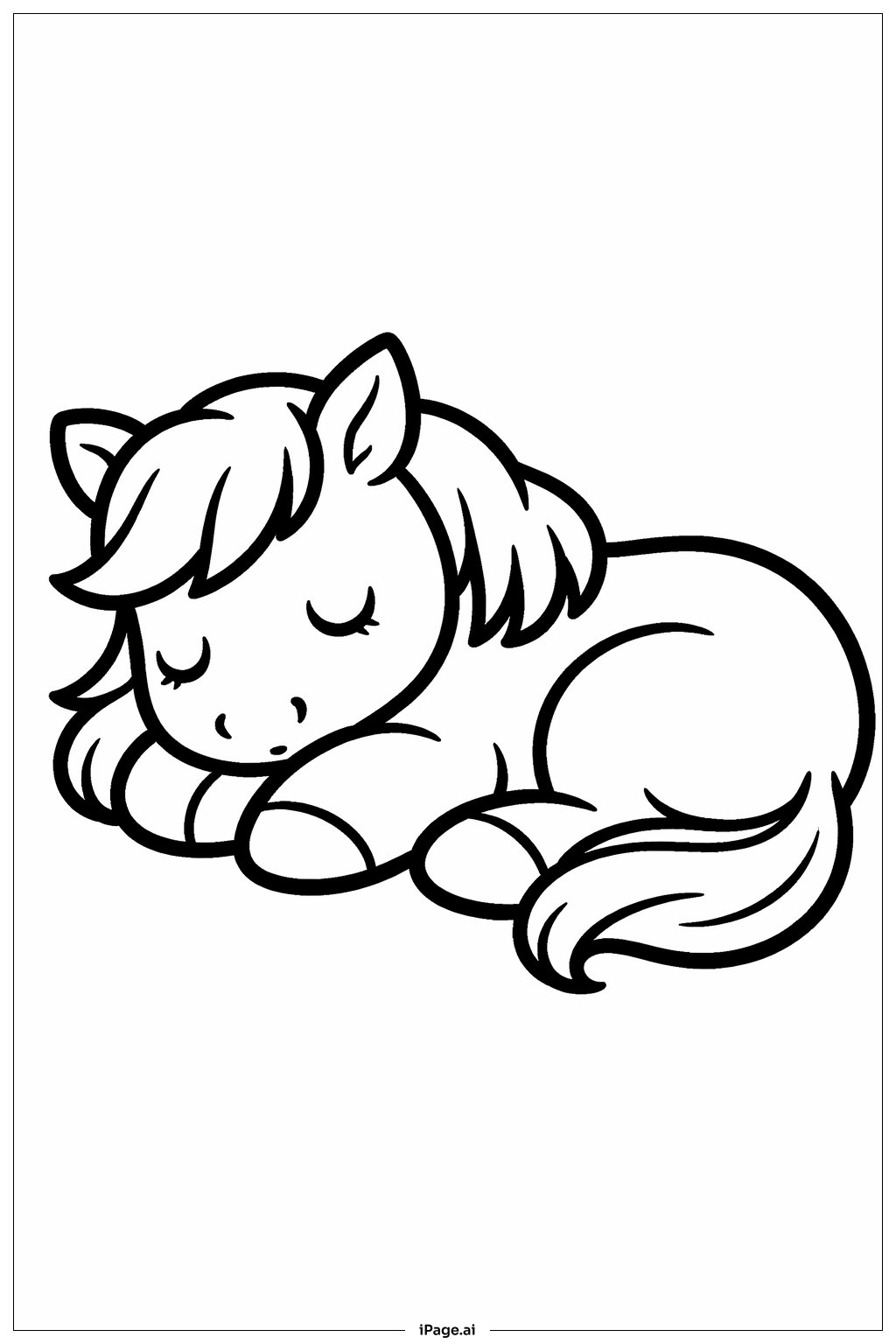
Coloring tips: How to color Sleeping Horse Curl coloring page well?
For this sleeping horse, consider using warm earth tones like chestnut brown, golden tan, or soft gray for the body. The mane and tail offer opportunities for creative expression with darker shades of brown, black, or even imaginative colors like deep purple or midnight blue. Use gentle shading techniques to highlight the curved body shape, adding darker tones along the underside and lighter colors on the top surfaces. The background can remain white or be filled with soft pastels like lavender, pale yellow, or light blue to create a dreamy nighttime or peaceful meadow setting. Consider using colored pencils for smooth blending on the body, while markers can emphasize the flowing strands of the mane and tail. Add subtle shadows beneath the horse to ground the figure and create depth.
Coloring challenges: Which parts are difficult to color and need attention for Sleeping Horse Curl coloring page?
• Curved Body Shading: The horse's curled position presents challenges in understanding light and shadow placement. The rounded form requires smooth color transitions from highlighted areas to shadowed regions. Young colorists may struggle to visualize how light falls across the curved spine, belly, and legs, requiring careful observation of the body's three-dimensional structure.
• Mane and Tail Texture: Creating realistic flowing hair texture demands attention to directional strokes and layering. Each strand should follow the natural fall and movement of horse hair. Maintaining consistent direction while varying pressure and color intensity challenges fine motor control. Avoiding a flat, uniform appearance requires deliberate technique and patience.
• Maintaining Smooth Color Transitions: The large body area needs even color application without visible streaks or patches. Achieving professional-looking gradients across the horse's coat tests blending skills and color consistency. Children may find it difficult to maintain the same pressure throughout, leading to uneven saturation that disrupts the peaceful aesthetic.
• Fine Facial Details: The sleeping expression requires delicate work around the closed eyes, nostrils, and muzzle. These small features need precision to avoid color bleeding outside lines. The subtle contours of the face demand careful hand control and attention to detail, particularly challenging for younger children with developing fine motor skills.
Benefits of coloring books: Advantages of drawing Sleeping Horse Curl coloring page
Coloring this peaceful sleeping horse offers wonderful relaxation benefits, as the gentle curves and calm subject matter create a meditative coloring experience. The flowing lines naturally guide smooth, rhythmic hand movements that reduce stress and promote mindfulness. Children develop important fine motor skills while working on the detailed mane and facial features, improving hand-eye coordination and pencil control. The curved body shape teaches valuable lessons about shading, dimension, and how light interacts with rounded forms, building foundational art skills. This image encourages color experimentation and personal creative choices, boosting confidence and self-expression. The tranquil theme helps create a calming activity perfect for quiet time or winding down before bed. Completing this page provides a sense of accomplishment while fostering patience, focus, and attention to detail—skills that transfer to academic and daily life tasks.