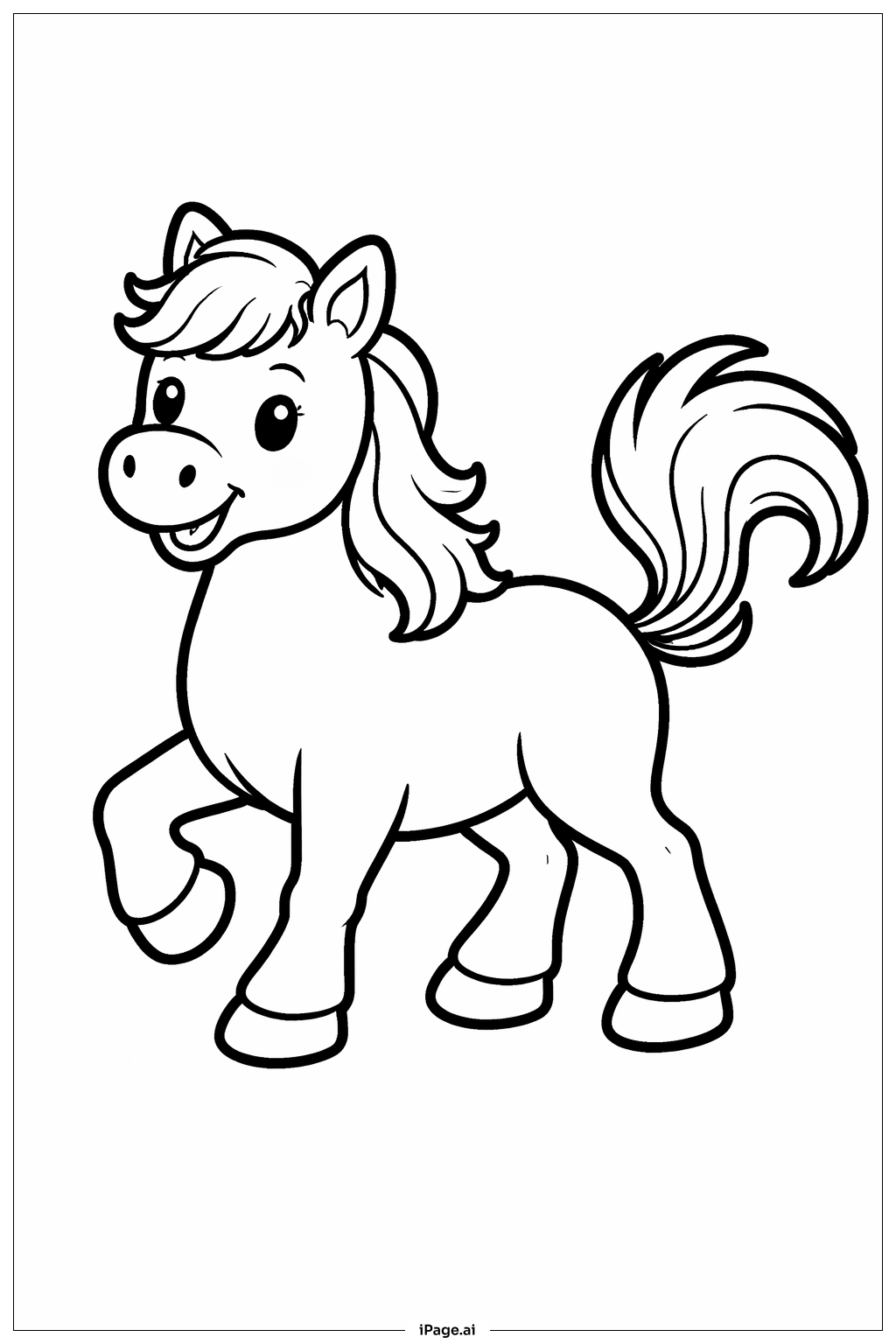
Coloring tips: How to color Horse Wagging Tail coloring page well?
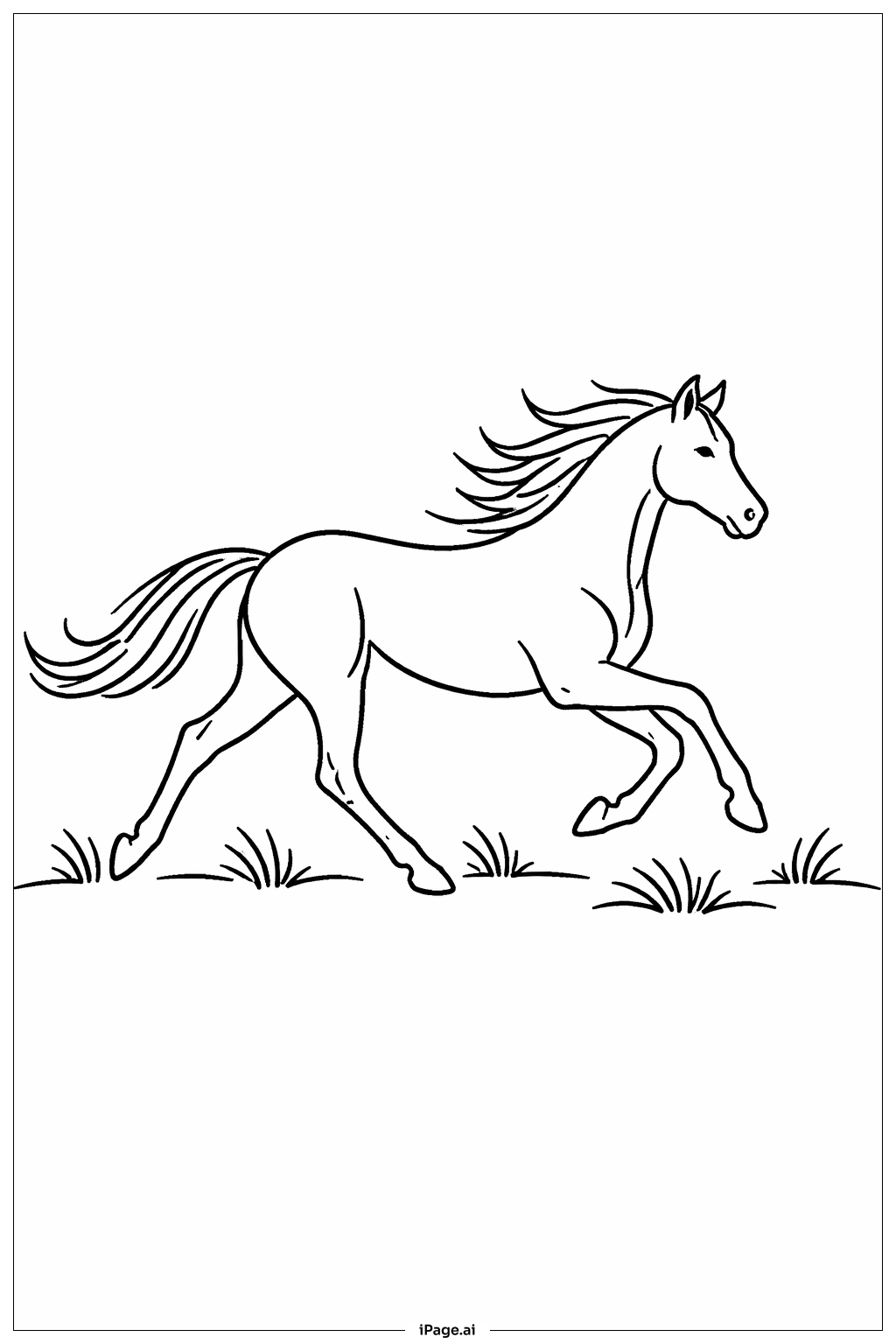
Use warm colors like brown, beige, or tan for the horse's body to create a natural look. The mane and tail can be colored with darker shades such as dark brown or black, or you can be creative and use bright colors like purple or blue to make it fun. The eyes should be colored black with a white highlight for shine. The hooves can be a darker shade of brown or gray. Feel free to add background colors like green for grass and blue for the sky to make the scene lively. Use soft, gentle strokes for the flowing mane and tail to show motion.
Coloring challenges: Which parts are difficult to color and need attention for Horse Wagging Tail coloring page?
1. Coloring the mane and tail smoothly can be tricky because of the many strands that need different shading to show movement.
2. Filling the body evenly might be challenging for younger children because the horse's body is large and curved.
3. Coloring the eyes to look bright and lively requires careful filling to avoid going outside the lines.
4. The raised leg has tight curves that need precision to color without overlapping the lines.
5. Adding the right contrast between the horse’s body, hooves, and mane can be difficult to balance and make the image look realistic.
Benefits of coloring books: Advantages of drawing Horse Wagging Tail coloring page
Coloring this horse helps improve fine motor skills as children practice staying within the lines, especially in small areas like the eyes and mane. It encourages creativity because kids can choose natural or imaginative colors for the horse and background. The image promotes focus and patience due to its different parts needing attention. Coloring flowing parts like the tail supports learning about movement and energy. Overall, this activity is fun and educational, making children more confident with coloring techniques.