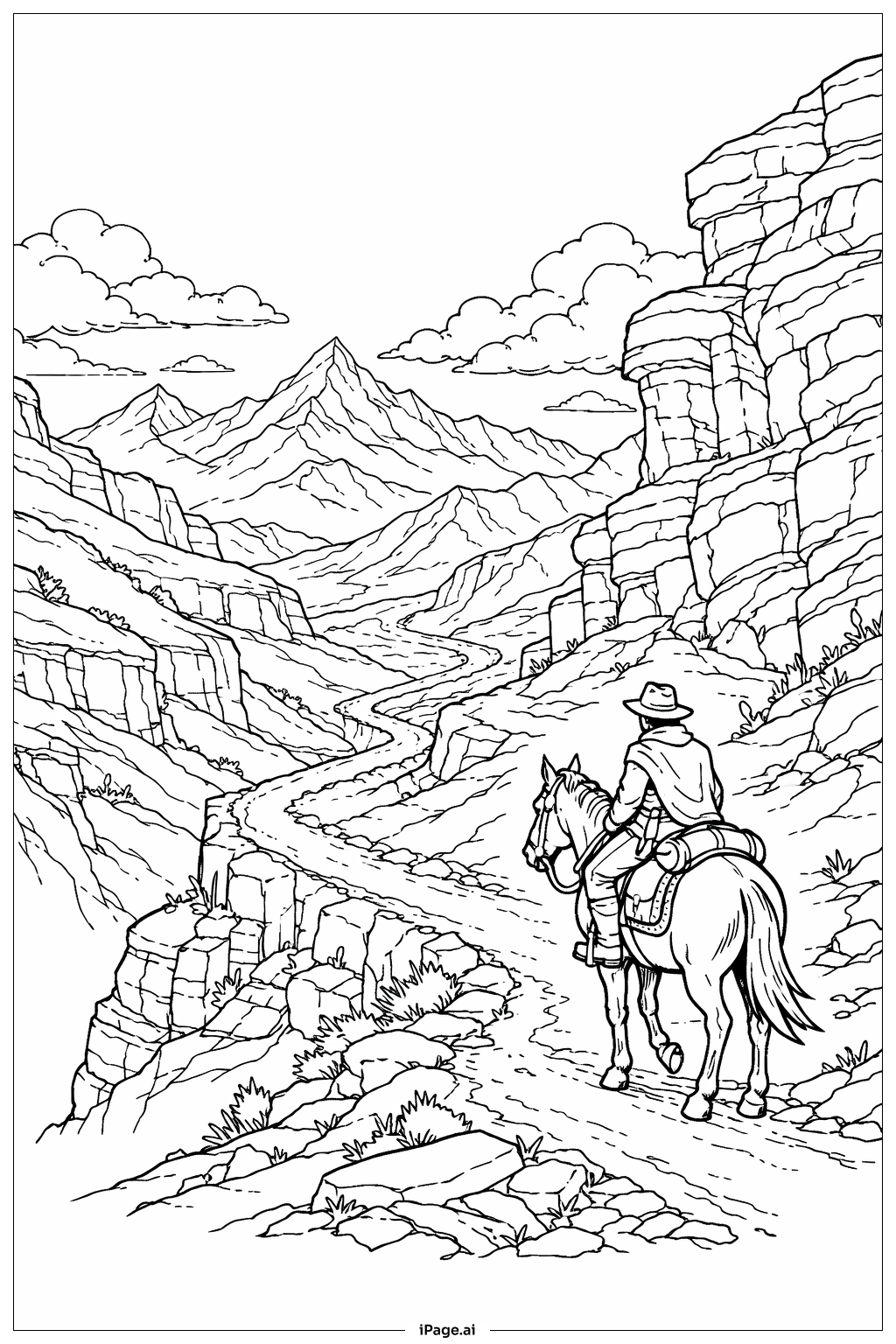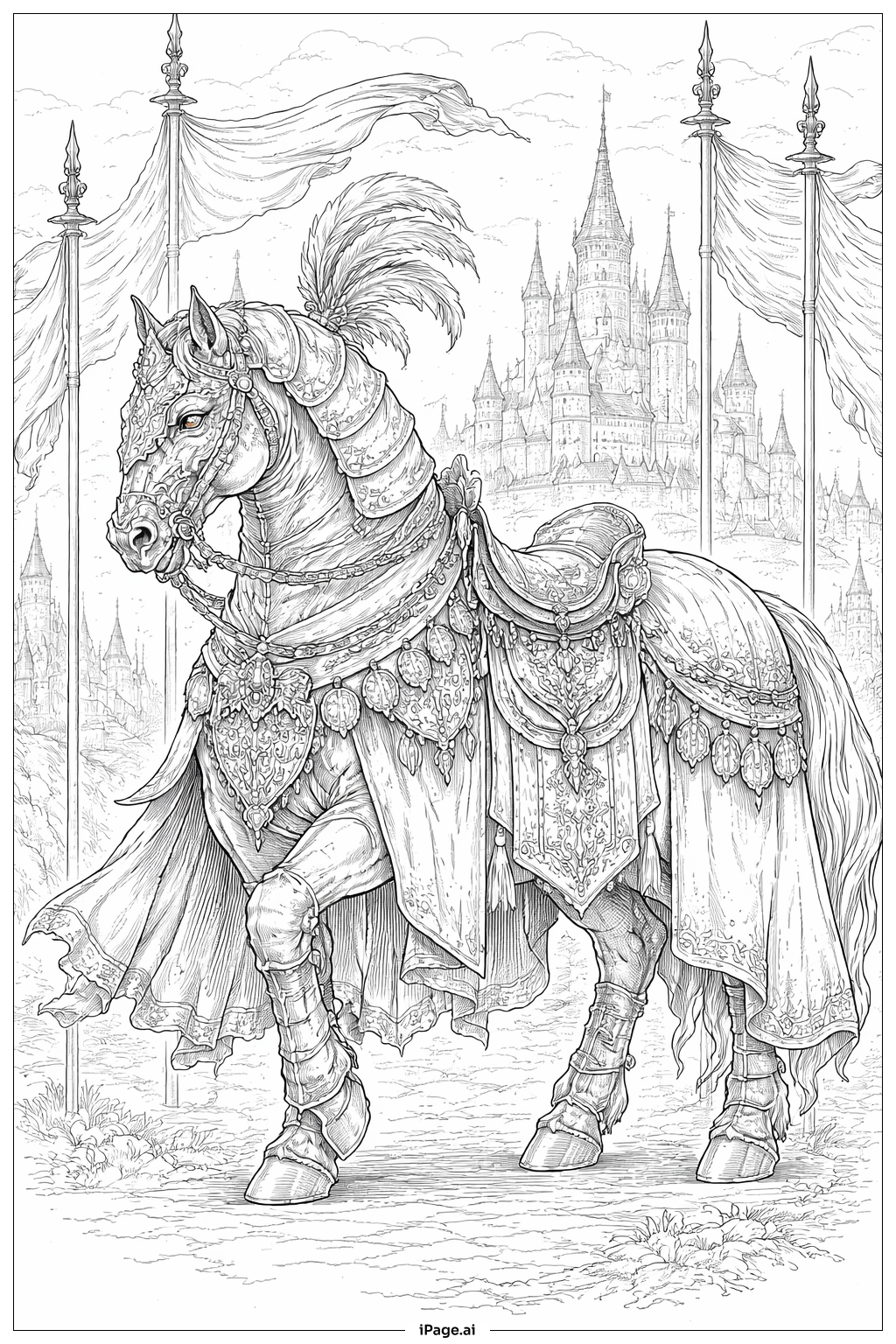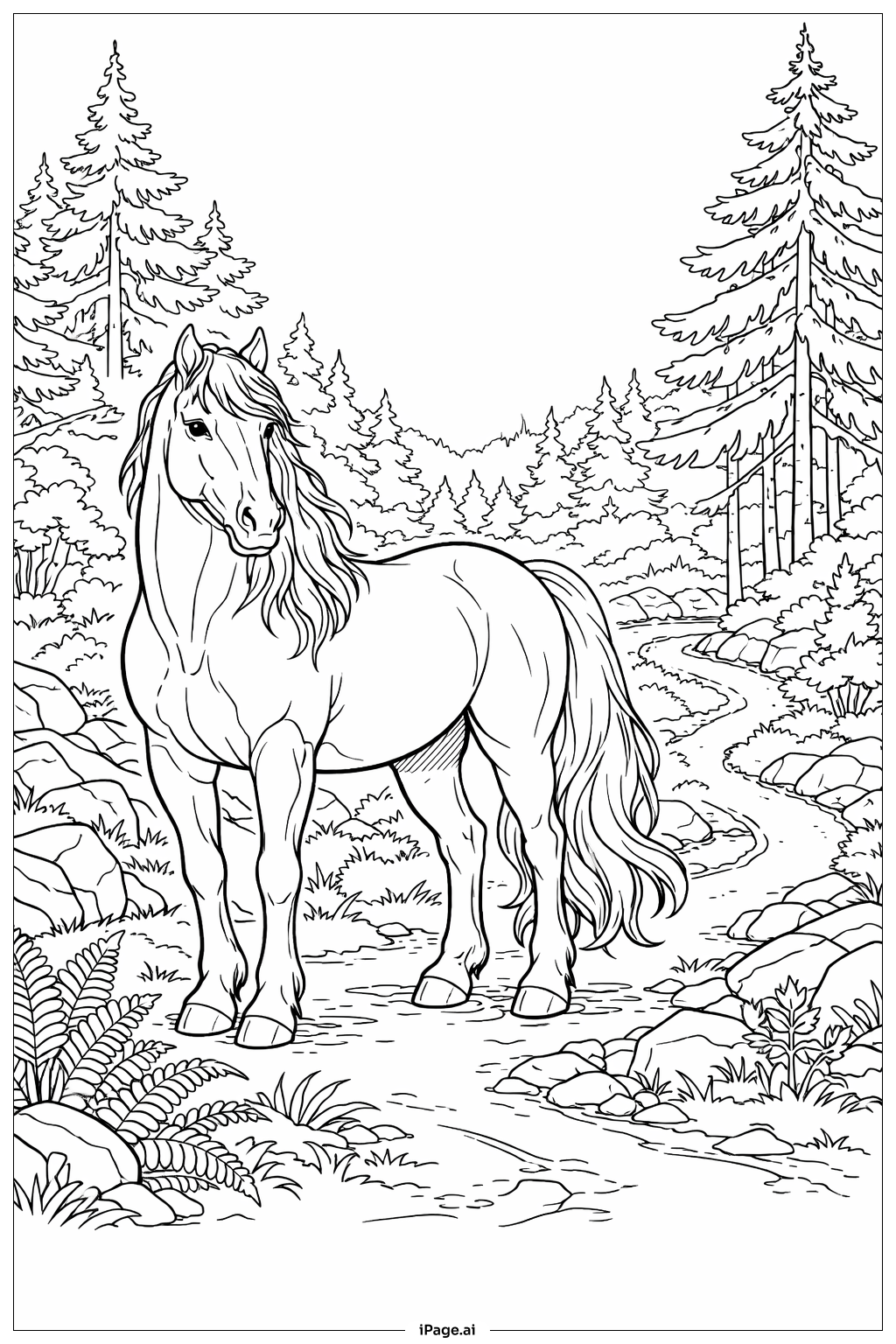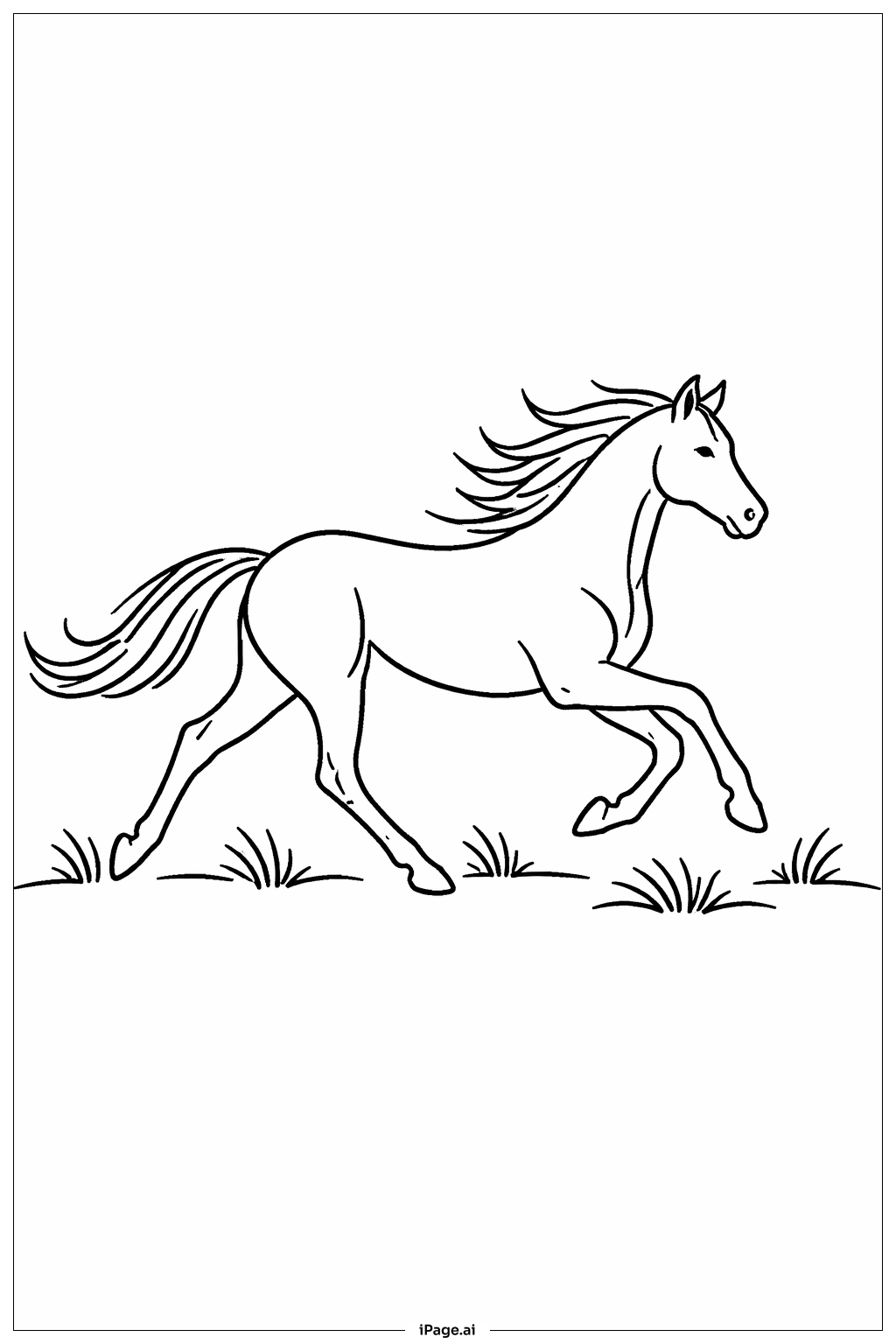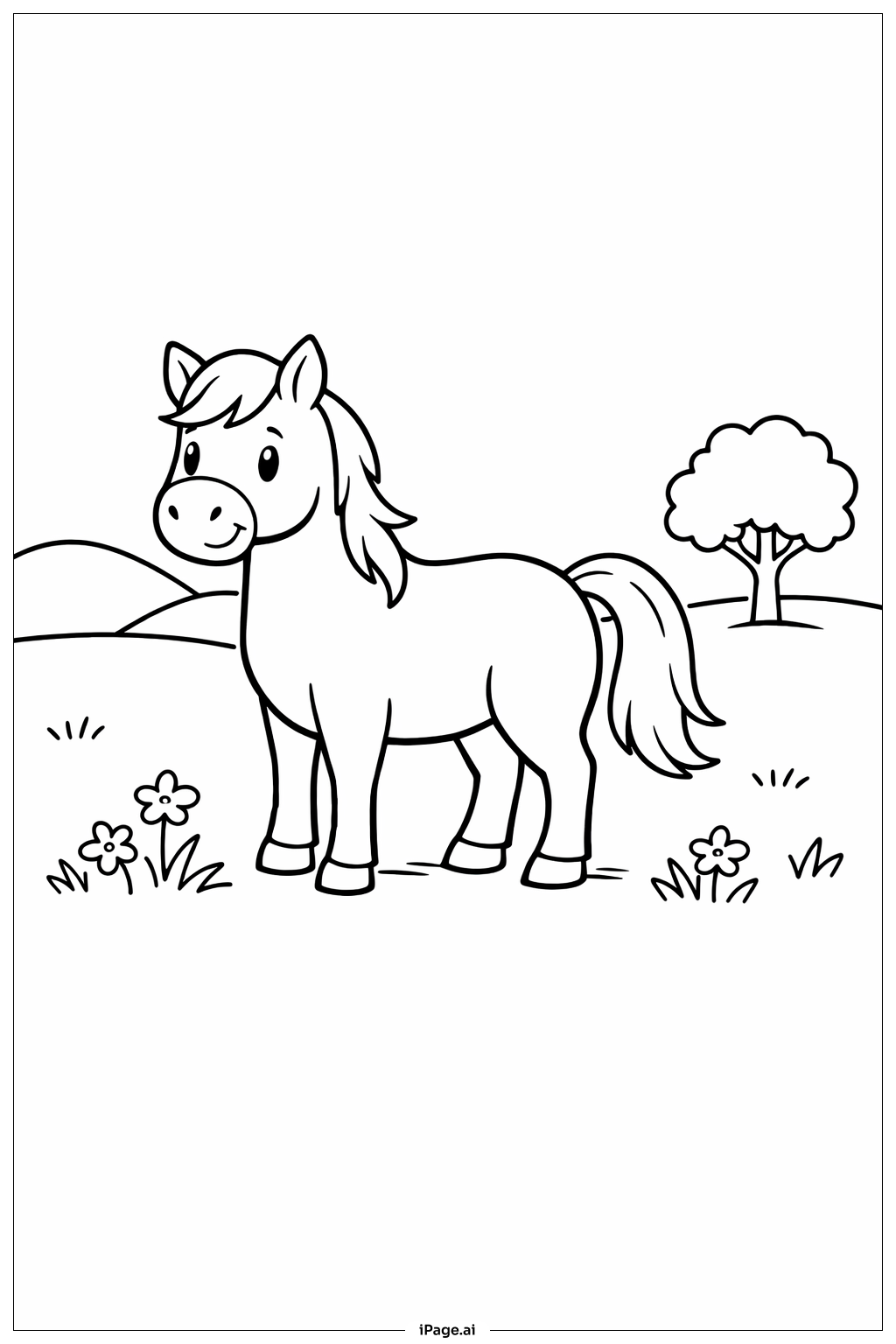
Coloring tips: How to color Horse in a Meadow coloring page well?
Start with the horse's body using warm browns, chestnuts, or golden tans. You can also try a gray, white, or black coat for a dramatic look. Use a slightly darker shade along the belly, legs, and under the neck to add depth. Color the mane and tail with flowing strokes — try black, dark brown, or even a warm blonde. For the meadow, use bright and light greens for the grass. Add pops of color with red, yellow, purple, and pink for the wildflowers. Paint the sky in soft blues and fill the clouds with white or light lavender. Use soft yellows and oranges near the horizon to suggest warm sunlight. Color the butterflies with bright, cheerful colors to make them stand out. Take your time with each section and enjoy mixing shades to bring the scene to life.
Coloring challenges: Which parts are difficult to color and need attention for Horse in a Meadow coloring page?
• Horse Body Shading: Horses have muscular, rounded bodies with curves that need light and shadow to look realistic. Blending two or three shades of the same color — light, medium, and dark — along the chest, legs, and hindquarters can be tricky but makes the horse look three-dimensional. Take your time layering colors slowly.
• Flowing Mane and Tail: The mane and tail have many long, overlapping strands that move in different directions. Coloring these areas requires careful, directional strokes that follow each strand. Using two tones — a base color and a slightly darker accent — can help each strand stand out without looking flat.
• Meadow Grass Texture: The grass in the meadow is made up of many small, layered blades that overlap one another. Filling this area evenly while still keeping a natural, textured look takes patience. Try using short, upward strokes and varying between two or three shades of green to avoid a flat, uniform appearance.
• Wildflower Details: The small flowers scattered throughout the meadow have tiny petals and thin stems. These small shapes require a fine-tipped coloring tool to stay within the lines. Choosing contrasting colors for petals and centers will help each flower pop against the green grass background.
• Sky and Cloud Blending: Creating a smooth, natural-looking sky means blending from a deeper blue at the top to a lighter tone near the horizon. The clouds need soft edges rather than hard outlines, which can be difficult to achieve with crayons or markers. Using colored pencils or watercolors works best for a gentle, airy effect.
Benefits of coloring books: Advantages of drawing Horse in a Meadow coloring page
Coloring this Horse in a Meadow page brings a wide range of benefits for children and beginners alike. The peaceful outdoor scene encourages a calm, focused mindset that helps reduce stress and anxiety. Sitting quietly to color trains the brain to concentrate for longer stretches of time, which is great for building attention skills in kids.
Working on the horse's body teaches children about shape, form, and how shading can make a flat image look full and real. Choosing colors for the meadow, sky, and flowers sparks creativity and helps develop a natural sense of color combination and visual balance.
The fine details in the flowers and grass give young colorists great practice with hand-eye coordination and fine motor skills — the same skills used in writing and drawing. Each small area completed gives a little boost of confidence and a sense of accomplishment.
This scene also connects children to the natural world, sparking curiosity about horses, wildflowers, and outdoor landscapes. It can inspire conversations, storytelling, and even further learning about animals and nature. Most of all, coloring this page is simply fun — a joyful creative activity that any child can enjoy at their own pace.